

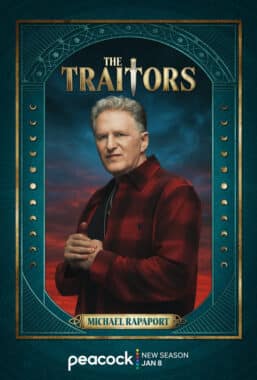
When Michael Rapaport steps into Ardross Castle in Scotland on “The Traitors,” expect there to be a season of wacky challenges, deceit, and shocking murder. The Peacock competition rewards people who can read a room, build alliances fast, and survive being judged, loudly, at a roundtable. Rapaport is already known for being loud on purpose.
Long before reality TV, the comedian and actor built his public persona around New York bluntness, high-volume opinions, and a social media presence that rarely stays quiet. In recent years, he’s also become widely associated with his Jewish identity and outspoken advocacy for Israel.
As he enters reality TV’s most paranoid social experiment, which premieres on Peacock on Thursday, Jan. 8 at 9 p.m. ET, here’s everything you need to know about Michael Rapaport’s Jewish identity and Israel advocacy.

Basics
Michael David Rapaport was born on March 20, 1970, to radio personality June Brody and radio executive David Rapaport in New York.
Rapaport has described growing up in an Ashkenazi household on Manhattan’s Upper East Side, with family roots in Russia and Poland. In an interview with the Jerusalem Post, he called himself a “very classic New York lox and bagels Jew,” and said his brother, Eric, attended Hebrew school. Rapaport, he joked, was kicked out after one class and spent more of his time playing basketball.
Decades later, he came back to a milestone he’d skipped. In February 2024, during one of his trips to Israel, Rapaport posted that he was finally having his bar mitzvah at age 53.
He has also credited his father with shaping his Jewish pride, especially growing up in a time where he says antisemitism felt common. Rapaport has shared a story his father told him about fighting off kids who bullied Jewish children, and the lesson he took from it: not “acting scared,” but standing up for himself and “standing up for your rights.”
He’s echoed that idea when he talks about his comedy, too. Rapaport has said his father warned him not to fall into a narrow “stereotype” of what Jews look or sound like in comedy. Because of his fair hair and blue eyes, that hasn’t traditionally been a problem.
“Most people assumed I was Irish because of the way I looked and talked, but I always led with being Jewish. It’s who I am. But I understood what my dad was saying about Jewish stereotypes. I love Woody Allen, I’ve worked with him (Mighty Aphrodite,1995) and I love his work, but my father never liked that persona.
“I think it’s okay to have all the colors and shades – the neuroses, the stomach issues, and all the funny things we have, especially American Jews. But we have to balance it out.”
As an actor and comedian Rapaport is known for his roles in films like “True Romance,” “Higher Learning,” “Cop Land,” and “The Heat.” On television, he’s starred in series including “Boston Public,” “Prison Break,” and Netflix’s “Atypical,” and made memorable appearances on shows like “Friends” and “Justified.” He’s also worked behind the camera, directing the 2011 music documentary “Beats, Rhymes & Life: The Travels of A Tribe Called Quest,” and he hosts the I Am Rapaport Stereo Podcast.
Michael Rapaport’s Israel advocacy
Rapaport’s career has made him a familiar face for decades. But after the Hamas-led attack on Israel on Oct. 7, 2023, he emerged as one of the entertainment world’s most vocal pro-Israel advocates. In the weeks that followed, he appeared in activist-style videos calling for the release of hostages taken by Hamas and other groups, and he used his own platforms, including his podcast and social media, to keep the issue in public view.
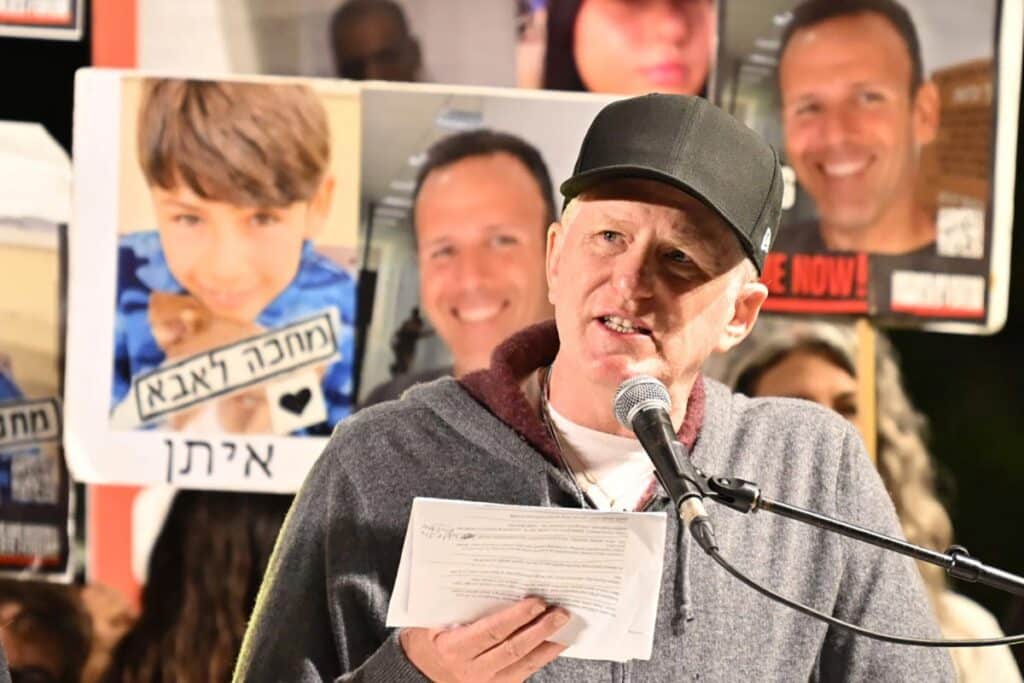
He said the shift happened almost immediately. “I was stunned by the reaction on October 8,” Rapaport told the Jerusalem Post, recalling that the massacre “was still going on” while he saw people celebrating in New York. That moment, he said, “invigorated me and triggered me,” even if he didn’t yet realize “it was going to turn into this.”
After that, he posted constantly. Rapaport posted frequent, direct-to-camera videos, continued releasing podcast episodes, and made public appearances at pro-Israel rallies in Washington, D.C., and in Tel Aviv. He also appeared in the documentary “October 8.”
Rapaport describes the work as a response to how the aftermath of Oct. 7 has been debated and reframed online. “As long as there are question marks” and accusations aimed at the victims, he said, “then I’m going to speak up.” In the same interview, he described the stakes in blunt terms: “I will not, not say anything when the Jewish people are under siege.”
He’s also urged Jewish audiences to embrace language that has become loaded in public discourse. He’s pushed Jews to reclaim language that’s turned into a flashpoint, especially ‘Zionist’ while repeatedly criticizing what he views as silence or avoidance within the entertainment industry. He told the Post he didn’t expect to become “the loudest person in the room,” saying he assumed there would be “an army of voices” doing the same kind of public defense.
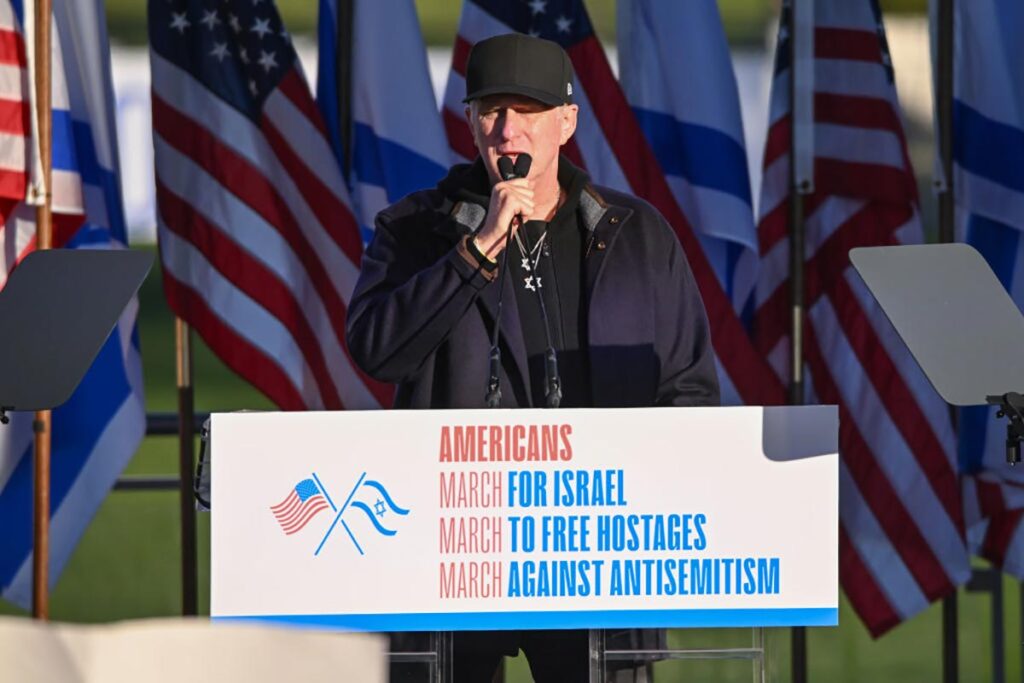
That public advocacy has also pulled him toward Israel itself. Rapaport has said he and his wife, Kebe Dunn, had planned a trip for December 2023, but moved it up after Oct. 7. Since then, he’s returned multiple times, visiting sites impacted by the attacks and spending time at Hostage Square, where he has spoken at rallies. He’s described those trips as personal and formative, saying he’s spent weeks in the country since the war began “listening, learning, [and] speaking.”
He has also used comedy as part of that project, including appearances on Israel’s satirical hit “Eretz Nehederet,” where he skewers antisemitism and what he sees as selective outrage.
“Jews invented sketch comedy, and we’re intrinsic to the humor that’s part of the vernacular of our everyday life today. For that to also happen in Israel and for those skits to be so darkly funny and spot-on is something I’m very proud of,” he said.
On speaking up for Israel
Rapaport has said his outspokenness has come with professional costs. He’s claimed he’s lost acting work because of his public stance, but says he doesn’t regret it. Rapaport also directed some of his harshest criticism at Jewish entertainers he believes have stayed quiet.
“I think a lot of Jewish entertainers have their eyes on their careers,” he said, arguing they “should be ashamed” if they’ve leaned on Jewish identity publicly but avoided speaking when Jews and Israel are under attack.
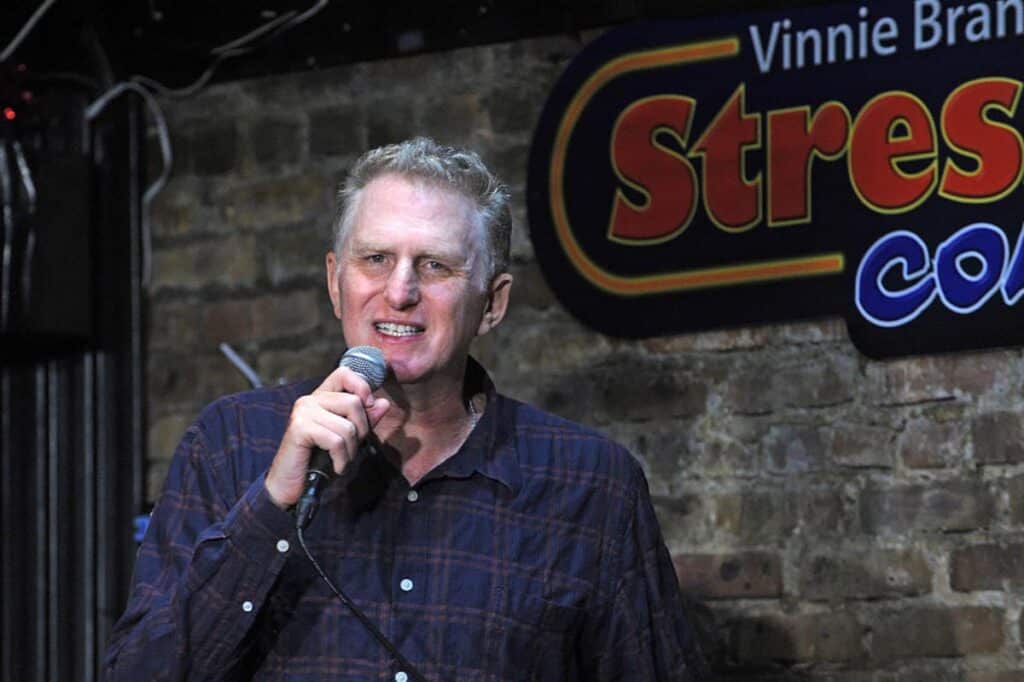
Rapaport previously described the backlash that comes with being loud online. “I get threatened on social media,” he told Ynet, saying that when he speaks publicly as a Jew, he’s met with “stereotypes and the tropes and the prejudices.”
He’s also leaned into public, collective statements when he thinks the stakes are symbolic. Rapaport was among hundreds of Jewish entertainment figures who signed a letter criticizing the Oscars speech delivered by filmmaker Jonathan Glazer when he accepted Best International Feature Film for Holocaust film “The Zone of Interest.” He has said moments like that are signals about who gets to define Jewish identity in public, and what kinds of Jewish speech are affirmed or punished.
Backlash and solidarity
But Rapaport sees that ugliness alongside something he sees as clarifying: community. “One thing that is true, and it is a good thing, is that we do stick together,” he said, adding that watching Jews “come together” has made him “more proud,” “more conscious,” and “more strong.” Even while acknowledging the vitriol, he insisted, “We’re going to be OK,” pointing to the perseverance of the Jewish spirit and describing Jewish community in warm, specific terms: “positive, generous, brilliant, encouraging, hilarious and compassionate people.”
On a recent episode of “IsraelCast,” Rapaport put it plainly: “I don’t like saying it, but it’s a scary time to be Jewish,” then followed it with a second thought: “But it’s also an incredible time to be Jewish.”
He often frames advocacy as something ordinary people can do, not just celebrities. In a recent message to supporters, he urged them to start where they are: “There are many ways to fight. Find your voice, educate yourself, stay close to other Jews, and be proud.” Then he broadened it into a simple refrain: “The Jewish people are going nowhere. Israel is going nowhere.”
The backlash hasn’t stayed online. Multiple comedy shows of his have been reportedly canceled after disruptions tied to pro-Palestinian protests and public outcry over his support for Israel. Rapaport has said his stance has cost him friendships and opportunities, but he describes the trade-off as worth it.
“The friendships I’ve gained and the relationships that I’ve gained are more important than the ones that have gone,” he told JNS.
And when he talks about why he keeps returning to Israel, he makes it personal and repetitive on purpose. “I want to be with my people. I want to be close to my people,” he told the Pittsburgh Jewish Chronicle, tying those visits to a specific mission: keeping attention on the hostages and backing those affected by the war, including the IDF. Even the professional fallout, he says, doesn’t register as a dilemma. “I’ve lost acting jobs over my Israel advocacy but I don’t have the slightest regret,” he told i24, because for him, “it was not a choice.”