
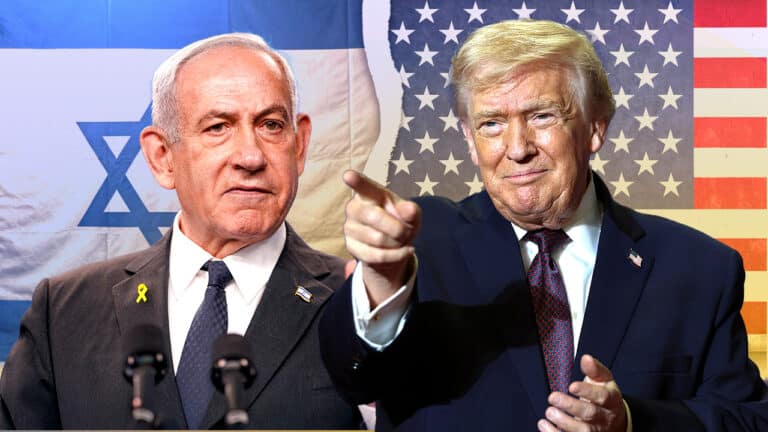
For decades, the United States has treated Israel as a uniquely close partner, providing major financial assistance, backing it militarily, and frequently shielding it from international censure.
That “special relationship” has also drawn a darker shadow: an old antisemitic idea repackaged for the internet age, casting Israel as the hidden hand behind everything from foreign wars to domestic problems, and turning legitimate policy questions into scapegoating.
But the conversation isn’t happening only at the fringes anymore. As Israel faces growing scrutiny abroad and sharper polarization at home, a wider range of writers, activists, and elected officials are asking a blunt question: Why does the U.S. still support Israel, and what does Washington believe it gets in return?
U.S. relations in Israel’s early years
The “special relationship” between Israel and the U.S. wasn’t always so special. For Israel’s first years, it often wasn’t much of a relationship at all.
After World War I, Britain took control of the territory between the Jordan River and the Mediterranean Sea. As tensions between Jews and Arabs intensified, London eventually handed the issue to the United Nations. In November 1947, the U.N. voted to partition the land into two states, one Jewish and one Arab, and the U.S. supported the plan.
But partition didn’t cool the conflict. It accelerated it. As Britain prepared to leave, violence spiraled toward war. Washington’s immediate instinct was restraint: the Truman administration backed an arms embargo on the region, worried that weapons shipments would pour gasoline on an already burning situation.
Inside the U.S. government, sympathy and strategy were not the same thing. President Harry Truman may have felt personally drawn to the idea of a Jewish state, but much of the State Department viewed the coming fight as a losing one and warned Jewish leaders not to expect American military support.
Then the Cold War barged in, uninvited. If the US wasn’t going to step in and flex its muscle, then the USSR sure would.
If the United States was trying to keep its hands off the weapons spigot, the Soviet Union saw an opening to expand its influence, including with the new Jewish state, whose early leadership included powerful socialist currents. In 1948, the arms that helped the Yishuv survive didn’t come from Washington. They came through the Soviet bloc, most notably via Czechoslovakia, whose shipments proved pivotal in the lead-up to and early months of the war.
That early flirtation didn’t last. Israel’s orientation was generally more Western than Moscow wanted, and mistrust ran both ways. The U.S. still wasn’t rushing to arm Israel, but it began offering economic assistance as the new state absorbed a staggering wave of immigration that roughly doubled its Jewish population between 1948 and 1951. (Those arrivals included refugees from Europe as well as large numbers of Jews fleeing persecution and upheaval in Arab and Muslim countries.)
For Washington, these sums were modest compared to what it was spending on postwar Europe. For Israel, they mattered. U.S. documents from the early 1950s describe “well over” $100 million in American economic support over two years tied to rehabilitation and refugee absorption, alongside additional annual aid programs being debated inside the administration.
Still, money doesn’t solve the problem that kept Israelis awake at night: survival.
In September 1955, Egypt announced a major arms deal routed through Czechoslovakia, worth more than $83 million in Soviet weaponry, including tanks, MiG-15 fighter planes, and bombers. For Israel, it felt like a regional balance shift with jets attached.
The U.S., committed to limiting an arms race, continued to hesitate about providing Israel with major weapons in this period; U.S. military aid to Israel remained limited in the 1950s compared with what would come later.
So Israel looked for other advantages, including the kind you don’t put on a foreign-aid line item. In June 1952, Prime Minister David Ben-Gurion established the Israel Atomic Energy Commission, an early institutional cornerstone of Israel’s nuclear program.
U.S. suspicion and the Israel Atomic Energy Commission
By the early 1960s, Washington’s Israel problem had changed. It was no longer just “Will this tiny country survive?” It was also: What, exactly, is Israel building in the Negev?
U.S. intelligence had growing suspicions about the Dimona reactor, and President John F. Kennedy pushed hard for regular American visits to the site. The diplomacy turned into what historians later called a “battle of the letters,” with Kennedy warning Israeli leaders in 1963 that U.S. “commitment and support” could be seriously jeopardized if Washington couldn’t get reliable information about Israel’s nuclear work.
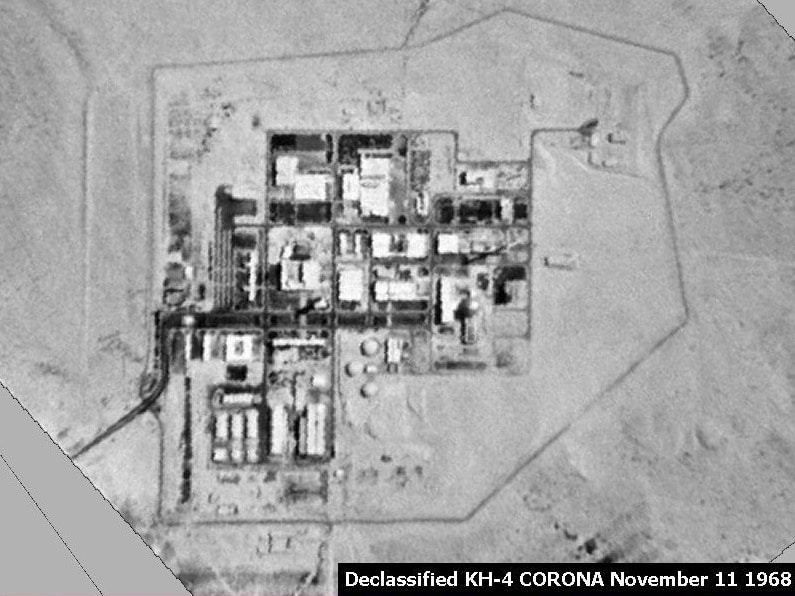
Israel ultimately agreed to periodic inspections, but they were not the kind of surprise, wide-open inspections that would make a nonproliferation hawk sleep like a baby. Later reporting and declassified material describe how the visits were managed and, in crucial ways, limited, leaving American officials with more reassurance than certainty.
At the same time, Kennedy began nudging U.S. policy away from its earlier reluctance to arm Israel. In 1962, his administration moved toward selling Israel the HAWK air-defense missile system, arguing it would reduce Israel’s vulnerability to surprise air attack and lower the temptation for a preemptive strike.
Kennedy’s assassination in November 1963 cut short his personal campaign to pry Dimona open. His successor, Lyndon Johnson, kept the pressure on for continued visits while the U.S.-Israel security relationship deepened. In 1965, Johnson told Prime Minister Levi Eshkol that failing to conduct regular visits posed “a difficult problem” for the U.S. and that Washington felt “compelled to continue them.”
Underneath the technical back-and-forth was a broader shift: as the Cold War intensified in the Middle East, a stronger, Western-leaning Israel became more strategically useful to Washington, and American leaders increasingly described Israel not just as an interest, but as an “aligned” democracy that shared U.S. values in a region dominated by autocrats.
American support grows for Israel
While Washington’s approach to Israel evolved behind closed doors, a parallel shift was happening in the open. Across the political spectrum, many Americans developed a soft spot for the Jewish state, and not for just one reason.
Jewish Americans advocated for Israel and emphasized the shared democratic values they saw in the project. But plenty of non-Jewish Americans didn’t need a briefing memo to feel the pull. They recognized something familiar in the origin story: a small, scrappy country trying to survive in hostile terrain, a national narrative built on reinvention, grit, and the promise that history doesn’t get the final word.
For some, it was the “frontier” romance, pioneers draining swamps and building kibbutzim, a national mythology that echoed the American self-image of building something new at the edge of the map. For others, the appeal was ideological. In Cold War terms, Israel looked like an “aligned” society in a region dominated by authoritarian regimes, and American political rhetoric often framed the U.S. and Israel as guardians of a shared “Judeo-Christian” moral tradition, set in contrast to atheistic communism and Soviet influence.
Religion sharpened that identification. Many American Christians, especially evangelicals, supported Israel’s return to the land as biblically significant, with some viewing Israel’s survival and victories as tied to prophecy. Pew’s research on U.S. attitudes notes that evangelicals are likelier than other Americans to cite religious belief as a major influence on their support for Israel.
Then, Israel delivered a story that landed with moral clarity, and with cameras rolling.
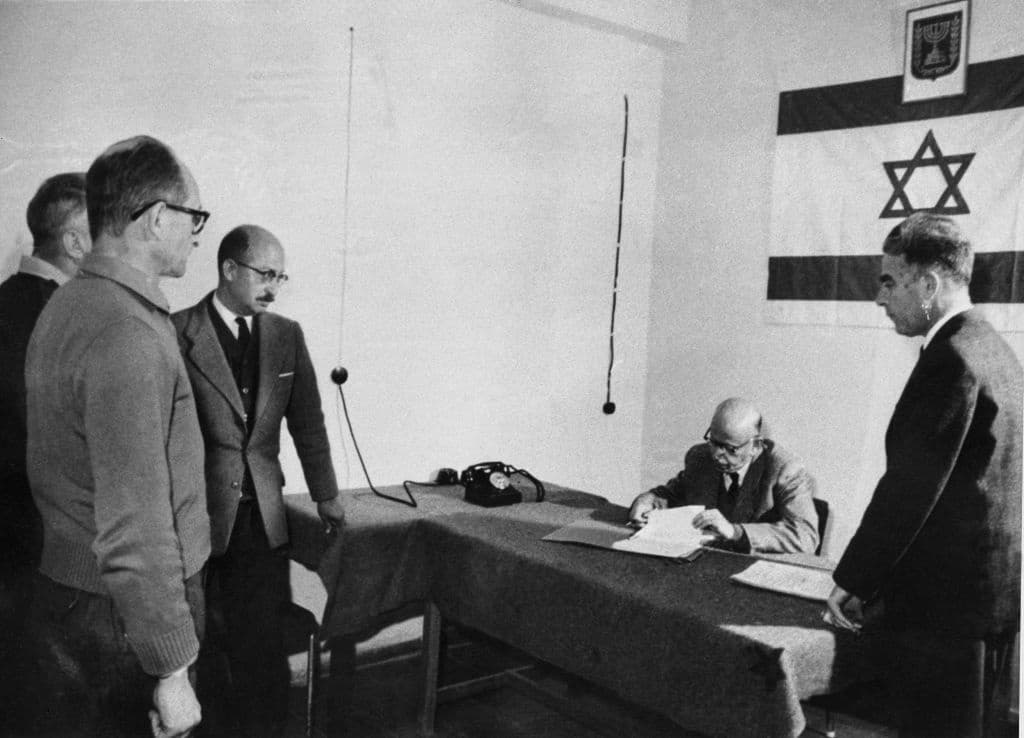
In May 1960, Israeli agents captured Adolf Eichmann in Argentina and brought him to Jerusalem for trial. The 1961 proceedings became one of the first global television courtroom events, with extensive broadcast and international media coverage that carried survivor testimony into living rooms far beyond Israel. For many Americans, the Holocaust had existed as numbers and newsreels. The Eichmann trial made it granular and human, one witness at a time, and it framed justice not in a defeated Europe but in a rebuilt Jewish homeland.
By the time the Six-Day War erupted in June 1967, Israel’s image in the American imagination had already been shaped by a decade of narrative, faith, and media. The war didn’t create American sympathy for Israel from scratch, but it cemented a lasting pattern: from that point on, Americans consistently reported far greater sympathy for Israel than for its Arab adversaries, a trend that persisted for decades across shifting Middle East crises.
Israel support during the Cold War
And for the first time, Americans’ sentimental and cultural attachment to Israel started to line up with a colder, strategic logic.
In the 1960s, many of Israel’s neighbors were armed and trained with Soviet help. U.S. intelligence assessments at the time described Soviet military assistance to key Arab states as measured in the billions of dollars, with Egypt the largest beneficiary. When Israel defeated Soviet-equipped Arab armies in the Six-Day War (June 5 to 10, 1967), it wasn’t just a dramatic military upset. It was also a geopolitical message. Moscow took it as an unmistakable slap, and on June 10 the Soviet Union broke off diplomatic relations with Israel.


From Washington’s perspective, that mattered. Israel was no longer just a compelling story or a sympathetic young state. It looked like a capable, pro-Western force that could blunt Soviet influence in a region the U.S. was desperate not to lose.
But Israel’s “value” as an American ally was cemented a few years later, during Israel’s darkest moment.
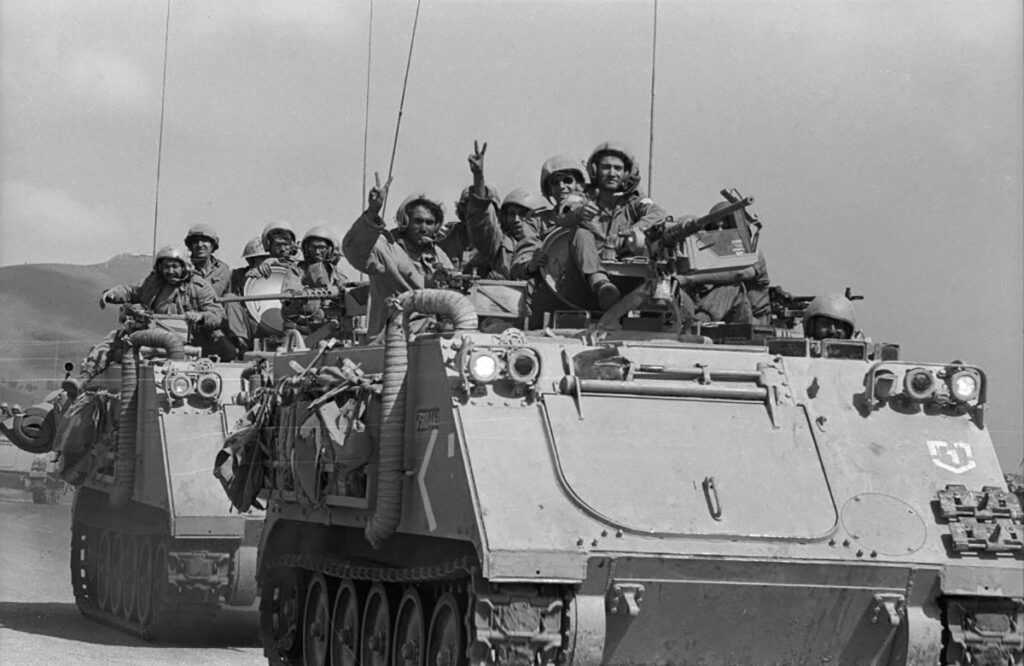
On October 6, 1973, Egypt and Syria launched a surprise attack on Yom Kippur, striking simultaneously on two fronts. The shock was existential. Moshe Dayan, Israel’s defense minister, warned that the “Third Temple” (a phrase used as shorthand for the state itself) could be in danger. Israeli leaders urgently pressed the United States for resupply.
Inside the Nixon administration, the decision was anything but automatic. Washington was navigating détente with the Soviet Union, and officials feared that visible U.S. intervention could trigger a superpower showdown and inflame relations with oil-producing Arab states. Those fears weren’t theoretical: Arab producers were already moving toward using oil as leverage, a campaign that soon escalated into the 1973–74 oil embargo.
Then the crisis escalated again. As the fighting approached a ceasefire, Soviet leader Leonid Brezhnev sent a message that U.S. officials read as a threat of unilateral Soviet intervention. The United States responded by raising its military alert level to DEFCON 3, a moment widely remembered as one of the tensest U.S.–Soviet confrontations since the Cuban Missile Crisis.
At that point, the alignment between Israel and the United States snapped into place. Both saw the same red line: the Soviets and their clients could not be allowed to win a Middle East war.
Nixon agreed to resupply Israel. American aircraft began delivering weapons on October 14, a massive operation known as Operation Nickel Grass. And on October 19, Nixon formally asked Congress to authorize $2.2 billion in emergency security assistance for Israel.
The result was more than an airlift or a one-time emergency package. The 1973 war turned U.S. support for Israel into a visible, high-stakes commitment, and helped solidify the “special relationship” in the form most Americans recognize today.
Israel as a growing strategic partner
But that friendship came with a price.
In 1973, the oil-rich Arab states retaliated against America’s resupply of Israel by embargoing oil shipments to countries they viewed as supporting the Jewish state. The result hit ordinary Americans fast and hard. Oil prices spiked, gas became scarce, and suddenly the United States was forced to confront an uncomfortable truth: that its economy could be held hostage by its dependence on imported energy. The shock of the oil crisis reshaped foreign policy and rewired daily life.
This wasn’t the first time Americans questioned whether backing Israel was “worth it,” and it wouldn’t be the last. But at that moment, the U.S. refused to be bullied into changing course. And politically, the blowback didn’t land where you might expect: many Americans blamed the Arab states and the oil companies, not Israel. In the dominant Cold War frame, Israel had been attacked first by Soviet-backed neighbors. To a lot of Americans, Israel and the U.S. weren’t just allied, they were fighting the same opponent.
Subsequent presidents increasingly said the quiet part out loud. Israel wasn’t only a country the U.S. admired or empathized with; it was a strategic asset, a bulwark against Soviet influence in a region Washington considered vital. That logic helped normalize a system that still defines the relationship today: the U.S. sends Israel large sums in military aid, and Israel uses much of it to buy American defense equipment, strengthening Israel’s capabilities while also supporting U.S. defense industries.
Then the Soviet Union fell in 1991, and the obvious question followed: if the original Cold War rationale was gone, why didn’t the relationship cool?
Because it turned out the USSR wasn’t the only threat America worried about in the Middle East.
After 9/11, Washington abruptly entered a new era, one defined by non-state actors, terror networks, and asymmetrical warfare. Israel, which had long been living with that kind of threat, suddenly looked less like a small regional ally and more like a country with grim, hard-earned experience the U.S. now needed.

And the timing sharpened the bond. The attacks of September 11 coincided with the Second Intifada, a brutal stretch in which Israelis endured frequent, terrifying attacks, including bus bombings that killed over 1,000 Israeli civilians.
Israelis felt isolated, traumatized, and constantly on edge. Americans did too. The solidarity was bleak, but real: two societies learning, at the same time, what it feels like to have your sense of safety ripped by the roots.
Of course, alliances can’t run on emotion alone. They need deliverables, and Israel had them.
Israeli intelligence and American intelligence had shared information for decades, but after 9/11 that cooperation deepened. Israel had networks, regional knowledge, and experience tracking militant groups and financing patterns. In some cases, sharing that information helped the U.S. reduce the cost and risk of placing its own personnel in dangerous places.
And the partnership wasn’t just about spying. It was increasingly about technology.
Israel became a major player in defensive systems, and its missile defense projects, including Iron Dome and David’s Sling, were developed in collaboration with the U.S.
In many regards, Israel became a sandbox for defense projects and advanced weapons. When those systems get used, they generate data, lessons, and iterative improvements, the kind of feedback that can sharpen future defense capabilities for both the U.S. and Israel. Israeli experience in areas like urban combat, emergency medicine and triage under fire, and vehicle protection has influenced tactics and training that the U.S. has drawn on in places like Iraq and Afghanistan.
Warfare, meanwhile, didn’t stay confined to physical battlefields. Increasingly, it moved into the invisible layer: cyber, surveillance, and digital infrastructure. There, too, Israel and the U.S. became deeply entangled, trading research, tools, and expertise.
It’s a remarkable evolution for a country that was once treated like the neighborhood runt. But a dominant regional power carries different moral and political baggage than a vulnerable underdog. Israel’s status as a military and technological powerhouse, and a close U.S. ally, has intensified scrutiny over how that power is used, and what U.S. support enables.
When does American support of Israel shift?
Popular support for Israel tends to dip whenever Americans feel the Jewish state is wielding its power recklessly, or when Israeli actions are seen as crossing a moral line.
One early, defining example came in 1982, when Israel invaded Lebanon to push the PLO away from Israel’s northern border. The war quickly expanded beyond its stated aims, and the turning point for global opinion came after the Sabra and Shatila massacre, when a Lebanese Christian militia allied with Israel killed large numbers of Palestinian and Lebanese civilians in the camps while Israel controlled the surrounding area. Israelis themselves erupted in protest, with an estimated 400,000 people demonstrating in Tel Aviv and demanding an investigation, a level of public backlash that signaled something important: the underdog story was changing, and Israelis knew it too.
That pattern has repeated, in different forms, through later wars and operations: support rises when Israel is perceived as defending itself, and drops when the images and outcomes suggest disproportionate force or avoidable civilian catastrophe.
At the same time, many Israelis have their own complicated feelings about the “special relationship.” Israel may be a regional heavyweight, but it is still dependent on the world’s superpower, and dependence comes with strings. American administrations publicly press Israel on timing, targets, humanitarian considerations, and political endgames, and at key moments have warned against or opposed major operations they believed would be disastrous.
In practice, those disagreements can shape Israeli decision-making not just through words, but through leverage: delays, conditions, and signals about what Washington will or won’t support. For Israelis who already feel isolated, that can produce a sharp question: are we still choosing our strategy, or are we negotiating it?
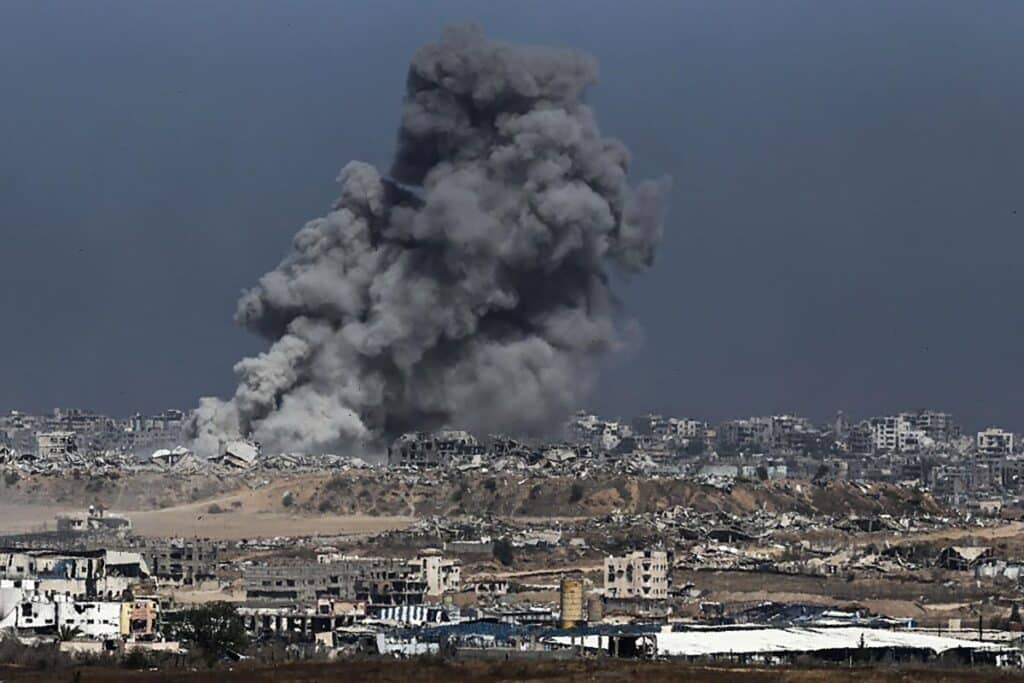
Nowhere has that tension been more visible than during the long war in Gaza. By mid-2025, American approval of Israel’s military action had fallen to new lows. Analyses found especially steep drops among younger Americans: in one cited breakdown, only 9% of Americans ages 18 to 34 approved of Israel’s military actions in Gaza. Pew’s polling showed a similar generational split earlier on: among adults under 30, 46% called Israel’s conduct of the war unacceptable, and roughly a third said Hamas’ reasons for fighting Israel were valid, with another 35% saying they were unsure.
It’s not just a policy shift. It’s a media shift. This is the first major conflict of this scale where millions of Americans are watching it unfold in near real time, through a relentless stream of videos, photos, livestreams, and commentary. And mixed into real, devastating footage is a churn of misinformation and synthetic content designed to inflame, confuse, and recruit. In that environment, narrative often travels faster than nuance.
The result is a generational inversion. To many older Americans, Israel was once the scrappy underdog that kept beating the odds. To many younger Americans, Israel reads first as the stronger party, a powerful military operating in a densely populated enclave, with the asymmetry front and center.
That shift has also collided with a broader cultural reframe. In many progressive spaces, nationalism is treated less as a source of pride and more as a warning sign. Frontier myths, once celebrated, are reread through the language of settler colonialism. And in that lens, Jewish nationalism can get folded into an American template that doesn’t actually fit the region’s history. Pew’s data captures some of the downstream effects of that reframe: younger adults are both more critical of Israel’s actions and more likely to express uncertainty or partial validation of Hamas’ stated motives, even while most Americans still describe Hamas’ October 7 attack as completely unacceptable.
None of this means sympathy for Palestinians is “new,” but it does mean Palestinians are more visible to Americans than in earlier decades, and their suffering is more legible in the moral language many young Americans already use to interpret power. The danger is when that moral language flattens complexity, and when American racial frameworks get imposed on Israelis and Palestinians as if the region is a mirror instead of a different world with its own history.
Support for a Jewish state doesn’t have to be a zero-sum proposition. Supporting Israel shouldn’t require dehumanizing Palestinians, and supporting Palestinians or opposing war shouldn’t require fantasizing about dismantling a country that is home to millions of people. But the “special relationship” has always been part strategy, part story, and both are under strain.