
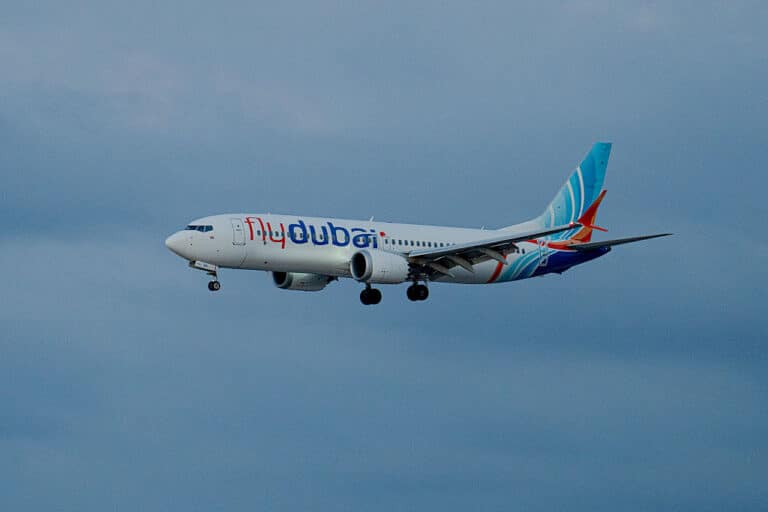
When the passengers from FlyDubai Flight 1073 finally entered Israeli airspace after an attempted hijacking, some observers were surprised to see them aboard another FlyDubai plane rather than on Israeli aircraft.
This was no accident.
After the flight made an emergency landing in Saudi Arabia, Israel reportedly asked Saudi authorities for permission to send its own aircraft to pick up its citizens. Saudi Arabia allegedly denied the request, instead insisting that the passengers complete their journey on another FlyDubai plane.
The refusal highlighted the ongoing strain between Israel and one of the region’s most influential powers. Yet just three years ago, the two countries appeared to be moving toward establishing formal diplomatic relations in the wake of Israel’s agreements with four other Arab nations under the Abraham Accords. And with a shared foe in Iran and the Houthis, one might expect Israel and Saudi Arabia to have found more common ground.
So what makes the Israeli-Saudi relationship so complicated?
1. The future for Palestinians
Saudi Arabia has long tied normalization — establishing formal diplomatic relations — with Israel to Palestinian statehood. But before October 7, 2023, there were signs that a deal might be possible without an independent Palestinian state already in place. In September 2023, Saudi Crown Prince Mohammed bin Salman said normalization was getting “closer” every day, while emphasizing that the Palestinian issue remained important. Saudi Arabia had also permitted flights to and from Israel to cross its airspace, and the two countries had quietly cooperated on security matters.
The negotiations weren’t just about Israel and Saudi Arabia. They were part of a broader bargain with Washington: Saudi Arabia sought U.S. security guarantees and help developing a civilian nuclear program, with normalization as part of the package. For Riyadh, establishing ties with Israel offered a potential route to a stronger American security commitment.
Then came October 7. Disrupting a potential Israeli-Saudi agreement was one of Hamas’s aims, according to then-President Joe Biden. The attack and the ensuing war in Gaza put normalization talks on ice.
Saudi Arabia has since hardened its public position, reiterating that no normalization would happen without an independent Palestinian state. Alongside France, the kingdom also led a diplomatic initiative in 2025 urging other countries to recognize Palestinian statehood — a move Israel strongly opposed.
Palestinian statehood was firmly back at the center of the negotiations.
2. Common ground
Israel and Saudi Arabia do have one major interest in common: limiting Iran’s regional influence and the power of groups it backs, including Hezbollah in Lebanon and the Houthis in Yemen.
The U.S. has worked to turn those shared concerns into closer security cooperation, quietly facilitating intelligence sharing between Israel and Arab countries. That effort paid dividends in April 2024, when Israel and its partners intercepted what Israeli officials said was 99% of the drones and missiles Iran launched at Israel — thanks in part to Saudi-provided intelligence.
Saudi Arabia’s response to the Israeli-Iranian conflict has reflected its own security concerns. The kingdom criticized Israel’s strikes during the 12-day war in 2025. But after the U.S.-Israeli war with Iran began in February 2026, Saudi Arabia itself faced repeated Iranian missile and drone attacks. In March, it condemned those attacks and ordered Iran’s military attaché and four other embassy staff members to leave.
Still, the idea that the Saudis are quietly giving Israel a green light to attack Iran is more complicated than it seems. As CSIS analyst Michael Ratney explains, Saudi Arabia must weigh the damage to the Iranian regime against the regional instability and economic harm the war could bring. A weaker Iran may serve Saudi interests, but a wider war threatens the kingdom’s infrastructure, investment plans and security.
Ditto with Lebanon. Israel and Saudi Arabia both want Hezbollah disarmed and its influence diminished. But while Israel has been willing to go on the offensive, Saudi Arabia has emphasized diplomacy and strengthening the Lebanese state.
Even when the two countries don’t see eye to eye on how to address shared threats, backchannels remain open. According to a September report by Kan News, Israel began providing intelligence on the Houthis to Saudi Arabia through the United States, following a Saudi request for American assistance.
3. Broader regional dynamics
When it comes to the wider region, things get even more complicated.
Saudi concerns extend beyond Iran and its allies. The kingdom also worries that Israel’s military actions could throw the region into further turmoil, threatening Saudi security and economic ambitions.
That concern was especially clear when Israel targeted Hamas leaders in Qatar in September 2025. Saudi Arabia condemned the strike as a “criminal act and a flagrant violation of international laws and norms,” and pledged its full support for Qatar.

And to add another layer of complexity, Saudi Arabia has been feuding with the United Arab Emirates, one of Israel’s regional partners. Their competing approaches to Yemen — with Saudi Arabia backing a unified state and the UAE supporting southern separatists — have brought that friction into the open.
For its part, Israel has sharply criticized Saudi Arabia’s alignment with Turkey and Qatar. Its concerns deepened in August 2026, when Turkey, Saudi Arabia and Pakistan signed a mutual defense pact declaring that an armed attack on one would be treated as an attack on all. Analysts at the International Institute for Strategic Studies describe Israel as suspicious of the agreement, particularly given its growing rivalry with Turkey.
4. Help in an emergency
With Saudi public opinion toward Israel strained by the war in Gaza, the shaken passengers of Flight 1073 might have expected a cold reception when they stepped off the plane at Prince Sultan bin Abdulaziz International Airport in Tabuk.

Instead, passengers who spoke to news outlets described a warm welcome from Saudi airport staff. “They gave everyone medical treatment, they gave us food and something to drink, sweets for the kids,” one passenger told CBC.
The warm reception didn’t erase the diplomatic limits: Saudi Arabia still refused to allow Israeli military aircraft to retrieve the passengers. But those limits didn’t prevent Saudi staff from caring for the people who had landed on their doorstep.
Diplomacy might be on the rocks, but in a moment of need, humanity shone through.