Israel just announced that elections will take place on October 27th, 2026, setting the stage for yet another chapter in one of the world’s most dynamic and complex parliamentary democracies.
From 2018 to 2019, I had the honor and pleasure of serving as a tour guide at the Knesset, leading groups from around the world in Hebrew and English through the Israeli parliament.
This was truly the first time I really learned about the Israeli democratic system and realized how complex and confusing it is.
Unlike the United States, Israel doesn’t have two dominant political parties, presidential elections, or a winner-take-all system. Instead, it has a parliamentary system, with so many different parties representing different political, religious, and cultural constituencies. Governments are built through coalitions, alliances shift regularly, and politicians often make headlines, but it is not clear what party they belong to or their connection to the broader political landscape.
For many people trying to follow Israeli politics, it can feel like stepping into a maze: Why are there so many parties? What exactly is the Knesset? Why does Israel seem to hold elections so frequently? And how can someone become prime minister without winning a majority of the vote?
This guide aims to answer all of those questions and more. Whether you’re following the 2026 election cycle closely or simply trying to understand how Israeli democracy works, here’s your ultimate guide to Israeli elections.
What Is the Knesset?
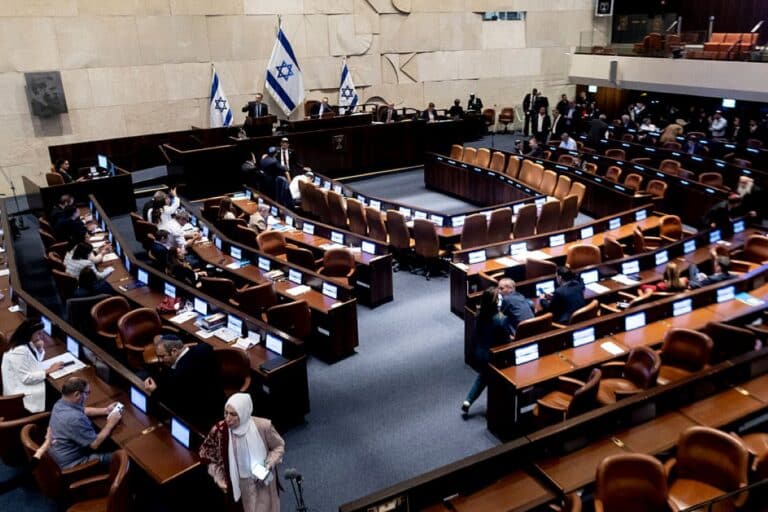
The Knesset (כְּנֶסֶת) is Israel’s parliament and serves as the country’s legislative branch, responsible for passing laws, overseeing the government, and representing the citizens of Israel.
The word Knesset comes from the Hebrew verb lehitkanes (לְהִתְכַּנֵּס), which means “to come together” or “to gather.” But the name is also a direct reference to Anshei HaKnesset HaGedolah, also known as the Great Assembly, the last Jewish governing and legislative body during the Second Temple period.
The Great Assembly had 120 members, and so too today our Knesset has exactly 120 members, despite the growing population in Israel. That number has never changed and maintains its historical connection.
How do Israeli elections work?
Israel is a parliamentary democracy, which means that unlike the U.S., voters don’t cast their ballots for a specific person. Instead, they vote for a political party.

Before the election, each party submits a ranked list of up to 120 candidates, and the proportion to the percentage of votes that party receives determines how many seats it gets in the Knesset. For example, if a party wins roughly 10% of the vote, it will receive about 12 of the Knesset’s 120 seats, and the first 12 people on its party list will become members of the Knesset (MKs).
Any Israeli citizen who is at least 18 years old can vote, and citizens who are at least 21 years old are eligible to run for the Knesset.
But in order to actually become a part of the Knesset, a party must pass the electoral threshold of 3.25% of the national vote, which translates to a minimum of four seats. Parties that fail to cross this threshold receive no representation at all. Because of this rule, small parties will often merge with one another to better their chances of getting into the Knesset.
How Are Party Lists Chosen?
Each political party determines its list of candidates differently. The different methods are:
- Party leader selection: The party leader decides the order themselves. Most Israeli parties operate like this.
- Party Primaries: Registered party members determine the order.
- Rabbinic Leadership: Ultra-Orthodox parties typically have their lists determined by a Council of Torah Sages (rabbinic council).
- Shura Council: Ra’am, the Islamic Arab party, has its candidates determined by a Shura Council.
Forming a Government
Once the results are in, the Israeli elections do not come to an end.
In a parliamentary democracy, a coalition needs to be formed with a majority of seats, with the idea that this will enable successfully passing legislation. Usually, the head of the largest party is given the authority to form the majority coalition and has 28 days to complete the task, with the possibility of a 14-day extension if additional time is needed.
To govern, a coalition must command the support of at least 61 of the Knesset’s 120 members, giving it a working majority capable of passing legislation and surviving confidence votes.
The parties that join the coalition form the government, while the parties not in the coalition become the opposition. Although they do not hold executive power, opposition parties have an important oversight role, proposing alternative legislation and providing checks and balances for the coalition.

During the time that the coalition is forming, the leader of the biggest party leads negotiations and debates with the different parties, negotiating over the terms of joining the government. These talks typically revolve around three subjects: funding, promoting particular legislation, and what ministerial positions they’ll receive.
Because there are many political parties in Israel, coalitions tend to have a small majority and be fragile. This way, a small party with just five or six seats can hold significant leverage on the stability of the government and coalition.
The big issues in Israel’s 2026 elections
1. National security since October 7
The Hamas-led attacks of October 7, 2023, shattered Israeli society. The deadliest day in Israel’s history raised profound questions about intelligence failures, military preparedness, and political decision-making.
One of the central political demands that has emerged from the attacks has been the establishment of a State Commission of Inquiry, an independent investigation into what allowed October 7 to happen and who bears responsibility. While many opposition parties, civil society organizations, and families of victims support such a commission, disagreements remain over when it should be established and what its mandate should include.
Different parties’ views on security are front and center this election cycle, with debate still on the table regarding how Israel should approach Hezbollah in Lebanon and the Iranian regime.
2. Equality of burden and the draft law
Perhaps no domestic issue is as divisive in Israel right now as military service, and the debate has only intensified since October 7.
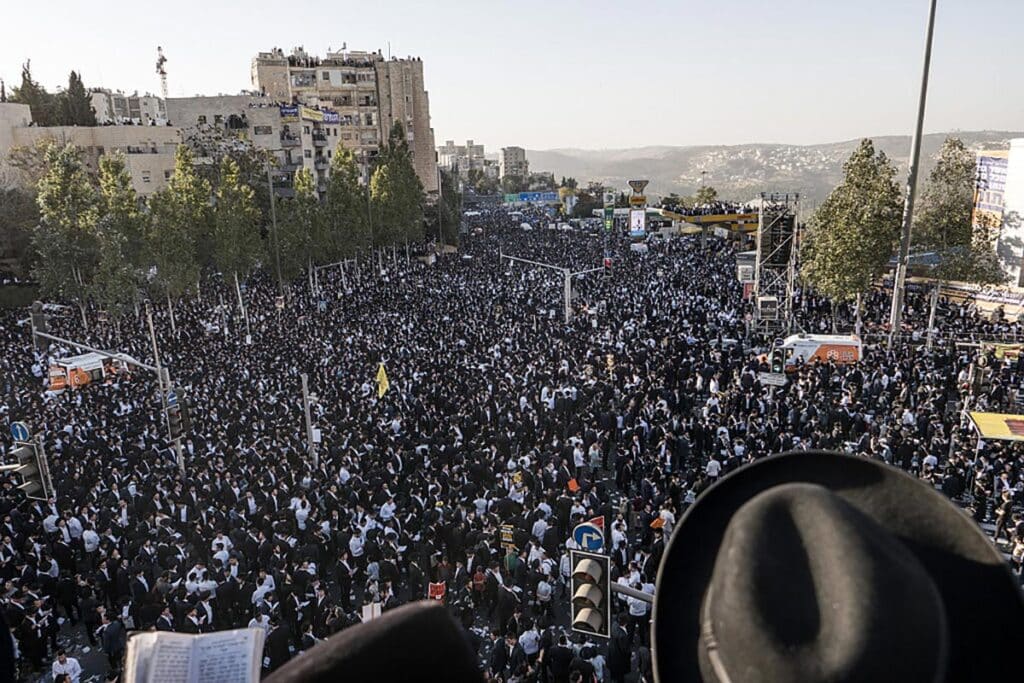
For decades, many ultra-Orthodox (Haredi) men studying in yeshiva have been exempt from mandatory IDF military service under the principle of Torato Omanuto, which means “Torah study is his vocation.” This is an arrangement that dates back to an agreement made by David Ben-Gurion with the ultra-Orthodox community at the founding of the state.
Read more: Torah study and legal immunity — what are the new laws shaking Israel?
After nearly three years of war, however, hundreds of thousands of reservists have served repeated and extended tours of duty, placing enormous strain on soldiers, their families, and the broader economy. As a result, the call for “equality of burden” and equality of draft has grown louder.
At the same time, the ultra-Orthodox community fiercely defends the exemption, arguing that full-time Torah study is itself an essential contribution to the Jewish state. Large demonstrations often block major roads and highways to protest any draft laws.
3. Cost of Living, Religion and State, and Judicial Reform
Questions about the relationship between religion and state also remain politically significant. Parties continue to discuss social issues such as public transportation on Shabbat, conversion, civil marriages, and providing changes to cater to the secular community in Israel.
The high cost of living and the burden it has caused for the Israeli population are also a central issue in the elections. Israel has some of the highest housing prices and consumer costs among OECD countries, leading parties across the political spectrum to propose different approaches to lowering prices, increasing housing supply, and easing the financial burden on families.
Finally, judicial reform, which was a major issue in Israel before October 7, is still a central subject and of interest towards the upcoming elections.
The Parties
A note: the parties below are for reference and not in any particular ideological, electoral, or polling order. It is also important to note that Israel’s political landscape is highly fluid and new parties can form and merge until 61 days before Election Day, which will be on September 7, 2026.
Likud
Leader: Benjamin Netanyahu
The governing right-wing party, founded in 1973. Likud emphasizes free-market economics with minimal government intervention, a strong security policy, military action against security threats, and support for the settlements in the West Bank (Judea and Samaria). Likud selects its candidates through party primaries.
Beyachad
Leaders: Naftali Bennett and Yair Lapid
Formed in April 2026, new centrist party Beyachad (“Together”) is the merger of Bennett’s “Bennett 2026” party and Lapid’s “Yesh Atid”party. The party has centered its campaign on military draft reform and the “equality of burden,” lowering the cost of living, and preserving Israel as a Jewish, democratic, and liberal state. Bennett and Lapid jointly determine the party list.
“Yashar!”
Leader: Gadi Eisenkot
Yashar! Is another new party for 2026, led by former IDF Chief of Staff Gadi Eisenkot, who previously served in the Blue and White party. He has now split off and is considered to lean center-left. The party platform emphasizes national security, regional diplomacy, a clear and detailed plan for equality of military service, and expanded civil liberties. Eisenkot determines the party list himself.
The Democrats
Leader: Yair Golan
The party was founded in 2024 through the merger of the Labor Party and Meretz; the Democrats define themselves as a left-wing, social democratic party. Their top priorities include equality of military service, deepening democratic institutions, drafting a constitution for the State of Israel, recognition of all streams of Judaism, expanding public transportation on Shabbat, and supporting a stronger social safety net. Their candidates are determined through primaries.
Otzma Yehudit
Leader: Itamar Ben Gvir
Founded in 2004, Otzma Yehudit is a far-right nationalist party. Its key positions include promoting Greater Israel, expanding Israeli sovereignty over Judea and Samaria, strengthening the Jewish character of state institutions, and taking a hard-line approach to security. Ben Gvir determines the candidate list.
Yisrael Beiteinu
Leader: Avigdor Lieberman
Founded in 1999, Yisrael Beiteinu is a secular, nationalist right-wing party, historically associated with immigrants from the former Soviet Union. Its platform today focuses on establishing a State Commission of Inquiry following October 7, equality of military service, and mandatory core curriculum studies. Yisrael Beiteinu is known for strong national security positions and for opposing religious coercion. Lieberman determines the candidate list.
Shas
Leader: Aryeh Deri
Founded in 1984 by the late Rabbi Ovadia Yosef z”l, Shas sees itself as the voice of Sephardi and Mizrahi Haredi Jews. The party advocates against discrimination toward Sephardim, preserving the traditional and religious character of the state, strengthening social welfare programs, and maintaining draft exemptions for yeshiva students. Its candidate list is determined by a Council of Torah Sages.
United Torah Judaism (UTJ)
Leader: Yitzhak Goldknopf
United Torah Judaism was founded in 1992 as the united list of Ashkenazi Haredi communities, including Hasidic and Lithuanian Ultra-Orthodox communities. The party advocates for religious conservatism, a halachic state, increased support for Torah institutions, and preserving exemptions for yeshiva students from the military draft. Its candidate list is determined by a Council of Torah Sages
Hadash–Ta’al
Leaders: Ayman Odeh (Hadash) and Ahmad Tibi (Ta’al)
Hadash and Ta’al have run together in multiple elections and plan to do so again in 2026, though discussions about broader cooperation with other Arab parties remain ongoing. The alliance consists of two parties: Hadash, a left-wing party with socialist and communist roots, and Ta’al, an Arab nationalist party, which generally opposes joining the coalition. Their platform focuses on representing Arab citizens, advancing a two-state solution, and full withdrawal from the settlements. The party leaders jointly determine the list.
Ra’am (United Arab List)
Leader: Mansour Abbas
The party was founded in 1996 as the political arm of the southern branch of the Islamic Movement in Israel. Ra’am is an Islamist and conservative party. Its platform focuses on promoting the interests of Arab citizens, the creation of a Palestinian state with East Jerusalem as its capital, and the Palestinian right of return. After leaving the Joint Arab List in December 2025, Ra’am is running independently in 2026. Its list is determined by the Shura Council.
Balad (National Democratic Assembly)
Leader: Sami Abu Shehadeh
Balad was founded in 1995 as a secular Arab, far-left party. Its positions include a Palestinian state with East Jerusalem as its capital, a full Israeli withdrawal from the settlements, the Palestinian right of return, the release of Palestinian prisoners, and Israel becoming a civic (non-Jewish) country with separation of religion and state. In the last election, Balad ran independently and did not pass the threshold. Its candidate list is determined through internal primaries.
Religious Zionism
Leader: Bezalel Smotrich
The party was founded in 2021 through a merger of several religious Zionist factions. It is defined as a religious right-wing party that promotes Jewish identity, nationalism, and Israeli sovereignty over Judea and Samaria. On the draft question, it supports legislation allowing Haredim to continue Torah study with a path toward workforce integration over time, even though many in the religious Zionist community are actively serving in reserve duty. Its candidate list is determined through primaries.
Blue and White
Leader: Benny Gantz
Founded in 2019, this centrist party advocates strong national security with support for pragmatic diplomacy. Blue and White also backs a selective political process regarding the settlements, supports expanded public transportation on Shabbat, and favors a free-market economy with social welfare programs. Gantz determines the candidate list.
Foundations of Israel (Yesodot Yisrael)
Leaders: Yoaz Hendel and Hili Trooper
One of the newest parties in the race, Foundations of Israel grew out of Hendel’s post-October 7 initiative, The Reservists, which sought to represent the interests of reserve soldiers and their families. Center-right in orientation, the whole platform and purpose of the party was the demand for equality in military service. However, to better its chances of passing the election threshold, the Reservists created the Foundations of Israel party along with Hili Trooper, formerly in the Blue and White party. Together, they want to bring the voices of those in combat to the forefront and create a wide Zionist coalition. Due to it being a new party, it is unclear how this would be expressed within legislation.
As the elections approach and new issues and challenges arise, polls will change constantly, as well as the issues that are the determining factor for the elections. This is because party lists can form and change until September 7, 2026. There are definitely a lot of players in the Israeli elections to be aware of. I hope that this guide can help sort out how Israeli elections work, the main issues, and the people involved, as you watch the upcoming elections unfold.