

There’s a particular silence that settles across a congregation as the shofar’s cry reverberates across the sanctuary throughout the month of Elul and over the course of the High Holidays. The12th-century scholar Maimonides understood the call of the shofar as a spiritual alarm: “Wake up, sleepers, from your sleep,” he wrote, urging us to examine our actions and return to God.
But what is it about the shofar that is supposed to inspire that internal change in any distinct way from the Vidui confessional prayers we recite throughout the season? And what are we supposed to do while we listen?
Read more: Rosh Hashanah guide 2026 — How and when to celebrate the Jewish New Year
Though we aren’t supposed to speak while we listen to the shofar’s cry, we are called to fill that silence — our silence — with something. But with what? I think we’re supposed to fill the silence of the shofar with tough questions.
What are we supposed to hear in the shofar?
The Torah describes Rosh Hashanah as a “Yom Teruah,” a day of blowing the horn (Numbers 29:1). Most of us are familiar with the three distinct blasts of the shofar: a long tekiah blast, three short shevarim blasts, followed by nine even shorter teruah blasts. But the sages of the Talmud spend a lot of time debating what those blasts should sound like and where they come from.

Surprisingly, they connect it to the mother of Sisera (Rosh Hashanah 33b).
Sisera was a Canaanite military commander who waged war against the Israelites in the Book of Judges. After his army was defeated, he was killed by Yael while his mother eagerly awaited his victorious return.
“Through the window, peered Sisera’s mother,” the Book of Judges recounts. As time went on and his chariot failed to appear, she wailed, “Why is his chariot so long in coming? Why so late the clatter of his wheels?” (Judges 5:28).
What is particularly heartbreaking about the way that she cried is that she seems to suspect the answer to her questions but cannot yet bring herself to acknowledge it.
Her world is unraveling, her expectations crumbling, and the victorious return she imagined is warping into a dark tragedy, but she couldn’t bring herself to admit it — not yet. Instead, she comes up with excuses for his lateness: “They must be dividing the spoils they have found…spoils of dyed cloth for Sisera…” (Judges 5:30).
The questions we’re afraid to ask
Life is full of questions that we avoid asking ourselves. Sometimes we fear what the answer might be. Or, more painfully, sometimes we already know the answer and don’t want to say it out loud. Along similar lines, Rabbi Joseph B. Soloveitchik wondered, “Why does the story of a pagan mother awaiting her barbaric son form the halachic basis for the required number of shofar sounds that are blown on Rosh Hashana[h]? Because upon hearing the piercing tones of the shofar, we must experience a similar emotion [to hers]; as we awaken from spiritual complacency, we must witness our own illusions being relentlessly shattered.”
On Rosh Hashanah, we stand exposed before God’s scrutiny, but we’re also supposed to become honest before our own. The Talmud’s connection between the source and inspiration for the teruah and a woman asking herself heartbreaking questions suggests that the shofar should implore us to do the same. We should be asking ourselves questions, especially those that we already know the answers to but have never been brave enough to ask.
Maybe the dream job that you have isn’t as good as you thought it would be, the person you are dating actually isn’t right for you, the excuses for your behavior aren’t good enough, or you haven’t lived up to some of the obligations you’ve made. Sometimes the life we imagined for ourselves doesn’t go as planned, and continuing to pretend otherwise will only hurt us in the end.
Through the process of reflection, we may painfully and inevitably recognize that some of the beliefs that we have been carrying — and some of the beliefs that have been carrying us — are no longer true. And, like Sisera’s mother, we may feel our imagined world begin to fall apart. But sometimes, if a house has faulty foundations, it’s better to knock it down ourselves and rebuild rather than wait for it to collapse on top of us.
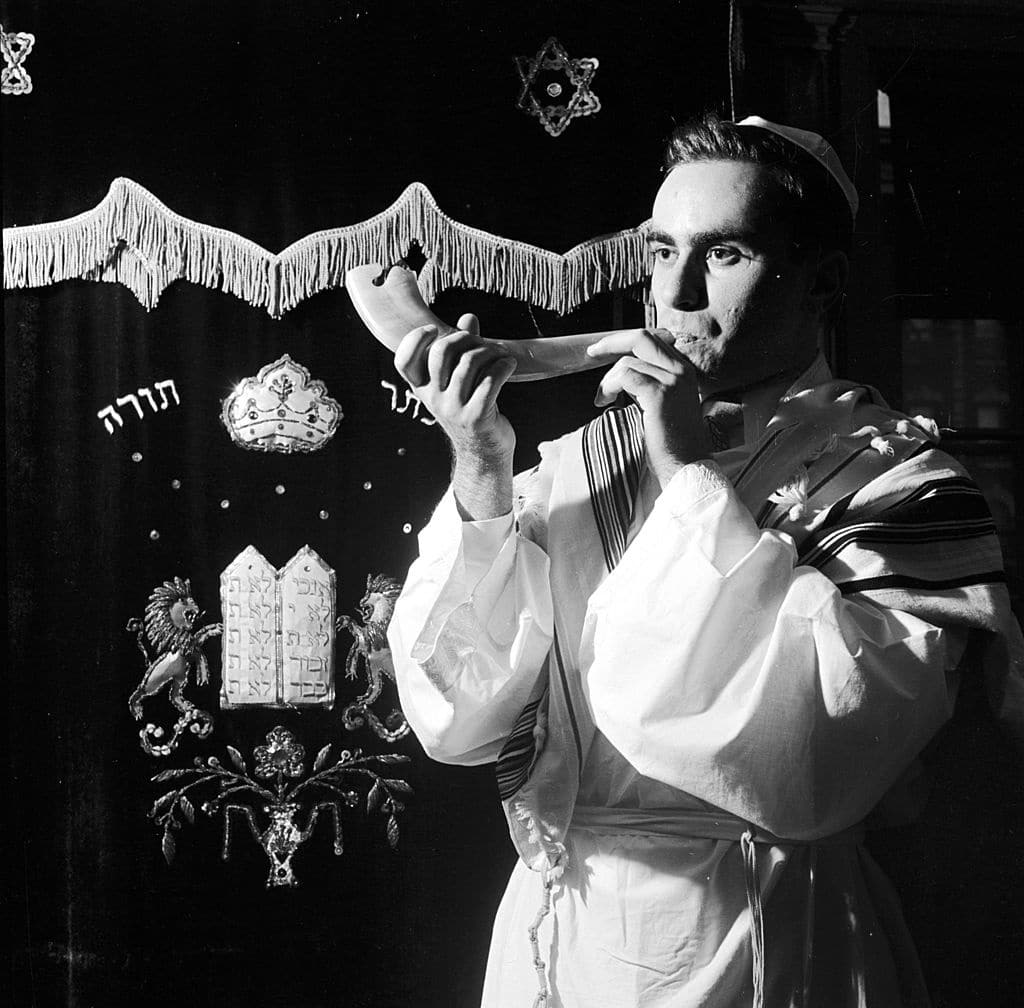
Still, engaging in the process of self-scrutiny without limits can be destructive, which is why we inspire this change with a ram’s horn.
According to Rabbi Abbahu in the Talmud, we use a ram’s horn as a shofar on Rosh Hashanah to remind God of the lengths Abraham went to obey the commandment to slaughter Isaac, with the hope that we reap some kind of benefit from the reward Abraham received for his obedience. But perhaps the ram’s horn is also meant to remind us of something.
We can only imagine the conflict, the pain, and the inescapable sense of unease that Abraham experienced approaching Mount Moriah as a father commanded to sacrifice his son — and as a Jew whose faith in a just and loving God was being put to the test by an impossible command. And in the final moment, an angel stopped him and a ram appeared, taking Isaac’s place as a sacrifice.
The ram does not make the story uncomplicated or assure us that everything will always be all right. But it does mark a boundary. Abraham is asked to surrender everything, yet Isaac’s death is ultimately not demanded.
Perhaps the ram’s horn carries that boundary into our own process of repentance. We may be asked to surrender an illusion, an expectation or a version of ourselves to which we have become attached. We are not asked to destroy ourselves.
Approaching Rosh Hashanah can feel like Abraham approaching Mount Moriah, preparing to make ourselves vulnerable, perhaps tearful and shaky, uncertain of what the new year will bring. And listening to the shofar can feel like Sisera’s mother realizing that the world we thought we knew was no more. But the shofar is our reminder that we will survive the truths we uncover — because just as much as God wants us to push ourselves to change, God also wants us to survive the experience. Just like God had faith in Abraham and was with him throughout his ordeal, God is with us in ours.
Real transformation requires painful self-scrutiny joined with faith in our own ability to endure it. Scrutiny without that faith can leave us broken and vulnerable. Faith without scrutiny can leave us empty and unchanged.
In the silence of the shofar blast, ask yourself the tough questions, and reckon with the hard truths you’ve refused to face. It will be hard, but the shofar also reminds us of the strength we have to survive it, and that it shouldn’t destroy us.
