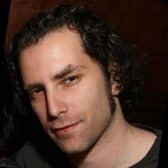
For Noah Arbit, Temple Israel in West Bloomfield, Michigan, is woven into his family’s history. His parents married there. He celebrated his bar mitzvah there. And long before a gunman attacked the synagogue, he had made fighting hate crimes a centerpiece of his political career.
On March 12, 2026, that work became painfully personal. Ayman Mohamad Ghazali, armed with a rifle, drove a pickup truck carrying fireworks and gasoline into the synagogue, where about 140 children were attending preschool. Security officers exchanged gunfire with him. All the children survived, though a security guard was injured when the truck struck him.
Arbit, a 31-year-old Democratic member of the Michigan House of Representatives, credited the synagogue’s security team, including security director Danny Phillips, with protecting the community. But relief did not erase the shock of seeing his own congregation targeted.

“It was my worst nightmare,” Arbit told Unpacked. “When I first ran for office, I campaigned on taking on hate crimes. To have a hate crime — a terrorist attack on a shul in my own district was unfathomable. Temple Israel is the largest synagogue in North America. It caused me to redouble my efforts to continue to work on preventing hate crimes in Michigan.”
The attack sharpened a question that runs through his work: How can Jewish leaders confront antisemitism without allowing fear — or pressure from political allies — to determine what they say?
Turning a campaign promise into law
Arbit’s efforts began well before the attack. In January 2025, Gov. Gretchen Whitmer signed House Bills 5400 and 5401, sponsored by Arbit and fellow Democratic state Rep. Kristian Grant, strengthening Michigan’s hate crime laws.
The Michigan Hate Crime Act expanded protections to cover characteristics including sexual orientation, gender identity or expression, age and disability, while retaining protections based on race, religion, ethnicity and national origin. The legislation also strengthened penalties for hate crimes.
“I promised my constituents when I ran that I would get this done and I’m proud of doing it,” Arbit said.

Prior to the passing of the legislation, Arbit noted the Jewish Federation building in Bloomfield had been vandalized, a 7-year-old Muslim girl was stabbed in a Detroit park, and a Black mailman was called racial slurs and threatened with a knife.
Getting the legislation passed was the most difficult challenge of his career, he said. Among the obstacles were claims that it would criminalize misgendering someone — claims he rejected.
For Arbit, who speaks openly about being gay and a Zionist, protecting vulnerable communities is central to his work. He said he is also working to establish an office focused on preventing hate crimes and political violence.
Reclaiming Zionism
That commitment has also put Arbit at odds with members of his own party over the meaning of Zionism and the place of its supporters in Democratic politics.
In a September floor speech, Arbit addressed what he sees as the distortion of a movement for Jewish self-determination into a political slur. He had wanted to give the speech for years, he said, but felt a growing urgency as the label was increasingly used against him and other Jews.
Arbit, a fierce critic of Israel’s current government, rejects the idea that its most extreme figures should define Zionism as a whole. He also rejects the suggestion that supporting Jewish self-determination requires opposing Palestinian statehood.
“Some of it is ignorance about what Zionism means, and some isn’t, and I am not going to let antisemites define what Zionism is,” Arbit said. “Young activists have gotten their education on Twitter and TikTok. I have a problem with those who want to judge Zionism by its most extreme voices. We don’t do that for any other movement.
“Palestinian self-determination is not a contradiction to my Zionism. I was in Israel campaigning for (former Foreign Affairs minister of Israel) Tzipi Livni before these people even knew Netanyahu’s name. You don’t get to tell me my support for Israel is evil or that this is contrary to liberalism. If that is what it becomes in the Democratic Party, it will be a morally impoverished party.”
He sees speaking out as part of his responsibility to the party, rather than a departure from it.
“I view it as my responsibility to hold the line for the Democratic Party,” he said. “Obviously the line is frayed.”
Drawing a line within his own party
One expression of that stance is Arbit’s refusal to endorse Abdul El-Sayed, Michigan’s Democratic nominee for U.S. Senate.
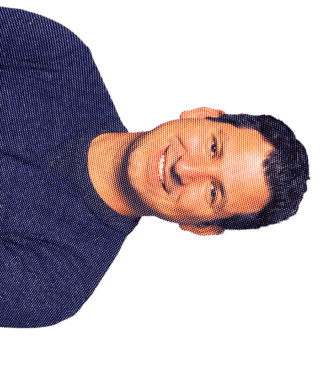

El-Sayed condemned the Temple Israel attack in March, but drew criticism for accompanying that condemnation with remarks about a cycle of violence and the deaths of the attacker’s relatives in Lebanon. In August, he apologized for those remarks, saying he should have stopped at condemning the attack.
Arbit also objected to El-Sayed’s decision to campaign with streamer Hasan Piker, whose commentary about Israel and Zionism he considers dangerous.
Arbit acknowledged that withholding his endorsement could bring political consequences, including a future primary challenge. But he said his conscience left him little choice.
“There are a lot of people who are angry with me,” Arbit said of his decision. “I have to look at myself in the mirror and say, can I live with myself? I’m not a politician motivated by fear. I’m far less afraid of losing my seat than losing myself. I will speak truth to power on any political side. I can’t endorse Abdul. He is an extremist voice who wants to purge the Democratic Party of Zionists, who are the majority of the Jewish people. His positions are unacceptable, and I would love to see the party move away from the radical fringe that is obsessed with only one issue.”
Piker’s popularity, Arbit said, reflects the influence of inflammatory online commentary on political life.
“They see this unhinged, brain-rotted, stupid guy as an essential commentator and voice on public policy and politics,” he said of Piker’s followers. “It’s absolutely crazy.”
His criticism extends to the right. He described Candace Owens and Tucker Carlson as “just as dangerous as Piker.”
“They are leveraging antisemitism as a weapon and fuel for their own popularity,” he said.
The pressure to stay silent
Arbit sees the consequences of hostility toward Zionism extending beyond elected office. He pointed to dating profiles that exclude Zionists as one example of how the issue has entered everyday social life. In his view, fear of ostracism can discourage people from expressing an important part of their Jewish identity.

“There’s tremendous peer pressure when you are young to want to fit in,” he said. “Our lives are most beautiful when we stand in our own skin without apology and without cowering in fear. I will never abandon my faith, my heritage, or my culture. Our Jewish community is under assault. We need our next generation of leaders to be unafraid.”
Although he is a harsh critic of President Donald Trump, Arbit does not expect a change in the White House to resolve the problem. He sees antisemitism as a threat that crosses political boundaries and persists beyond election cycles.
“Antisemitism almost seems resilient to political trends,” Arbit said. “It’s a fact of life: people hate Jews and the state of Israel, and they are willing to incite antisemitism in order to gain popularity. It’s become a social contagion as well. It’s become fashionable to be antisemitic…We know that Zionism is a code word for Jew, so I’m very much worried about how it’s become the socially necessary thing to be anti-Zionist.”
A call for the next generation
Arbit’s own political involvement began before he held elected office. He worked on Hillary Clinton’s 2016 presidential campaign and Whitmer’s campaign for governor. In 2019, at 23, he founded the Michigan Jewish Democratic Caucus in the aftermath of the Pittsburgh synagogue shooting, which killed 11 worshippers.
He was elected to the Michigan House in 2022 and reelected in 2024. Speaking with Michiganders from different backgrounds and hearing their concerns remains one of the most rewarding parts of the job, he said.
His message to younger people is to get involved, confront problems and speak honestly, even when doing so is uncomfortable. He wants more room for thoughtful dialogue and less tolerance for slurs, harassment and the exclusion of Jews and Israelis from public life.
“It’s unnerving and scary, and I don’t know how it gets better, but we need more voices to speak the truth,” he said. “If I can inspire people to speak the truth on a number of issues, that would be a great thing.”