








Mijal:
Coming up on Wondering Jews…
Angela
I think that there are Jews who really, deeply feel like what is being done in the name of Zionism is something that makes them want to push away. And I and I wanted to say, no
Mijal
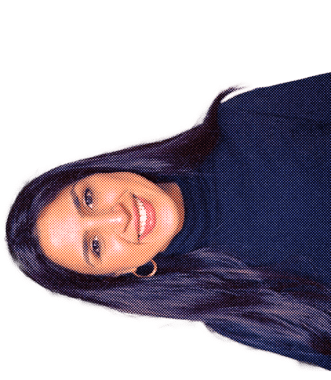
Welcome to Wondering Jews with Mijal and Noam. I am so, so excited for our guest today. Our guest is Rabbi Angela Buchdahl. She is the senior rabbi of Central Synagogue in New York, the first Asian American ordained as rabbi or cantor in North America, and the author of Heart of a Stranger. That’s a book, by the way, that I read in one sitting.
Mijal
One Friday night, I sat down and I read the whole thing cover to cover because it’s so amazing. I’m going to call you Angela. Yeah. Of course.
Angela
We’re friends.
Mijal
You’re here as a as a rabbi, as an expert, as a leader. I’m going to say you’re here as a friend as well.
Mijal
And I want to just start by saying something that I think is obvious to many of us who know you’ve read your book that your childhood, your upbringing, your identity, it defies so many assumptions and I would say defies assumptions that that are often present, like in the mainstream Jewish community. And it also defies assumptions that that exist outside of the Jewish community in the way that people talk and think about Jews.
Mijal
Growing up with a Buddhist, a Korean mother, Ashkenazi American father, negotiating a home that has multiple legacies growing up and trying to figure out your own voice and your own path. So could you tell us a little bit more how you understand not just your identity, but really what is defined in terms of the way that that we think about what it means to be a Jew.
Angela
So, yeah, I always felt like I wasn’t sure that I belonged fully in any world when I was a child growing up, you know, being born in Korea. But being biracial meant that I was already not a citizen of the country in which I was born, even though my mother was. Korean citizenship in Korea is done through your father.
Angela
And so while I felt at home within my family, I didn’t feel like I was really Korean. And I moved to America when I was five years old. And while America is, you know, a diverse country, there was also something about the fact that I had, you know, barely spoken English. By the time I got to kindergarten, I was just learning the language that made me feel very foreign.
Angela
And so I, I was an American, but I was a hyphenated American. I’m Korean American. And then, of course, I enter into the Jewish community. And our family was actually welcomed very much into the community, in part because my father was already a third generation Jew. In that exact synagogue was a small, tight knit Jewish community in Tacoma, Washington.
Angela
And so, on the one hand, I had lots of family I felt like I had in my temple. And yet we didn’t look like any other family. And so there were lots of questions, especially in the beginning. And of course, any Jewish community I entered into, there would be more questions. Where are you from? You know, how are you Jewish?
Angela
So this these were reminders, not that I necessarily needed them, that I could feel at home there, but I wasn’t 100%. You know, the good news is that I got messages from both of my parents that helped me feel that I could find my way. My father was like, no, you’re 100% Korean. You’re 100% Jewish, and you’re 100% American.
Angela
You know that math doesn’t exactly add up, but somehow he was like, you can own all of those identities. You don’t have to. You’re not half. And I appreciated that. That was the way he expressed it, because it’s not about like how much DNA and bloodline you have. He said that that’s not what makes up your identity. And for my mother, I remember feeling that I wasn’t at home anywhere and crying to her after these kids in Korea said, you’re not from Korea, you’re from America.
Angela
And American kids saying, you’re not from America, you’re from Korea. And I said, I don’t have a home. I don’t belong anywhere. And my mother said, home is where your people are. You can make your home anywhere. And so those messages kind of coupled with this feeling that people kept saying, you know, you define my expectations. You don’t fit the box for for what I expect.
Angela
It enabled me to kind of navigate through what felt like very complicated waters, I mean, and not not to mention that, of course, I was in a predominantly Christian community, that my Korean aunt became an evangelical Christian minister and was constantly proselytizing to me. And so I had I mean, I kind of called myself a little bit of a spiritual mutt.
Angela
I mean, my, my, my religious vocabulary was very clearly Jewish. You know, we belonged to a synagogue. We went regularly. I loved Hebrew school. I became my youth group president. I was I was deeply involved in Jewish life, and that was my religious vocabulary. But I think there was a certain way in which you can’t help but absorb some of the religious language and ideas that are in the air.
Angela
So there was a certain way that that was also part of my upbringing and shaped who I was as a Jew. We know that’s also the way Jews have always responded. There’s a there’s a reason that Jews who come from Morocco or Poland or India have slightly different ways of their Jewish because they also, in certain ways absorb pieces of the the cultural value system, the music, the foods that they’re there in.
Angela
And so that was a little piece of what was happening. There was some syncretism that was also happening.
Mijal
I guess that leads me to my question. You you are, I want to say, like the most popular rabbi in the world.
Angela
Oh, God, I don’t know.
Mijal
In terms of like your your students, you’re following online, like there’s people from all over the world who are drawn to you and to your and to your teachings. And and I wonder if there’s something. I mean, I’m sure you’ve thought about this more than I have, but there’s something about that feeling of not belonging or not fitting in that actually is much more universal than the cookie cutter assumptions that we have about the way we’re supposed to look.
Mijal
Is that something that that, you.
Angela
You know, I, I think you are absolutely hitting something on the head. I, I think I’ve spent so much of my childhood and into adulthood and worries about becoming a rabbi, that I would never really be able to do this because, because I was always on the outside that I always felt a little bit like I was the stranger and marginalized in some way.
Angela
And yes, it took me a while to understand. Wait a minute. Almost everyone has this experience in some way. I know, Michael, you’ve had that experience and and no, I don’t know you as well, but I guess my guess is there are ways that you’ve also felt that in your Jewish experience. And one of the things that was in a moment for me, maybe the reason that I ended up writing the book was I gave a sermon in 2020.
Angela
It was after George Floyd’s murder. And I remember, you know, we were in the pandemic and there were lots of race riots and kind of the sense of racial reckoning in our country. And I remember thinking, okay, I’m going to have to I’m going to write a sermon about race in America. And the more I thought about it, I was like, wait a minute, before I can talk about race in America, I need to talk about race in the Jewish community.
Angela
And it was the first time, and I was already like, had been a rabbi for over 20 years. It was really the first time that I gave a serious sermon about my experience of race and racism within the Jewish community, in part because I didn’t want to be the Korean rabbi. I didn’t want to make that my issue.
Angela
And also because I thought, well, my experience is so unique, no one will relate to this. How many other Korean Jews are there? Or Jews of color? It’s like, you know, it’s a small number. Am I only speaking to them? I gave a sermon that was the most personal sermon I’ve ever given. And the most particularistic sermon. And I think what shocked me, and maybe it shouldn’t have, is that that was the sermon that the most people said I related to that sermon.
Angela
And it was not just Jews of color who said, okay, I feel like I was represented for the first time. It was Jews from the South who said, oh, I, I, I experienced that because I’m from Alabama and I saw and people say, you can’t be a real Jew, or I experienced that because my mother converted. So we always felt like we were somehow othered, or I experienced this because I’m gay, or I experienced this because fill in the blank, I’m a feminist and I’m orthodox.
Angela
Okay, there’s just a there are a million reasons. I used to apologize for the way that I felt on the outside. At some point I realized, actually, that that feeling of knowing what it’s like to be a stranger is the most Jewish thing about me. It is actually the existential state of what it is to be a Jew.
Angela
And and frankly, honestly, it’s a universal human experience. So I do think the fact that I come to this without the assumption that you feel like you belong, yet that I have to actually create an active sense of welcoming, that I don’t presume what you know, that I come without the same biases or presumptions I think is actually part of the reason when people say, why is this feel so inclusive or welcoming?
Angela
I think it’s because those presumptions, I don’t carry them in the same way.
Noam
Why do you say that being a stranger is a universally human experience? What do you mean by that?
Angela
So I think that, we are constantly creating boxes of, how you can be inside or outside a tribe. And, and so there can be certain ways that you can feel, oh, I fit this is my tribe, you know, whether or not it’s actually, you know, a racial or ethnic group or it might be because of some other identity marker, and, and so you can feel like you identify.
Angela
But there will inevitably because we are complex human beings and we carry multiple identities within us, there will inevitably be something that it might not always be, but it might be at a certain moment that this particular identity rises up like a it might be a political identity or, sexual orientation identity or something else, a values identity that suddenly makes you feel like you are outside the tribe that you thought you belonged to.
Angela
And so that experience, it will inevitably happen. Either that or we are just like unidimensional humans that just squash down the things that we feel. That sort of friction of our sense of insider and outsider is actually, I think, not just a deeply human experience. I actually think it’s deeply productive. It helps us. You don’t actually often understand who you truly are until you’ve got some kind of file against you to help you understand what you always just sort of presumed and understood.
Angela
So sometimes it happens for a Jewish kid like my son who grew up in New York, went to a Jewish day school, had a rabbi for a mother the first time he really experiences. He went to Korea for a semester, and he was like, oh my God, mom, now I understand what you’re saying, but he needed the foil of being a Jew in Korea before he really understood the things that he just took for granted.
Angela
So I think that that feeling, it is universal, and I think that it’s often uncomfortable. People don’t seek out feeling like a stranger. But I would say that our Jewish tradition teaches us that it’s the place where the most growth happens, that it’s actually been our Jewish superpower.
Noam
I want to ask the two of you a question, because, Angela, you mentioned that, you know, you don’t know me as well, but I am white presenting Ashkenazi Jew. Right.
Angela
No way. Yeah.
Noam
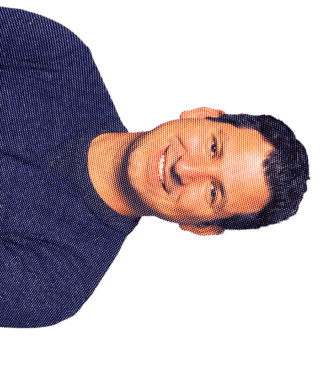
I wanted to share with you, just in case. Yeah. And, Mijal, you are how you identify.
Mijal
A I am a Latina, immigrant in this country. I’m Sephardic. I’m not white. If you want to ask about my racial identity.
Noam
Yeah. What are you.
Angela
I am a Korean immigrant, biracial, Jew, Ashkenazi Jewish.
Noam
Okay, so there’s terminology that I want to work with. There’s a story that you talk about where you said that a powerful congregant came to you for lunch and said that Central should be led by an Ashkenazi rabbi. So I want to know the reaction that the two of you have to this feeling of being othered or being a stranger, like you’re saying, is this universal human condition and but it’s also deeply Jewish reality, and then layer on to this deeply Jewish reality, which we lay it on to.
Noam
The human reality. Is being Jewish from a different background? Certainly from an external presenting perspective, nine out of ten Jews in America present as white presenting or Ashkenazi, which is very different than Israel, which you wrote a great piece about in the Wall Street Journal, but it’s very, very different. So I want to know, first of all, the language, Jew of color.
Noam
Do you identify with it, Mijal? Angela, do you identify with it? How do you feel about that term?
Angela
I think that it’s not a it’s not a I don’t identify really with that term, but I think that is the attempt to try to understand that it can be a different experience to be a Jew who carries another kind of, racial identity inside the Ashkenazi one. And in America, because we use terms like race, I think in Israel they would never identify as Jews of color.
Angela
That’s not a term that Israelis would even understand. But I think in America, because we do have these racial boxes that we check, and because it is different to be black in America or Asian or Latina, I think that those are, it’s it’s kind of a catch all for helping us understand people who experience, Judaism, not as an Ashkenazi, white presenting Jew.
Angela
Yeah, I don’t know. Do you identify with that term?
Mijal
I, I’m, I’m in a little bit of a different place. I don’t use the term. I prefer to just use the word like the term like I’m not white.
Mijal
I’m more comfortable saying I’m a Jewish person of color. But that I think beyond getting into the intricacies, I’ll just say, like, so much of this gets into dynamics that have to do with all of these voices, right? The voice of wanting to bring more inclusion. But that inclusion is also like, I want to represent my communities faithfully.
Mijal
I want to represent them in a way that honors them and respects them and the way they like to understand themselves, even when those ways are not super comfortable. For for people who are trying to do that inclusion work, I don’t, I don’t know.
Angela
I, I think also I would just add that I think that, you know, in general, I think it’s mostly a political term. It’s a category to be able to talk about a group of people. It’s similar to Asian American, which I also don’t love because, I mean, I, I think it’s necessary, but I don’t think that my experience as a Korean is anywhere near what a Pakistani or an Indian or a Filipina or a Vietnamese is just a catch all.
Angela
And it is sometimes important and useful as a political category for organizing. And it’s, but I don’t actually think it’s very descriptive in any meaningful way. So again, I think Jews of color, it might be important when we want to think about counting Jews of color in America to just be able to, to have some sort of.
Angela
But it’s mostly a political term. I will also share that in America, because of the politics of race, that I’ve had some kind of uncomfortable, conversations around this, because I remember being on a panel of Jews of color at a ADL conference, and the moderator, who was a African-American Jew, kept referring to Jews of color as black and brown Jews.
Angela
And so I said in the context, very respectfully, I said, you know, I understand that, you know, you keep referring to Jews of color is black and brown, which erases my being here as part of the Jews of color. And I said, now I understand that being a black Jew is different in America than being an Asian Jew, but I don’t think we have to create hierarchies of like how, how our oppression is in the Jewish community to not just in some ways make this category.
Angela
And she, you know, she totally responded beautifully in the moment and said, oh, I didn’t mean to, like, make you invisible. And and yet at the same time, when there was the next opportunity for something, it was it was as if I wasn’t there when there was a group of women that were going to the Women’s March.
Angela
It’s it’s a long story, but basically what I found is that there is some way that of color also necessitates almost a level of victimhood and oppression. And so because in particular, because I am the rabbi of Central Synagogue, it’s like I’ve become white because it’s a position of institutional powert. And so instead of actually seeing it as like, oh, good, we’ve actually arrived to have a woman who is also Korean as a Jew in a position like a, you know, a legacy pulpit like central synagogue. Instead, it’s almost like the now I’m erased from the Jew of Color community.
Noam
This is all.
Mijal
Or if you’re right wing, by the way. Oh, okay. Not you. Yeah. If if one if if if Sephardic is one of the reasons and again I’m not negating anyone’s when they say the origin of color. Like I’m not like saying that’s not a good thing to say. I’m talking about myself. But, when you, you have this category that describes a population and it assumes that all of them are progressive, or all of them agree with progressive racial politics.
Mijal
I’m like Sephardic Mizrachi Jews, if you’re including them in that category, which I don’t know if, I don’t think you should, but if you are, there are not automatically all progressive. And just like it’s just, yes, it’s really tricky when it becomes a political category. And, and and when and when it erases any complexity. Kind of like the what you were mentioning, like, you know.
Angela
With Asian Americans. Yeah, yeah.
Noam
And I mean, and that’s why your piece in the Wall Street Journal is so important also because there’s so many Mizrachi Jews in Israel identify as right.
Mijal
Wing when most of them not so many. Yeah.
Noam
But so here’s let me be, on the nose of it here. The, the question that I have to the two of you as, as the white presenting Ashkenazi Jews, though your father is an Ashkenazi. Is his Ashkenazi Jewish. So totally that congregant kind of missed the point on that. Yeah, but that’s not it’s not about that. The how do we deal with the challenges that on the one hand, the Jews are sensitive to the experience of Jews who are not in America. And on the other hand, that Ashkenazi Jews don’t aren’t the bad guys, aren’t the like, are not feeling maligned. Someone’s listening. They could easily feel, I could imagine like, oh, I’m I’m not the good type of I’m not like the good liberal type of team that’s going to be accepted.
Noam
I’m the non Ashkenazi Jewish. I’ll be accepted. It’s like a it’s a very strange kind of it.
Angela
No, Ashkenazi Jews should feel great pride in Ashkenazi Jewish tradition. And just be aware that there are other Jewish traditions. And I think that’s the main that’s the main ask. And I think, you know, what it’s hard is I think I remember having a conversation with an Ashkenazi Jews who actually was, in a relationship with someone who was not Jewish.
Angela
And when she asked him, you know, but what what makes your Judaism like, why do you care so much? Because he really wanted her to convert to Judaism, and she was sort of a Texas Wasp and churchgoing and like and, and he said, well, you know, it’s not really so religious. It’s really about like a cultural feeling. It’s like a vibe.
Angela
It’s like when I go into a party, I can always pick out the Jews in the room like my Judah is on. And so, yeah. And, and I remember looking at him thinking, you mean like you mean Jews like me, you know, meaning, like, obviously I’m not sending off his Jew. Da and his wife sort of felt like, okay.
Angela
Or his wife to be. Well, if that’s what is the the what encompasses Jewish identity is basically this Judah of Ashkenazi cultural markers. Then I.
Noam
Can write.
Angela
Exactly. It’s a look. It’s a kind of sense of humor. It’s a it’s a food. It’s a it’s all of that stuff I think people should enjoy and be proud of that and we relish it. But when that becomes kind of that is what it is to be Jewish, then first of all, then Judaism becomes sort of an exclusive club that you, first of all, can only be born into because his wife to be was like, well, then I can never convert to that.
Angela
I’ll never become that first of all. But second of all, it erases the kind of diversity of what Jewish experience looks like, feels like, and is experience. Now, it is for sure the majority culture of America, and it’s something that I think we’ve all loved. And my husband, who grew up in rural Vermont as the only Jewish family, when he got to a place like Yale, he was like, oh my God, I feel like I’m with my people.
Angela
And there’s something that feels wonderful about, like the kind of cultural ease of being with people that are similar to you. And that has been the kind of Ashkenazi American Jewish experience. And that’s wonderful. And I never want to take that away. People should enjoy that and feel the comfort of that. But also, I think that there has to be a recognition that when someone comes in that looks different or has a slightly different cultural or political viewpoint because but they’re also Jewish.
Angela
Not to sort of deny that that’s somehow a lesser than Judaism or that’s the stranger. I think it’s just all a matter of context. So I guess that’s the that’s the ask.
Noam
Well.
Mijal
I’ll just I’ll, I’ll say, in short, I, I agree with everything. Angela. Angela just said I, I would add something from a different perspective. I definitely think that there are attempts to divide us by, by getting us to, to, to kind of like, begin pointing fingers at each other and like, have the good Jews and the badges based on race and ethnicity but I think there is a way to heal the challenges, to fight back against exclusion and to do so in a way that doesn’t play into attempts to divide us in ways that aren’t real.
Mijal
I’ll go back, Angela, to ask you some questions because we just right now. No, no, I’m just as reflect, I think, a lot of internal dynamics of the Jewish community. But I’d like actually to ask you to reflect a little bit about dynamics with. It’s not like the non-Jewish community as one, but like, you know, being the senior rabbi of such a prominent synagogue at this moment post October 7th, one of the moments that, the really, I think stood out for many of us in terms of your, your leadership is when there was and if I get the details wrong, please correct me.
Mijal
But when there was, the rabbi in Colville who had welcomed a stranger into his synagogue, right as the way I think of of of embodying the Jewish values, of welcoming the strangers, I’m going to add, embodying the Jewish values of, of social justice, of like, opening our doors. And then, of course, there was an attempt by that individual to hold the rabbi and some other congregants, hostage.
Mijal
And you were brought into that as, as I think, you know, the the chief rabbi of the Jews. And you were in phone calls with, with the FBI and and thank God and. Well, but but to me, it’s almost like a I’m going to say this maybe I’m overstating it, but I see it almost as like a metaphor to the way that many American Jews.
Mijal
Have been feeling, which is we have open our doors, we have been part of many coalitions. We have stood up with many. And somehow after October 7th, some of those people saw groups that we literally brought in. I I’m not going to be as dramatic and say they’re holding us hostage, but maybe they haven’t had the empathy and the support for us.
Mijal
Whenever people have been in pain and when we have been attacked and they gaslight us when we face anti-Semitism. So I, I, I just I would love for you to reflect a little bit on that if this is something that you if this feeling is one that you see around you, and what advice do you have as someone who is a liberal reform rabbi who speaks about particularism and universalism?
Mijal
What advice do you have for those that feel this way?
Angela
It’s without a doubt there has been a lot of disappointment, I think, post October 7th, in terms of the way our non-Jewish allies, people that we’ve been in spaces with doing justice work, interfaith work, have shown up or not shown up for us in these moments, and I think it would be easy. For example, when we, after October 7th, there is a coalition of interfaith clergy in New York that have been meeting for, honestly, for decades.
Angela
Many of those members were people that Rabbi Cosgrove and I brought on a trip to Israel, sponsored by UJA. Just, you know, I don’t know, eight months before all of this or whatever it was. And, they couldn’t write. They couldn’t come together on a statement to even just condemn what happened on October 7th, just a few days later, no war.
Angela
And it was so disappointing to me, and I ended up speaking about it a little bit in the sermon I gave right after October 7th. Now, interestingly, one of those colleagues, reached out to me afterward and and he said, listen, I want to explain, like why we didn’t act. He said, I don’t think I don’t think that it was like that.
Angela
We didn’t want to speak. But I think that we have to not underestimate how much the kind of the cultural tension around Israel has created an environment in which people like, remember how much we think and talk about Israel. And it’s still extremely complicated. It’s like the third rail to talk about it. Every time I give a sermon about Israel in my community, it is one that I have to think about ten times as much as any other, and I labor over every single word.
Angela
And that’s speaking to a community that is really, really all across the spectrum on Israel and, you know, and on the on the political spectrum, it’s a purple congregation. And so if I have to think about it that way, as a as a rabbi and a Jew in a community, that is we are a Zionist congregation. That’s not like something we ever hide.
Angela
And it’s unapologetically Zionist. And yet it is still complicated. So when I think about my clergy partners who are thinking about Israel much less, who know much less, and then they just what is in the air, I understand why it’s very hard for them to speak up. I want to say the addendum to this is he and I had a very long, deep conversation about this afterward, when the first group of hostage families came at the end of October and we hosted them, he showed up for that.
Angela
He then made a $5,000 donation to UJA to help them. And I just feel like we actually turned that, meaning I didn’t give up on a relationship that that it felt like it was disappointing in the moment. But I, I leaned in and and I would say that he is one of still one of my closest colleagues, interfaith colleagues.
Angela
So I think that like we can make the metaphor like, you know, they weren’t with us and we’re disappointed and we’re closing the doors. But I just think we cannot afford to do that. Now. Some friends, we can have those conversations and they don’t go where we want them to.
Mijal
Can you help us? Yeah. Really want us because I. I’m actually, like, turning to you for help. So help us understand, like, I have a hard time understanding why people cannot make a simple statement saying, terror against civilians is bad. And hostages, including children held by terrorists, should be allowed to go home. Like, it’s just hard for me to understand.
Mijal
You said Israel is. I get all of I, I get complicated, it is. But it’s hard for me to have empathy. I.
Angela
I can’t I can’t understand that either. Honestly, I can’t. All I can say is that they I think that some people would say there’s pressure to put this into context, and I would say there’s no context for October 7th. But I think that some people feel like, well, if a people has been oppressed and they have not and they, you know, there’s no means for them to come out of this, that like, they don’t have a government that’s going to help them, that I honestly don’t understand it.
Angela
I’m not going to justify why they think that because I, I agree, I think there is no context for October 7th that explains that that is justified. I think it’s just more the larger context of a sense that, the Palestinians are the oppressed people, and therefore there is some way that they have a right to fight back again, never against civilians, never in the brutal, disgusting way that October 7th happened, not with hostage taking of children and grandmothers and babies, but.
Mijal
You you’re pushing us to think about is.
Angela
I’m saying more that there is a knee jerk reaction that people have often that are not thinking about this in the same way. And my sense is instead of just saying I’ve written them off because of their response, lean into it more and question them on this. Say, how can you actually not make a simple statement about this?
Angela
I’m saying we don’t give up on people who are not thinking about this in the same way in which a culture around was saying Israel was genocidal before even October 7th. Right. And so if that’s the context in which they are operating, I’m just saying we either could just write off all those folks that disappointed us because we could say, I don’t even understand how you can’t condemn October 7th.
Angela
Or we could say, can we have a conversation about this? Because I can’t understand that and not to give up on all those relationships. That’s what I’m saying.
Noam
So we, we we got into the Israel conversation. So I want to I want to continue with the Israel Zionism conversation. The third rail, the third rail. So let’s talk about Central Synagogue. Let’s talk about you.
Angela
Okay.
Noam
You’re you’re giving these sermons. I just checked YouTube, 277,000 views of your YouTube, of your sermon on the High Holidays, where you chose to speak about Zionism. You and I texted a little bit and spoke a little bit about it before you chose to speak about Zionism, why is scientism an issue that you have to, like? You said, every single word.
Noam
You have to be careful about what it is that you say. Why Zionism, more so than any other issue, what divinity looks like? What is God? Who is God? LGBTQ plus different perspectives on reproductive rights. Any other topic under the sun about Judaism? Why is Israel and Zionism the third rail? From your perspective in your synagogue or speaking in general?
Angela
I think that Israel politics feels existential for Jews right now, and it feels, whatever your perspective is meaning, like, I really deeply believe, like let’s say I’m speaking now for someone, I deeply believe that the right Israel has a right to exist. It was a war of defense. Like they have to do what they have to do.
Angela
Okay, maybe there were certain ways they didn’t handle the war. Right. But like, this was a war to an existential war. Not only do you deeply believe that, but you feel that Jews who think differently are not just wrong, but actually in existential threat to you and vice versa. There are Jews who are like Israel is. What Israel is doing is morally wrong.
Angela
There are Jews who believe it’s a genocide, and it feels like it’s actually threatening their ability to be a Jew in America the way they want to be a Jew, or to be in the spaces they want to be as a Jew, and they feel shame or whatever, and they actually feel like those who are supporting what Israel is doing is actually not just wrong, but existential threatening to them.
Angela
When you feel that way about the other side. And I have Jews who feel all of those things in my community, then it is. That’s why it’s the third rail, because it’s not. It’s not just emotional. It actually feels like it come to the core of what it means, like who we are and our safety and our security.
Angela
So this is why it’s unlike any other issue. And I think that, there is you you know, I know that the Jewish community, generally speaking, and the polls show all of this, like the vast majority of Jews, as we said, nine out of ten, deeply believe that that Israel has a right to exist as a Jewish democratic state.
Angela
We all believe in that, or the vast majority of us believe in that still. And yet when I saw how few of us like a third, we’re willing to call ourselves Zionists, I really saw this like this delta of like that means like a majority actually think it should exist, but can’t call themselves a Zionist. This is where I was like, I got that idea when I saw that survey and I was like, I have to talk about this.
Angela
Although I have to say it scared the heck out of me to to do it. And and in many ways, I spent the summer doing a ton of reading and research for me. I felt like I, I mean, I’ve been a Zionist my whole life. My older cousin made Aliyah when I was like six years old, and I spent my whole life kind of going and visiting and hearing from him.
Angela
And then, it was that was clear. But there is a tension between feeling like, especially because Zionism means so many different things. It was just I don’t know why, because this feels so simple. But it was very illuminating for me to be reminded. I was I was reading through the Arthur Hertzberg, you know, Zionist idea book, which somehow I never read before.
Angela
There is always it is always meant different things for so many different people. And that alone gave me some pathway in. It was one of the first ideas I had about how I wanted to express what this was. Why is it about agreement? I think that there are Jews who really, deeply feel like what is being done in the name of Zionism is, in some places is something that makes them want to push away.
Angela
And I and I wanted to say, no, if you don’t like that, then you have to act or support. What you want to see is the Zionism you want to see. Otherwise you will cede that term to the most extreme elements. Or if you, you know, give up on it, you might cede it to the most hostile opponents of Israel, who call it a genocidal, you know, apartheid colonialist project.
Angela
And I, I just feel like, how can we give up on a term that has meant that has encapsulated like the dreams of our, of our people for now, more than 2000 years?
Mijal
What advice would you have for young Jews who might agree with what you just expressed, but who are scared of the cost you will pay if they identify as Zionist?
Angela
First of all, discomfort and being on the outside is never comfortable. It’s very hard. And I would also say that like this is where you build character backbone and actually maybe get inside the Jewish experience in a deep way. So I I’m 54 years old. I’ve not really felt like I’ve experienced anti-Semitism until this last decade of my life, maybe half decade in particular.
Angela
And that’s kind of an amazing thing. That’s been the American Jewish experience for me, has mostly been one without any, you know, anti-Semitism that really hurt. Now I’m feeling it, and it’s it’s not. I can’t say that it’s a pleasant experience. There are times where I feel a level of dread and upset and fear that I haven’t ever experienced before, as a Jew around anti-Semitism and anti-Zionism in certain ways.
Angela
But I, I would say that I t hink, wrestling with this, this is what it is to be a Jew. It is not meant to be an easy path. Never been. It never has been. And um, and I also find that there’s a lot of comfort to be taken in looking at our history and being reminded that this is something that we have worked through and come through time and time again and grown from.
Angela
And it’s really deeply, deeply shaped who we are. And I think that that’s that’s the advice I would give. It’s like, don’t expect it to be easy. If you if our goal is to be our most fully realized souls and Jews in the world. So think of this as like our spiritual curriculum right now to work on.
Angela
That’s the curriculum we’ve got.
Noam
I have a very tough question for you.
Angela
Oh, great. All of these have been tough.
Noam
Very good.
Noam
Very tough questions.
Mijal
We want your answers.
Noam
It’s a little philosophical, but I want your I want your take on this. And we call what you’re taking to do you view Zionism as an absolute good or is it contingent on something or is it conditional? Do you hear what I’m asking? Yeah, I know, I know. Okay.
Mijal
Sorry.
Noam
I know, I know, I have.
Mijal
I’m like, “define your terms.”
Noam
Okay. Are you unwaveringly supportive of Zionism? You said Zionism. Zionism. And that’s a that’s a classic idea that there’s labor Zionism and there’s religious Zionism within religious Zionism. I did a two part series on the different types of religious ideas that exist within Religious Zionism. There, social sciences. There’s there’s.
Angela
Revisionist Zionism, right. Yeah. Political.
Noam
There’s now a Diaspora Zionism. But people use that term. Okay. But Zionism is something and it moved over time and starkly. It used to be the idea that the Jewish people should have total immigration rights to what was then called Palestine, then the land of Israel. Then it became something that was much more about self-determination than it became about sovereignty specifically.
Noam
But now that Israel exists post 1948, Jewish people have this ability to have agency, and they are the subjects of their own history. My question to you is, is Zionism something that is good, meaning that it is something that you’re going to support no matter what it looks like? Or is it conditional on something? Let’s say it’s the case that Israel wasn’t a democratic project, for example.
Noam
Okay, let’s say it stopped being democratic. Now Zionism doesn’t demand that it’s democratic. That’s not what Zionism demands. That’s another value of yours that you believe in liberal democracy. So is a Zionism something that you support no matter what. Or a Zionist something that you support if that’s on condition that is also a liberal force.
Mijal
I think you should answer this. Also known.
Angela
Yeah, I might I might give this to Mijal first and.
Mijal
I think. Gonna if we’re gonna go for this.
Angela
There’s no reason that you can’t answer that one too.
Mijal
That’s that’s that’s good.
Mijal
That’s good.
Mijal
Very sorry. Okay. Okay.
Noam
So do you want to go first?
Mijal
Yeah. Go ahead. I’ve thought about this, because what you’re saying is not like, it’s not.
Angela
Out of the realm of possibility.
Mijal
Yeah. And I have a lot of people that I love that have different visions for Israel, than mine. And we disagree on things quite strongly. I, I would say like this, I, I would say for me, when I think about Zionism and I think about Israel, it’s not a political attachment. I actually don’t identify with, like a particular ideology.
Mijal
Like, for me, Zionism is not an ideology. Zionism for me, or the way that I think about Israel is relationship. Like I’m part of the Jewish family. Majority of my family lives in Israel. That’s that’s like the, the, the, the it’s not an ideology. Like I don’t have like a three point principle, you know, thing that I’m gonna, like, hold up.
Mijal
It’s simply like, of course there’s a central sense and central ties to the land. That’s where my family used to live for a very long time. But that’s like at its core that. So. So once I have that, then I need to ask, what happens if a lot of members of my family do things that I am very opposed to or I disagree with?
Mijal
Right. And that could be the case in Israel. It could be the case in America. It could be the case in a lot of different places. And I don’t have like a simple answer. I’m just describing the kind of mindset that I would have my. Am I getting into a little bit now? Yeah. So so I don’t think I would ever walk away from my family.
Mijal
But it doesn’t mean that when my family does something, if if my extended family were to do things that I think are really wrong, it doesn’t mean that I would like say, okay, I’m agreeing with you. I’m part of this project. I but but I’m still family, so that’s where it gets really complicated. It’s not an easy you know, I’m not giving you like a a a a a somebody.
Mijal
Am I saying this right. That that.
Noam
Gets Instagram soundbite.
Mijal
Apologies to Instagram. I think it’s more complicated than that. And, and, and so my faith is tied with that of the Jewish people no matter what. Okay. It’s tied with the Jewish people. What direction.
Angela
So I, I want to expand on that. It’s beautiful because it as you were describing it, I was saying I was thinking to myself, that’s exactly how I think about it. And I’ll just like add another layer to it, which is I think of Zionism also, as you know, about peoplehood, like connection design ism is about peoplehood. And I agree.
Angela
I think, though, that with family you don’t have.
Noam
To is a word that no one outside of the Jewish educational world can sense what that word means. It’s not okay. A Microsoft word is not even technically a word. They still have everything. So what? What does people would mean?
Angela
I think it’s the, you know, the kind of the ancient understanding of who we are is that we are a people with a shared homeland, a history and and ritual and vocabulary and text. And so, you know, and it is and so this is part of what it is to be a people. And there can be people who are not particularly religious, who are still part of the peoplehood.
Angela
Right. And so this is you know, Dara Horn talks about this beautifully, but she says, you know, like essentially it’s a it’s a category that was very common in ancient times is essentially more tribal, which people don’t really understand today because we’re sort of like, no, are you a religion or are you a race or are you a nation?
Angela
You know, and so this is kind of it is it is what we are. I would say the same thing. I’m right. It is which is, you know, the people or nation of Israel. I think that what I would say is with family, yet you can disagree vehemently with family and, and the love for me would always still be there.
Angela
But I think that one of the things our tradition teaches is deeply is when you love. In fact, you must also give tokhachah, which is rebuke, essentially like it actually puts love your neighbor as yourself. Like the line that precedes it immediately is, surely you must rebuke your neighbor so you don’t incur sin for it. So there may be times, and in fact there have been already where out of love for my family and I, I, I think that absolutely you have to say I disagree.
Angela
You could even say I think this what you were doing is absolutely wrong. And I think that that would mean which would be difficult. But as a rabbi or as a leader here, because I’m attached, because I care, because it is part of my extended peoplehood, that I still believe in the idea of self-determination of the Jewish people in our ancestral homeland.
Angela
But I might then also, out of that love and peoplehood, need to also share tokhachah or rebuke and say, I cannot agree with this, I cannot abide this.
Mijal
Or protest.
Angela
And protest which is a which is.
Mijal
A right. It’s the most picturesque, patriotic thing you can.
Angela
Do it. And lots of Israelis have been doing it, as we know, for years now. We saw it with hundreds of thousands in the judicial reforms and and also after October 7th. And I think, you know, I think that the thing that is is strange about the conversation, that it’s only about Israel and almost nowhere else. It’s like people I have also major problems with what is illiberal about our current government right now around immigration and lack of due process, and in America and the and the breakdown of some of our democratic institutions.
Angela
And so, and but never is it about like, are you an American? Are you do you think America should exist? Are you proud to be? Do you believe in the idea of America? That’s not even a question. Of course I do. And I can also say none of this is okay. So if this were to happen, this scenario you’re saying, I would say this is not okay.
Angela
But that doesn’t mean that like, I’m no longer a Zionist, because that, again, is about my sense that my deep belief that Jews must have agency self-determination in this land. But we can say you’re doing it wrong. I mean, in my opinion. And granted, I know that I have the humility to know that I’m not living the experience that Israelis are living.
Angela
And and so it is, you know, it’s challenging to see that Israelis, the vast majority of them, might be voting in a different way than I would want to vote, for example. And I also know I’m not living the reality or protecting that country in the same way, or living with the security threats that they’re living with that they’ve experienced.
Angela
And so, but I think to be in relationship means you’re still in conversation. Is it? You didn’t answer the question. No.
Noam
Facilitator? No. I think that I’ll answer in a second, but I think that I’m wondering, just in reflecting on what the two of you said, if that one of the challenges of that number that’s like 88% of, of Jewish people identify as believe that Israel should be a Jewish democratic state, in 37% say that they identify as Zionist.
Noam
So there’s a there’s a discrepancy Delta 51% or whatever. I’m wondering if part of that is belief is is not that they don’t believe in the Jewish democratic state. They don’t believe Israel is a Jewish and democratic state. And that is why they don’t identify Zionists. It’s not you don’t agree with that assessment. You think they just don’t want to have the label of Zionist?
Mijal
I think just many think that Zionism means to support the current government.
Angela
That’s right. I think it’s as simple as that. I think that they feel like I disagree with it, and so I don’t want to.
Noam
Call it. So.
Angela
I think.
Noam
It is the younger congregants. I have a lot of smart students of mine that I used to be the head of a school in LA, and a lot of students who are whip smart. And they would say, I went through 12 years of Jewish state school education, and I have questions about the project of Zionism, of what it’s become, and not the vast majority of them are like ra ra, but some of them know the definitions and are just told you about a few of them in the past.
Noam
But they were saying no, we just actually resist this definition if this is what it’s become.
Angela
I mean, I.
Noam
Think you don’t have any of those.
Angela
I do, I do, but I don’t know why it has become that. There’s some people who’ve made it that, but there are plenty of others. I mean, part of why I want us to all be in it is so that we can keep that definition as broad as it has been from its beginning, which has never been just one thing.
Angela
But, I mean, I think it’s more about the negative associations that that word has taken on and people don’t want to be associated with. If the Zionists or this kind of loud whatever. I mean, it’s like the way feminism as a term, there are plenty of people who are like, well, of course I agree that women are equal to men and should have equal opportunities.
Angela
And it’s not that simple. But then but if feminists look like these women with Harry armpits who are screaming and protesting that I don’t want to be that right. And so you can you can agree with the idea in principle and yet not want to be associated with what, what the kind of the brand is. And I think that Zionism has a brand problem right now, for sure, especially for young people.
Noam
So I’m just imagining that, like the analogy of the feminist with the armpit hair and.
Noam
Just like applying that to Zionists.
Angela
Right?
Mijal
Noam before before, you know, I ask Angela one more question, but do you want to be.
Noam
My very quick answer? I have a very quick answer to this question, which is is is not an absolute good and it’s not an absolute. It is meaning that whatever the Jewish people make of Zionism is what it becomes. So that’s that is and I’m part of the Jewish people. You’re making a face.
Mijal
So I think you’re avoiding the question.
Noam
No, no, no, no.
Noam
To the Zionism is what it is. The Jewish people are a people. We are not. We are people with a religion. And Zionism to me is the return to original Judaism. Original Judaism had a land, had agriculture, it had a military, had a government, and it believed in a certain God. That’s what that’s what original Judaism was. And when they were building out the Jew in Judea, whatever we do with that is up to is the Jewish story.
Noam
So I want to constantly improve the Jewish story. I have certain values in that Jewish story. But Zionism is that return to original Judaism, and it’s our job to make it the best possible thing. Yeah, for me, I believe in a liberal democracy. For me, I believe that, that democracy is not merely people being able to vote, it’s also being able to have a free press.
Noam
It’s also free speech. It’s also making sure that minorities have a voice and have a seat at the table. That’s what I personally believe, and I continue to fight for that. But Zionism is whatever the Jewish people make of it. And so if the Jewish people are going to be sitting on the sidelines and only get involved when 7th of October happens and then boom, ten, eight Jews come out of nowhere, then and then and then they then they get fatigued.
Noam
This could happen also. Then I seen some people are getting fatigued with the whole Israel Zionism thing. Let’s just like go back to our bourgeois existence in America and just like live and let live, it’s all good. But we have to continue if we want to make the best version of Zionism, actually, come to the fore and we actually have to insist that we stay involved for the long term.
Mijal
So you’re saying it’s not ideal? It’s a project, and it and it will be whatever.
Noam
Whatever we make of it. It’s a forever project.
Mijal
Though, right. So so this list may think just to, to our last question for you, Angela, unless you want to stay here and go back and forth in, among other topics. I don’t know if you hate this question.
Mijal
I hate these questions, but I’m asking to you anyways.
Angela
But it’s great.
Mijal
Now, the question is like, like, give us some.
Mijal
Hope or some, like, constructive wisdom, like for people who are who are out there in this, like, choppy waters, perhaps they’re not, you know, rabbis or Jewish professionals, but they are facing a really noisy world that demands that they pick a side, pick an identity, just, you know, stand in one place only and not have not just Neumann’s, but capacity for relationship and love in ways that are not narrow and that are not anxious and fearful.
Mijal
So what what what is them and hope can you offer us?
Angela
I have drawn strength from the fact that our Jewish tradition has really understood that certainty is actually more suspicious than doubt, and that people who speak from this place of like absolute kind of certainty and truth with a capital T, as if they own the truth. Actually, that they are the ones who are the ones to be wary of and to and to question.
Angela
And I think it is a very uncertain time. And in my leadership, while I feel like I have had to, I’ve taken stands that have felt like very clear to me, like this is where I need to go. It’s not that it hasn’t been without a sense of trepidation and sometimes doubt. And I guess one of the things and wrestling, like a lot, a lot of wrestling.
Angela
And I guess I’m really appreciative, deeply appreciative that our tradition has always been about that. I mean, I think that, I remember learning with Chris Hayes, doctor Chris Hayes, about even she is the most incredible Talmud teacher. And she was talking about, unlike kind of Greek divinity, divine truth, which was universal and eternal and for all time and discernible things like do not murder, okay?
Angela
We all kind of know that’s like a universal kind of truth, divine truth. She said, you know, Judaism had those divine truths, of course, but we also had divine truths that were changeable. Like, God actually can change divine law even in the tour. Therefore, examples of this meaning like when you think like even if God can change God’s mind that Judaism is setting up a model in which the fact that we have to continue to wrestle with ideas and we don’t get to just sit in our extremism, is actually deeply comforting to me because I feel like then I’m in this Jewish pursuit and in this line of thinking that we have to all be
Angela
in right now. And so, yes, it’s really hard. It’s been the most challenging chapter of my rabbinate. I also think I’ve kind of, I’ve grown the most through this period. And I also have found wonderful travel companions along the way, because while we feel like the extremes are the loudest, which they are right now, they’re taking up a lot of oxygen.
Angela
I actually feel the vast majority and it’s it’s part of like, why that Zionism sermon went viral in this way. People were like, yes, that’s what I needed to hear. Like that’s there’s this sort of way that you can hold the complexity of it and still move forward and not let the extremes shame you out of where you know you stand.
Angela
And so when you kind of feel like you’re able to articulate that, it’s incredibly gratifying to hear people say, yes, that is what is is, is pushing me forward or enables me to kind of look at this in a different way. So, I think our tradition gives us the building blocks for navigating an uncertain, complex time.
Noam
Oh. That’s beautiful. I wanted to actually ask one other question. That can be.
Angela
The last. Last.
Noam
Or whatever. I just the question just again, looking at the three of us, I just I can’t see myself very well right now. But looking at the three of us, we come from very different backgrounds. Three of us come from different Jewish backgrounds. Our past in many ways are different from each other. And how would you say what?
Noam
What connects the three of us? Me? No. Ashkenazi Jewish guy. All my grandparents were born in America. And, you know, that’s one story you call your story comes from North Africa and South America. All your story comes from an Ashkenazi father and a South Korean mother. Buddhist, South Korean mother. Right. What connects the three of us?
Angela
I think in short, I’d say we are all committed to moving the Jewish story forward, and we come at it from a place of love, of Ahava Israel, of like love of the people of Israel. And we gain that love in different ways. We might even have, like our inner circle tribes might be slightly different than each others.
Angela
In fact, they definitely are. But we want to help shape the Jewish story, and we’re committed to it. We all like. And it’s part of why I feel an immediate bond with with you, even though we’re meeting, you know, for the first time in person today. But I know that that’s the work you are invested in. And and you’re in that project and that you love the people Israel.
Angela
And I just feel like for all of its complexity and frustration and beauty and diversity. I feel I feel that from us. And I think that if we want to be part of that Jewish story, I think that we have we still have a bond that connects us.
Noam
Thank you so much for joining us.
Angela
Thank you.
Mijal
Thank you.
Angela
I was hoping I was going to get the answer from both of you guys.
Mijal
I’m. Well, I’ll say I’ll say.
Mijal
Two things if it’s okay. Once. I it’s funny. Normally service and we all come from different places. I heard a beautiful encapsulation once. Someone who whose mom converted, and she was talking about, she, she was a, a Catholic, and she was talking about the Inquisition and about how they oppressed us.
Mijal
At one point he was like, mom, you know.
Angela
You were those people. Yeah. Yeah. Your people were those people.
Mijal
He was like, nope.
Mijal
They oppressed us. And he said something that was beautiful that he said that, that, that that moment of, that, that, that she was right. And, and I, I and to me just I’m like, yeah, you come from there. You come. I’m like, I think our past is still the same story. Like, you know, and the most important thing is I think we have shared fate and shared destiny and we are bound to each other.
Mijal
And, and hopefully we can, work together to make it better.
Noam
Amen.
Angela
Amen.