

Israel and Iran have been sworn enemies for years. The two wars of the past year have always felt like a matter of when, not if.
But would you believe they used to be best friends?
Iran under the Shah: When Israel had an (unofficial) embassy in Tehran
When the State of Israel was established in 1948, Iran wasn’t controlled by the Islamic Republic that runs it today. Instead, it was a parliamentary monarchy run by the Pahlavi dynasty.
The king, or Shah, at the time, Mohammed Reza Pahlavi, ruled Iran as a secular country. He pursued sweeping economic and social reforms and cultivated close ties with Western powers.
Those ties extended to Israel. Both countries were isolated from the Arab world. Israel was surrounded by declared enemies; several Arab states, including Iraq, were openly hostile to Iran as well. Israel’s first prime minister, David Ben-Gurion, recognized this shared predicament and pursued what he called a “periphery doctrine,” forging alliances with non-Arab states like Iran and Turkey.
The partnership also had a ton of mutual perks. Iran gained access to Israeli shipping lanes on the Red Sea and Mediterranean to export oil to Europe, while Israel secured a reliable oil supply outside the Arab world. The two countries also developed robust economic cooperation in agriculture, medicine, and technology, and Iran saw Israel as a gateway to strengthening ties with Washington as well.
However, despite their warm relationship, the Shah never officially recognized Israel. Nevertheless, Israel operated an unofficial embassy in Iran with a diplomat present under the guise of a representative of an Iranian-Israeli trading company.
El-Al, Israel’s national airline, even operated a line to Tehran, with twice-weekly flights from Israel. Ben-Gurion even visited Iran in 1961, and Prime Ministers Golda Meir and Yitzhak Rabin also visited.

After 30 years of good relations, though, everything changed.
The Islamic Revolution: How a love-hate relationship turned into just hate
While Iran prospered economically under the Shah, popular resentment toward Pahlavi ran deep.
Many Iranians felt he had sold their sovereignty to foreign powers, a perception rooted in a series of foreign interventions. In 1941, Pahlavi was installed by Britain, which controlled a significant portion of Iran’s oil industry, to replace his father during World War II. As time passed, Iranians increasingly demanded control over their own resources, and parliament leaders began opposing the Shah’s concessions to the West.
In 1953, Pahlavi and Iranian Prime Minister Mohammad Mosaddegh clashed directly, as Mosaddegh sought to regain control of Iran’s oil industry from Britain. Concerned about the possibility of international action against Iran, Pahlavi attempted to undermine Mosaddegh’s efforts but failed, increasing support for the prime minister and against himself.
After his failure, the U.K. and U.S. stepped in and launched a coup, using street gangs and the military to organize pro-Shah protests that escalated into a seizure of government buildings and Mosaddegh’s arrest.
The Shah subsequently suppressed all opposition to his rule, executing dissidents and creating a secret police, the SAVAK, to monitor and torture suspected opponents. Over the next two decades, Pahlavi became increasingly unpopular, with many Iranians feeling he was disconnected from the people.
In 1978, student protesters filled the streets in support of Ruhollah Khomeini, an exiled Shia Muslim cleric who opposed Western influence and promoted a new system of government run by clerics. The protests were brutally suppressed, sparking further unrest.
Secular and communist dissidents joined forces with Islamic clerics to present a united front against the Shah, overthrowing the monarchy in 1979 and forcing Pahlavi to flee the country. Khomeini returned, declaring Iran an Islamic republic, and quickly turned on the secular and communist groups that had supported him. Thousands of political prisoners were executed over the following years, and any political opposition was harshly suppressed.
Khomeini stood against anything he saw as incompatible with a purely Islamic order, and that meant nearly everything on the world stage. He condemned both Western liberalism and Eastern communism, refusing to take sides in the Cold War and positioning the Islamic Republic as a defiant third option: anti-imperialist, fiercely independent, and a self-declared champion of the oppressed. This sweeping ideological vision reshaped Iran’s view of every country, including its former allies.
At the top of Khomeini’s enemies list was the United States: the “Great Satan,” as he called it. In his view, the U.S. was the central imperialist force in the world, the power most aggressively working to undermine the Islamic Revolution and bend other nations to its will. This wasn’t an abstract grievance: Iranians had watched the U.S. orchestrate the 1953 coup that reinstalled the Shah, and that wound had never fully healed.
But Khomeini’s hostility wasn’t simply a mirror image of American enemies. The Soviet Union fared little better, earning the designation of “Lesser Satan.” Khomeini despised communist ideology in principle, and his opposition was sharpened by the fact that communists in Iran had been among the domestic opponents he had crushed after the revolution. The Soviet Union’s support for Iraq in the Iran-Iraq War only deepened that enmity.

Israel fit neatly into this framework as the “Little Satan.” For Khomeini, Israel wasn’t so much an independent country as an arm of American imperialism planted in the heart of the Muslim world. He portrayed the Israeli-Palestinian conflict as a clear-cut struggle between the powerful and the powerless, with Palestinians cast as the oppressed party whose cause the Islamic Republic was duty-bound to support. There were also personal ties at play. The PLO had trained Iranian revolutionaries in Lebanon in the years before the revolution, creating bonds between the two movements.
Beyond ideology, Israel served a very practical domestic purpose for Khomeini. A clear external enemy helped unite Iran’s quarrelsome internal factions behind him and redirected public frustration away from the chaos and hardship of life under the new regime. “Death to America” and “Death to Israel” became the defining chants of the Islamic Republic, a tradition that continues to this day.
Iran’s animosity towards the U.S. and Israel quickly went way beyond words, though.
Shortly after the revolution, Khomeini’s supporters stormed the U.S. embassy in Tehran, taking 66 Americans hostage and demanding that the exiled Shah be returned to Iran to face justice. The crisis dragged on for more than a year before the final hostages were released in 1981 through a negotiated deal.
However, while on paper Iran, Israel, and the U.S. were the most bitter of enemies, behind closed doors, the situation wasn’t quite as black and white.
The Iran-Contra Affair and the Iran-Iraq War
Almost immediately after the revolution, Israel and Iran found themselves quietly collaborating again, this time against a shared enemy: Saddam Hussein‘s Iraq.
Hussein was consolidating power and positioning Iraq as the dominant force in the region. He was racing to build nuclear weapons, in a major arms competition with Israel, and feared that Khomeini’s Shia revolution might inspire Iraq’s Shia majority to revolt.
Israel, seeing Iran as the lesser of two evils, began supplying Tehran with arms. The logic was partly strategic, weakening Iraq, and partly diplomatic, with some Israeli officials hoping that military aid might soften Iran’s anti-Israel stance.
In early 1980, Israel reportedly arranged a transfer of fighter jet components as a “demonstration of good faith.” Khomeini reportedly responded by allowing large numbers of Iranian Jews to emigrate.
Later that year, an additional shipment of ammunition to Iran was carried out by Israel, allegedly due to coordination between Iranian and American officials linked to then-presidential candidate Ronald Reagan. Not long after, Iraq invaded Iran, making the search for weapons supplies even more pressing for the new regime. The war between the two countries was brutal and included the use of chemical weapons.
Moshe Dayan, who was Foreign Minister at the time, urgently called on the U.S. to help Iran defend itself against the Iraqi invasion. Meanwhile, Israeli and Iranian officials allegedly met to discuss ways Israel could help Iran keep fighting.
All in all, between 1980 and 1983, Iran purchased over $500 million worth of arms from Israel.
The two countries’ cooperation had unexpected benefits. In September 1980, Iran struck Iraq’s Osirak nuclear reactor, causing limited damage but providing Israel with critical intelligence on the site’s air defenses. Iran also managed to severely damage Iraq’s air force. A year later, Israel used that intelligence and Iraq’s weakened state to destroy the reactor entirely. Allegedly, Iran even agreed to allow Israeli fighter jets to land in Iran in the case of an emergency.
Despite these examples of coordination, the relationship frayed again as the decade wore on. Israel’s 1982 invasion of Lebanon led to the rise of Hezbollah, an Iranian-backed Shia militia that would become one of Israel’s most persistent threats. Hezbollah kidnapped Americans and Westerners throughout the 1980s, giving Iran leverage over Washington and prompting the Reagan administration to tilt toward Iraq and impose an arms embargo on Iran.
But in 1985, with the Iran-Iraq War still grinding on, Iran made a secret approach through Israel. It asked for weapons in exchange for the release of American hostages held by Hezbollah, and, it was implied, a possible rapprochement with Israel.
Over the next year, the U.S. sold several batches of weapons and equipment to Iran through Israel, in what became known as the Iran-Contra Affair. However, Iran failed to uphold its side of the deal, and very few hostages were actually released. The affair later sparked widespread controversy in the U.S., although Israel’s role remained relatively out of the spotlight.
A turn for the worse
The Iran-Contra episode marked the last serious attempt at reconciliation. In the years that followed, Iran doubled down on funding anti-Israel and anti-Western militant groups: Hezbollah in Lebanon, Hamas and other groups in Gaza, militias in Iraq, and the Houthis in Yemen. Together, they formed the self-described “Axis of Resistance.”
Then came a graver threat: Iran’s nuclear program.
Khomeini had frozen nuclear development after the revolution, but his successor, Ali Khamenei, revived it in the 1990s, turning to Pakistan, Russia, and China for assistance. Iran expanded uranium enrichment capabilities and constructed key facilities in secret, most notably Natanz, whose existence was only revealed in 2002 by an Iranian opposition group.
The steps Iran took could have been solely for civilian purposes, but the infrastructure set up could also eventually be used to develop a nuclear weapon. For many years, it wasn’t clear if Iran intended to pursue a bomb or just wanted to have the option if it ever decided to pursue one.
In light of Iran’s failure to report much of its nuclear activities to international watchdogs, the U.S. and other countries began demanding regulation to ensure Iran didn’t pursue a bomb. After years of back-and-forth diplomatic efforts, a deal was signed: the Joint Comprehensive Plan of Action (JCPOA).
Both before and after the JCPOA, Israel saw the nuclear program as an existential threat, as the regime continued to place the eradication of the Jewish state at the center of its ideology. Iran even built a “countdown” clock ticking off the days until the promised destruction of Israel.

Combined with Iran’s support for terrorist groups that repeatedly attacked Israel, this made the two countries bitter enemies. But up until recently, a confrontation was off the table.
Instead, the two fought a shadow war, with Israel focusing on what it called the “Campaign Between the Wars.”
The Campaign Between the Wars
Beginning around 2013, Israel launched the “Campaign Between the Wars”: a sustained, largely covert effort to degrade the capabilities of the Iranian-led Axis without triggering an all-out conflict.
The campaign started with Israeli jets striking weapons shipments bound for Hezbollah in Syrian territory, then expanded into strikes against Iran-backed militias in Iraq, secret operations to sabotage Iran’s nuclear program, and targeted eliminations of key scientists and commanders.
This was a major shift in Israeli strategy. Instead of launching a war to combat major threats, this tactic was designed to delay a war as long as possible. By continuously weakening Iran and its proxies, Israel aimed to push back the timeline for an inevitable confrontation and ensure that when it finally came, the conditions for success would be much more favorable.
At the same time, Israel was growing increasingly wary of ground warfare. The grinding campaigns in Gaza and Lebanon during the late 1990s and early 2000s had made both the military and the public deeply averse to large-scale ground operations. The IDF pivoted toward technological superiority and precision airstrikes as its primary tools. It was precisely this shift, and the blind spots it created, that Hamas would exploit on October 7.
October 7: The day that changed everything
On October 7, 2023, Hamas launched a surprise assault on southern Israel, killing nearly 1,200 people, taking more than 250 hostage, and staging the most devastating invasion of Israeli territory since the Yom Kippur War.
The attack succeeded in part because it was so unsophisticated. Hamas used outdated radios and paragliders, tools too low-tech to set off Israel’s advanced surveillance systems. The very technological edge Israel had spent years honing had left it blind to a threat.
The assault reportedly caught Iran and Hamas’s other allies off guard as well. Hamas had moved before Hezbollah or the rest of the Axis of Resistance was prepared for a war of this scale. Even so, Hezbollah opened a second front from Lebanon almost immediately, launching waves of rockets and drones at northern and central Israel, while Iranian-backed militias in Iraq and the Houthis in Yemen joined the fray shortly after.
Israel found itself fighting on multiple fronts simultaneously, but it adapted quickly. Over the following year, Israel systematically dismantled Hezbollah, eliminating its top leadership and destroying the weapons stockpiles and infrastructure the group had spent decades accumulating. It struck Iranian-backed militias in Iraq and, alongside the U.S., targeted Houthi capabilities in Yemen. One by one, the proxy groups that had served as Iran’s buffer against a direct confrontation with Israel were being stripped away.
In April 2024, Israel struck Iranian commanders at a consulate in Damascus. Iran retaliated with a massive barrage of drones and missiles, the first direct attack on Israeli territory in the two countries’ history. Israel struck back, targeting Iranian air defense systems. Months later, after Israel assassinated Hamas chief Ismail Haniyeh in Tehran and Hezbollah leader Hassan Nasrallah in Beirut, Iran launched another large-scale attack. Israel responded by striking missile production facilities deep inside Iran.
The taboo against direct confrontation had been broken, but a larger conflict would wait. Shortly after, Israel and Hezbollah reached a ceasefire, and the focus returned to Gaza. Following a temporary ceasefire in early 2025, the fighting in Gaza escalated as negotiations for a lasting peace collapsed.
Meanwhile, attempts between the U.S. and Iran to reach a new nuclear deal faltered in early 2025. As Iran continued to expand its nuclear program, Israel decided it couldn’t wait any longer.
Operation Rising Lion
On June 13, 2025, Israel launched a surprise attack on nuclear facilities, senior military officials, nuclear scientists, and missile sites across Iran. Israel said Iran had taken unprecedented steps toward weaponizing enriched uranium, bringing it just weeks from building a bomb.
After nearly two weeks of fighting, the U.S. launched strikes on Iranian nuclear facilities in Fordow, Natanz, and Isfahan with bunker-busting bombs dropped by advanced B-2 bombers and Tomahawk missiles.
While Israel and the U.S. at first insisted that Iran’s nuclear and missile program had been effectively destroyed, those assessments were toned down as more information was revealed over the following months. While the damage to Iran’s nuclear program was significant, it still had the capability to rebuild the program within a year or two.
IDF Chief of Staff Eyal Zamir stressed at the time that, while significant achievements had been made, the conflict with Iran was far from over.
“We have concluded a significant phase, but the campaign against Iran is not over,” Zamir said. “We are entering a new phase based on the achievements of the current one. We’ve set Iran’s nuclear project back by years, and the same applies to its missile program.”
“Despite the phenomenal achievement, we must keep our feet on the ground. Many challenges still lie ahead,” the Chief of Staff added. “We must stay focused; there’s no time to rest on our laurels.”
In the months after the war, Iran began steadily working to rebuild its nuclear and missile programs. This included efforts to reinforce surviving facilities to protect itself from future attacks. Iran additionally has a stockpile of about 400kg of highly enriched uranium that could be rapidly enriched to weapons-grade, and it’s unclear exactly where this stockpile is being held or if it’s still buried in one of the facilities targeted last year.
Renewed U.S.-Iran nuclear talks stalled repeatedly. Washington demanded that Iran surrender its domestic uranium enrichment capability, end support for its regional proxies, and curb its ballistic missile program. Tehran refused to put any of those items on the table.
Operation Roaring Lion
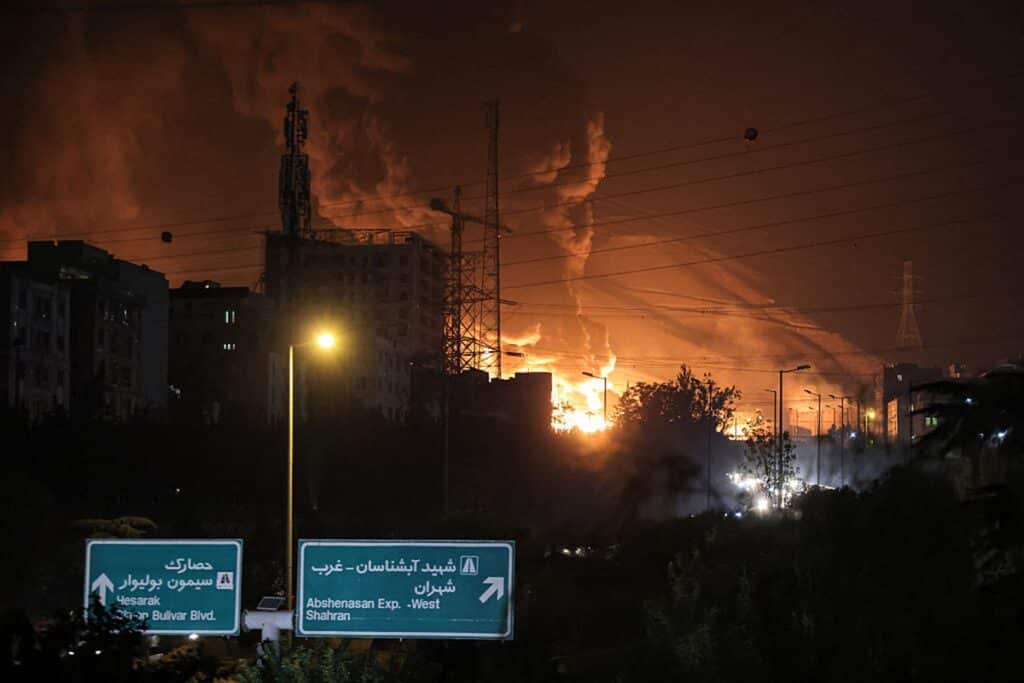
After months of deadlock, the U.S. and Israel struck again, launching a series of strikes on military and government targets across Iran last week. The goals presented in this campaign have been much broader, including an aspiration to spark the overthrow of the regime.
While the bulk of the strikes have focused on decimating Iran’s military capabilities, additional strikes have targeted the regime’s leaders and capabilities to suppress protesters. Israeli and American officials have said that any regime change will need to come from the people of Iran, and that the countries can only help create the conditions to make this possible.
On Tuesday, Israeli Prime Minister Benjamin Netanyahu emphasized this point, calling on Iranians to take the opportunity to overthrow the regime.
“We have hit countless Regime targets. We have taken out thousands of IRGC thugs and hundreds of their missile launchers,” Netanyahu said. “We are your ally. Your best ally. We fully respect your sovereignty, culture, and heritage. You asked for help, and help has arrived.”
“In the coming days, we will create the conditions for you to grasp your destiny. Your dreams will become a reality. When the time is right, and that time is fast approaching, we will pass the torch to you. Be ready to seize the moment!” the prime minister added.
Could Israel and Iran get back together?
If the regime is overthrown, could Israel and Iran once again be friends? It may sound absurd, but so did the idea 50 years ago that the two countries would one day be at war.
If the Islamic Republic falls — and for the first time in decades, that possibility feels less theoretical — what replaces it will determine everything. After decades of a failed and oppressive regime, many Iranians have come to see the regime’s enemies as natural allies, looking back on their country’s old alliance with Israel with nostalgia rather than hostility. At anti-regime protests around the world, Israeli flags have been raised alongside Iranian ones.
That doesn’t mean normalization would be immediate or straightforward. Much of the visible warmth toward Israel has come from Iranians living in exile, and it’s extremely difficult to gauge public opinion inside the country itself, where expressing views that contradict the regime’s principles can be a death sentence.
Even among Iranians who oppose the Islamic Republic, opinions on Israel may be complicated. Some may resent Israel’s close ties to the Shah, whose rule many Iranians also despised. Others may hold the wars of the past year against Israel. However much they blame the regime for provoking them, the strikes that damaged Iran’s military also damaged the country.
Still, there is something to build on. The enmity between Israel and Iran was never inevitable; it was manufactured by a regime that needed enemies to survive. The two countries’ shared interests didn’t vanish in 1979: both have long sought to counterbalance regional rivals, integrate into the global economy, and avoid being isolated in a turbulent region. Even the regime itself worked with Israel on some of these interests.
History, as this story shows, has a way of surprising people. Two countries that once shared intelligence, oil pipelines, and airline routes became sworn enemies within a generation. With the foundations of the regime now being targeted, the reverse could happen as the people of Iran are given the opportunity to decide their own future.