

The Jewish calendar contains several fast days throughout the year, but three weeks stand out as the saddest days of the Jewish calendar. The Three Weeks begin on the 17th of Tammuz until the 9th of Av, or Tisha B’Av. In 2026, it falls from July 2 to July 26.
These three weeks commemorate a series of devastating events in Jewish history, culminating in the day that we believe the First and Second Temples in Jerusalem were destroyed. Why are these weeks observed with such sadness? Let’s unpack it.
The Three Weeks begin with the 17th of Tammuz, which commemorates the date during the Second Temple period that the walls of Jerusalem were breached by the Romans in 70 CE. This marked the beginning of the end, with the destruction of the temple an inevitable ending.
Three weeks later comes Tisha B’av, the 9th of Av, Judaism’s principal day of mourning. According to Jewish tradition, both the First Temple, razed by the Babylonians in 586 BCE, and the Second Temple, burned by the Romans in 70 CE, were destroyed on this day.
Sages over time have also associated additional tragedies affecting the Jewish people on Tisha B’av and the 17th of Tammuz, but the official and formal reason for fasting is associated with the destruction of the Temples, events that transformed Jewish history and marked the beginning of long periods of exile and upheaval.
Why is the Temple so important? Why do Jews mourn its loss more than 2,000 years later?
The Temple in Jerusalem was the religious, spiritual, and national center of Jewish life.
In biblical times, the Jewish people were an agricultural society that would bring animal sacrifices, as well as the first fruits and crops of their harvests, as donations to the temple. These gifts supported the priests and Levites working there and were associated with their contribution and connection to the Temple.
Three times a year — on Passover, Shavuot, and Sukkot — Jews would come for the pilgrimage festivals. During Passover, Jews were obligated to come for the Passover sacrifice, for otherwise they would be cut off from the nation of Israel, making the Temple central not only to daily religious life but also to the rhythm of the Jewish calendar.
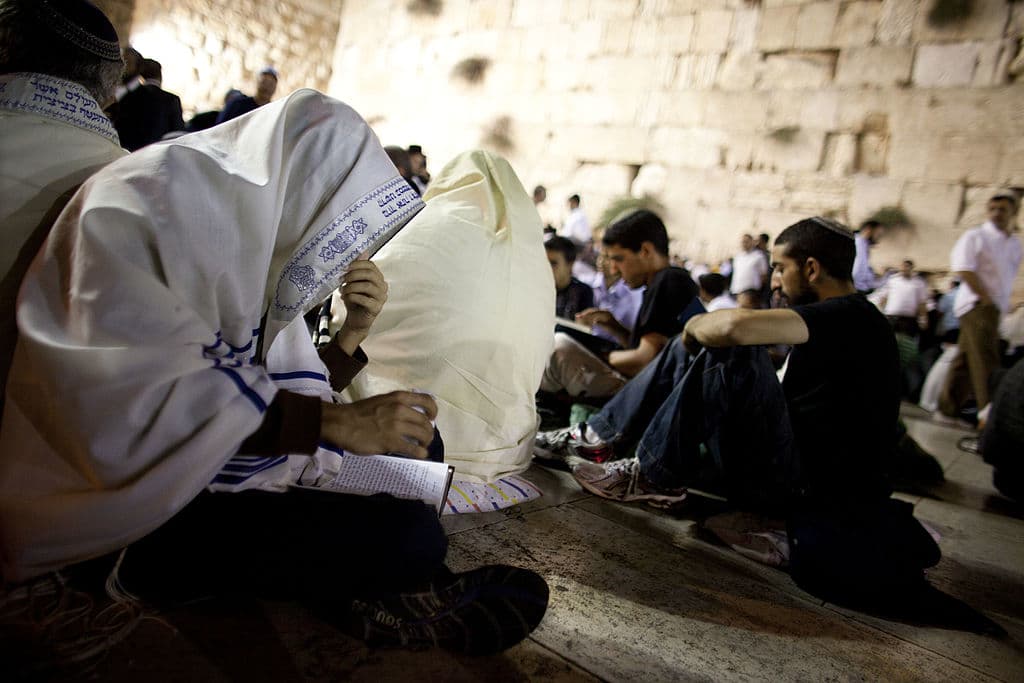
If we look at Torah and later biblical books, we can see that life revolved around the temple, its service, and the worship that took place there. It was where the High Priest entered the Holy of Holies on Yom Kippur to ask for forgiveness for the whole nation. According to Jewish tradition, the Ark of the Covenant, containing the stone tablets of the 10 Commandments, was housed in the First Temple.
When the Temple was destroyed, many feared that it was the end of the Jewish people. And so today, Jews continue to pray for its rebuilding and for the Messiah to come.
Our sages were able to create practices, blessings, and prayers that have served as a temporary representation designed to preserve the memory of the Temple and its rituals until, according to traditional Jewish belief, it is rebuilt in the messianic era.
For many modern Jews, especially those living thousands of years later, it can be very difficult to fully embrace and understand what the Temple meant. It’s why we have practices and customs during the Three Weeks to mourn, to refrain from celebratory and happy moments, and find the opportunities to further connect to Jewish history, heritage, and practice. This helps us truly embrace and understand the Jewish life that once was and the loss that has shaped Jewish identity for centuries.
What happens during the Three Weeks?
The period between the 17th of Tammuz and Tisha B’Av is one of gradually increasing mourning. Rather than observing all of the restrictions at once, as we build up to Tisha B’av, the prohibitions and mourning customs build up, making ‘the saddest three weeks on the Jewish calendar’ feel increasingly solemn.
The 17th of Tammuz
The Three Weeks begin with the Fast of the 17th of Tammuz, a minor fast day commemorating the breaching of Jerusalem’s walls before the destruction of the Second Temple.
Like other minor fasts, the only prohibition is that one does not eat or drink from sunrise until nightfall. Work, daycare, using technology, cooking, driving, and other everyday activities are all permitted and function as usual.
It is from this point that the mourning customs of the Three Weeks are observed. Similar to the Omer mourning period that takes place between Passover and Lag BaOmer, weddings are avoided, many men (and some women) refrain from shaving and haircuts, and many communities do not listen to music.
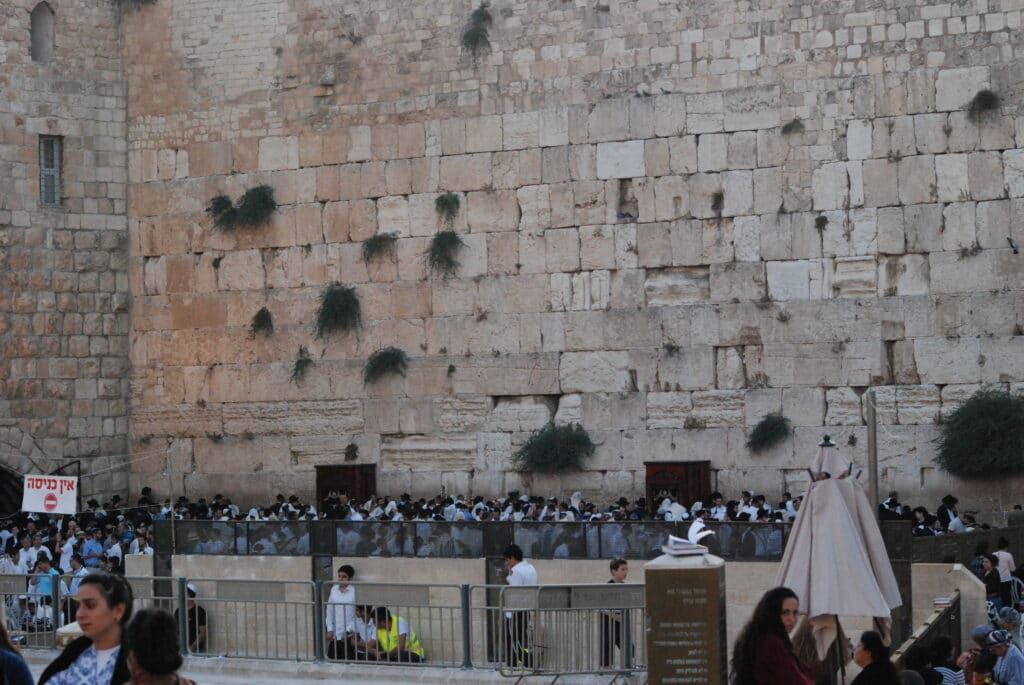
In addition to these customs practiced also in other mourning periods during the year, it is customary to be mindful that our actions are consciously ‘decreasing joy.’ What exactly does this mean?
Some will postpone vacations or flying during this time. Others refrain from purchasing new items, particularly new clothes or other significant items for which one says the gratitude blessing, Shehecheyanu, traditionally recited when experiencing something new or special. These are customs and not strict obligations, so customs differ between communities and even families.
The Nine Days
The prohibitions and mourning customs go up a notch once we reach the beginning of the month of Av, a period commonly known as the Nine Days.
From this point, it is customary not to eat meat or drink wine (except on Shabbat), not to do laundry except when necessary, and to postpone home improvements or other enjoyable activities. Some people who are more lenient during the Three Weeks about purchasing and vacationing become more strict during the Nine Days.
It is also important to note that customs differ among Jewish communities. Ashkenazi Jews, who are of Eastern and Central European descent, observe the full Nine Days, whereas Sephardic communities, who descend from Southern Europe, the Middle East, and Northern Africa, observe the most stringent customs only during the week that the Tisha B’av fast takes place.

The extent to which the prohibitions are practiced differs, but nonetheless, this is a period when many Jews are more intentional about what they do, what they eat, and make efforts to refrain from things that are purposely joyful while reflecting on one of the most tragic periods in Jewish history.
Tisha B’av
The mourning period reaches its peak on the fast of Tisha B’av, the 9th of Av.
Like Yom Kippur, the fast begins the night before at sunset, and is the only other fast that lasts 25 hours. During this fast, there are five prohibitions practiced: no eating and drinking, no putting on creams or lotions, no bathing, no wearing leather shoes, and no sexual relations.
Despite these similarities, Tisha B’Av and Yom Kippur have very different meanings, as well as the fact that Yom Kippur is from the Torah and Tisha B’av is Rabbinic. What does that mean and how does that influence each of these major fast days?
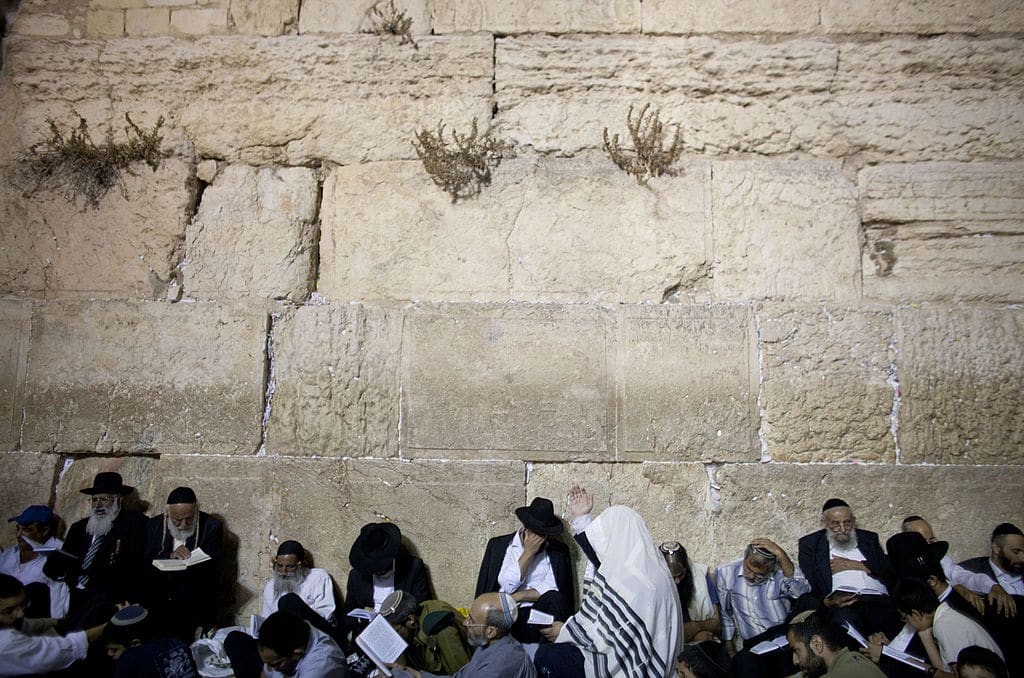
Yom Kippur, the holiest day of the Jewish year, is the day of atonement, whereas Tisha B’av is a true national mourning day. Yom Kippur is considered a holiday; Jews wear white, and the prohibitions are intended for people to distance themselves from their physical needs and functions, becoming closer to the angels and elevating themselves spiritually.
Tisha B’av, by contrast, is a sad and devastating day for the Jewish nation. Rather than elevating oneself spiritually, the focus is on grieving the destruction of the Temples and the many tragedies that followed. In synagogue, many will sit on stools or on the floor when participating in services and listening to the book of Lamentations, following personal mourning customs.
Because Tisha B’av is a rabbinic holiday, one can use technology, cook, drive, and even go to work or daycare if that is necessary. Yom Kippur is a Shabbat Shabbaton, an extra special Shabbat, and anything prohibited on Shabbat is also not done on Yom Kippur.
There is also an important practical difference regarding fasting. If someone is not able to fast, they just don’t fast on Tisha B’av; on Yom Kippur, however, Jewish law generally encourages those who cannot fast to be mindful of consuming just small portions of food and drink, only the minimum of what is necessary.
What happens after Tisha B’av?
Once the fast of Tisha B’av comes to an end, the mourning customs of the Three Weeks cease completely, and everything goes back to normal. Some will not have meat or wine until noon the following day, because according to Jewish tradition, the Temple continued burning into the 10th of Av. But in general, one can shave, play music, attend and hold weddings, go on vacation, bathe, or buy new clothes from this point onwards.
In fact, the weeks that follow are a popular time for celebrations, especially weddings. The warm summer weather makes it a perfect time for gatherings, and just a few days later comes the 15th of Av, a day of celebrating love on the Jewish calendar.
The Three Weeks are a time to reflect and pause, introspect, and connect to Jewish history. They force us to think of our actions, be mindful of our choices, and take into consideration the loss the Jewish people experienced 2,000 years ago. The Three Weeks allows us to think of how we can take steps forward to bring redemption, however we interpret that, improving the Jewish world and people one step at a time, toward a better world to come.