
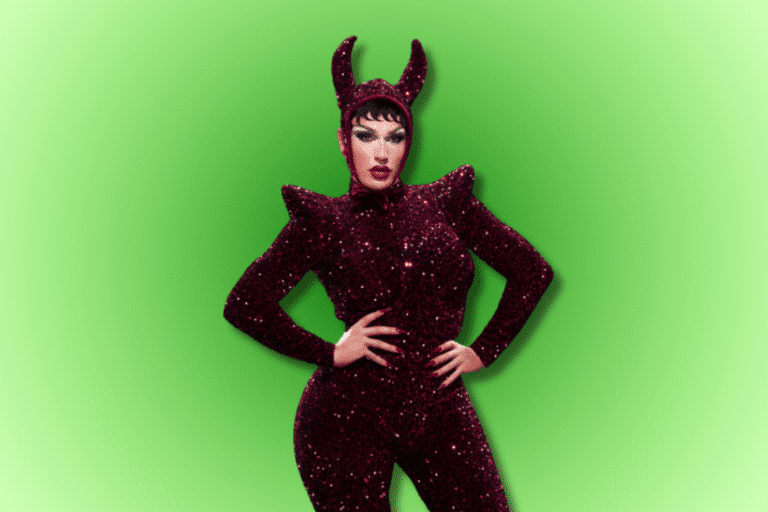
Peacock is opening the trapdoor again.
“House of Villains” Season 3 premieres Thursday, February 26, 2026, at 9 p.m. ET, with the first three episodes dropping right away. And tucked among the usual reality-TV rogues’ gallery of “Survivor” schemers and Bravo headline-machines is: Plane Jane, the “RuPaul’s Drag Race” Season 16 finalist whose “villain edit” felt like a job she auditioned to fill.
If you’re just meeting Plane Jane, here’s the rundown: she’s sharp, strategic, and was likely engineered in a lab to thrive on reality TV. She’s also Russian Jewish, and she’s talked openly about how that background shaped the world she grew up in.
So before “House of Villains” opens its doors this season, here’s everything you need to know about the resident pot-stirrer of “Drag Race,” Plane Jane, and her Jewish identity. It’ll leave you saying, “Mama, kudos for saying that, for spilling.”
The basics
Plane Jane was born Andrew Vladimir Dunayevskiy on Feb. 4, 1998. She grew up the child of Russian Jewish immigrants in an enclave of Jewish immigrants from the Soviet Union in Newton, Mass.
As a child, Plane Jane was a competitive ballroom dancer, a space dominated by Jews from the former Soviet Union and their children.
On Maddy Morphosis’ Give It to Me Straight, Plane Jane recalled a Drag Race tour trivia moment when Bob the Drag Queen pointed her out as “the 18-year-old Jewish kid,” an interaction she says stuck with her and helped fuel her determination to be the one holding the mic someday.
That made Plane determined to do drag, which she began performing in 2018: “In that small, tiny little interaction, I was like, ‘I never want to be on the receiving end of that ever again. I will never be looked at by this as if I’m like a prop, an audience member, a nothing. I saw in Bob’s eyes, in that moment, that he felt that he was the star and that I was just, you know, a little moment. And I said, ‘No, honey, I am the star. And one day, I will be holding that mic, and somebody else will be answering the trivia question,” she said, jokingly.
Plane Jane initially came up through the local drag scene in Boston before hitting the national stage on “RuPaul’s Drag Race” Season 16.
On her season, Plane built a reputation as both a polished and a polarizing queen, someone who openly embraced the “villain role.” She’s most known for her song “Burger Finger” and her now-iconic feud with Amanda Tori Meating. Ultimately, Plane finished third in the season’s finale, after a run that included four maxi-challenge wins.
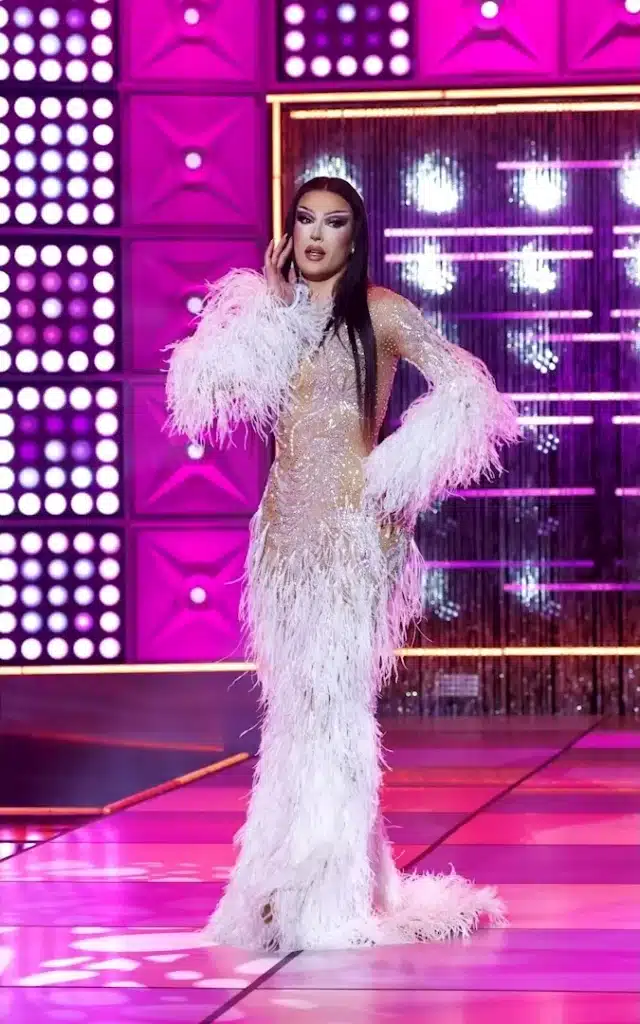
After “Drag Race,” Plane returned to Northeastern University to complete her Bachelor’s degree in business administration and communications.
Since the show, Plane Jane and her drag sister, Kori King, have begun a Season 18 review series on YouTube, “Kudos for Spilling.”
Plane Jane’s Russian Jewish identity
While on “Drag Race,” Plane briefly discussed growing up in a Russian immigrant home and the pressures that came with that.
On episode six of her season, Plane Jane opened up about the homophobia she experienced as a child, and the rigid gender expectations in the community she grew up in.

“My dad took my dolls away and said that ‘only nasty disgraceful faggots play with dolls,’” she told fellow contestant Xunami Muse. “One day, I remember coming into my room and seeing that my dolls got replaced with fire trucks. It was made very clear to me at a young age, even though I wasn’t quite aware of what homosexuality was, that the effeminate wasn’t good.”
A moment later, she broadened the context, describing the environment her parents came from and the social world she was raised in. “Listen, I don’t blame my dad. My dad’s a Russian Jewish immigrant. Russia is a very homophobic country. It’s hard to sort of just move past that signal. We grew up in a Russian immigrant circle, essentially. I wasn’t afforded the luxury of feeling that my parents would accept me no matter what, just because of the way that Russian culture is,” she added.


Plane also connected those early messages to how she moves through drag now, both onstage and on the show. “I feel like the reason why I have such a critical eye for drag, and the reason why I’m oftentimes so harsh, is because of my parents,” Plane continued. “I’m so acutely aware of how they perceive drag, which is: they don’t value it at all. If I get the sense that somebody’s not up to par, I kind of devalue their drag in my mind.”
“Russians are very critical individuals,” she concluded. “There are none of those polite pleasantries that you [have] in American culture. It’s a lot more blunt, and that’s part of who I am as well. At the end of the day, I do have these deep-rooted insecurities that are really hard for me to shake.”
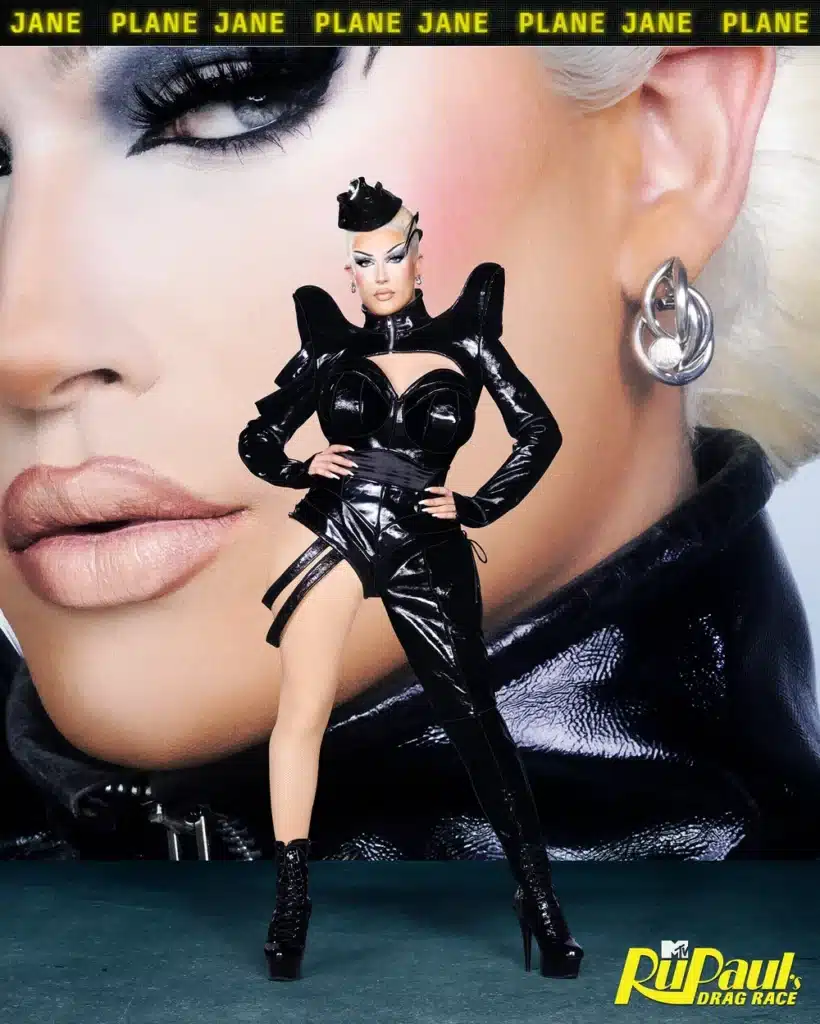
Plane explained that she used “Drag Race” as a way to connect her work to her culture. Throughout the season, she wove in nods to her Russian heritage on the mainstage, and she capped it off on the finale red carpet by arriving as a high-glam Baba Yaga. In Slavic folklore, Baba Yaga is the iconic forest witch figure, often imagined as an eerie old woman who lives in a hut on chicken legs and can be a villain, a gatekeeper, or an unlikely helper depending on the tale. It was a shift from how she’d approached drag before the show, when she says her performances weren’t especially rooted in that background.
“It wasn’t necessarily an aesthetic that I paid homage to. I was just kind of brunching and gigging and dragging,” she said, “but Drag Race gave me a really, really great opportunity to show more of my culture and represent it more in my drag and come up with more conceptual looks.”
She also acknowledged some of the season’s running commentary around her silhouettes, framing it as part of the push-and-pull between consistency and experimentation. “Arguably, a lot of people liked to call me out this season on having a few similar silhouettes here and there, hence ‘Bodysuit,’ my finale number,” she said. “But I also wanted to step out of my box and really do some cool, conceptual things with my drag because that’s part of who I am as a creative artist as well.”
“Showcasing my heritage and upbringing and my background, and bringing in that cultural aesthetic into my drag, was great,” she continued, “and I feel like it resonated with a lot of Russian queer people and a lot of Slavic queer people, so that’s really awesome.”
On the Season 16 “RuVeal Yourself” runway, where the assignment is to build a look around a reveal that says something about your persona, she leaned into a distinctly Russian reference point, starting with a Russian princess presentation before flipping the look to a more cheeky, Boston-coded version of herself.
Plane Jane has also nodded to her Jewishness in the low-stakes way a lot of American Jews do in December: by pointing out what she’s not doing, even as she works the season. In an Instagram post promoting holiday gigs, she wrote, “’Tis the season to capitalize on a holiday I don’t celebrate.”

Drag and Jewishness
Jewish gender-bending in performance has roots that predate modern drag culture by a long stretch. Purim has long made space for Jews to play with disguise, including cross-dressing in Purim celebrations and shpiels.
That instinct carried into Yiddish theater and popular entertainment, where cross-casting became a recognizable tradition. Scholars and theater historians trace a through-line from early Yiddish performance to explicitly “draggy” stage conventions, including well-known roles that were traditionally played by men, and a broader ecosystem of gender-bending Jewish performers. One standout is Pepi Litman, often described as a Yiddish drag king figure who performed in masculine and Hasidic garb to poke at the gender rules of Jewish life in her era.
In the modern American drag world, Jews have been there early, too. Flawless Sabrina (Jack Doroshow), a pioneering New York performer and community “mother” figure, is regularly credited as an important bridge between pageant-era drag, activism, and mentorship for gender-nonconforming people, and she came from a family of mixed Jewish and Italian heritage.
And then there’s “RuPaul’s Drag Race,” which has both featured Jewish contestants and folded Jewish references into the show’s language over the years. Longtime judge Michelle Visage has discussed that she was adopted by Jewish parents and raised Jewish, including going to Hebrew school and having a bat mitzvah in New Jersey.
On the contestant side, queens like Miz Cracker have been overt about weaving Jewish identity into their drag persona and commentary. Others, like Sasha Velour, have spoken and written about Jewish family history as part of their artistic worldview. And queens such as Alexis Michelle and Suzie Toot have described themselves as culturally Jewish while talking about what they carry forward from family tradition.