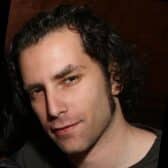

Twenty-year-old influencer Braden “Clavicular” Peters had barely settled into his chair at Israel’s Channel 13 before the interview fell apart.
The social media personality, who has amassed more than 1.5 million followers through content centered on “looksmaxxing” and self-improvement, was asked about a January incident in which he sang along to Kanye West’s “Heil Hitler” at a Miami nightclub alongside controversial streamers Sneako and Nick Fuentes.
Rather than answer the question, Peters criticized the line of questioning and walked off the set.
“Everyone in Israel is talking about what we’re doing in Israel, that’s good,” he said. “For you to start the interview in a negative manner doesn’t really make sense.”
His visit to Israel has sparked a fierce debate both inside and outside the country. Critics argue that Israel is legitimizing a man accused of misogyny who has publicly associated with antisemites and faces allegations in an ongoing civil lawsuit. Supporters counter that in an era when anti-Israel content dominates social media feeds, reaching a massive Gen Z audience may be worth the risk.
The question at the center of the controversy is larger than Clavicular himself: Where should Israel draw the line between engagement and endorsement?
Who is Clavicular?
Peters, who grew up in New Jersey, rose from relative obscurity to internet fame over the last several years by promoting “looksmaxxing,” an online subculture focused on maximizing physical attractiveness.
The movement has exploded in popularity among young men online, though critics have linked it to toxic masculinity, unhealthy body image expectations, and an obsession with status and dating success.
His content frequently centers on fitness, appearance, and dating advice.
His online persona has also attracted controversy. Peters has spoken publicly about using extreme methods to alter his appearance, including striking his jaw with a hammer, and the use of crystal meth to curb his hunger. Earlier this year, YouTube removed two of his channels for violating platform policies.
He has additionally faced criticism for videos in which he rates women’s appearances and speaks about them in explicitly sexual terms.
Why He’s Controversial
Peters’ critics point to a pattern of behavior that extends well beyond internet provocations.
In January, videos circulated online showing him singing along to Kanye West’s song “Heil Hitler” at Miami’s Vendôme nightclub alongside controversial streamers Sneako and Holocaust denier Nick Fuentes, both of whom have faced accusations of antisemitism. The incident drew widespread condemnation and remains a focal point of criticism surrounding his trip to Israel.
He has also faced legal troubles. In March, Peters was arrested on a battery charge stemming from an incident in Florida. Separately, he is named in an ongoing civil lawsuit filed by influencer Aleksandra Vasilevna Mendoza, known online as Alorah Ziva. The suit alleges, among other claims, that Peters sexually assaulted her while she was unconscious and injected her with Aqualyx, a fat-dissolving drug not approved by the U.S. Food and Drug Administration. Peters has denied the allegations through his attorney.
The allegations have not been adjudicated in court.
Adding to the controversy, Peters has repeatedly used sexually explicit language when discussing women during livestreams. During his time in Israel, clips circulated online in which he made comments about Israeli women that many viewers described as degrading and objectifying.
Taken together, critics argue, the controversy surrounding Peters is not the result of a single offensive moment, but a long trail of behavior that has led many to question why he was welcomed to Israel in the first place.
Israel’s Gamble
Peters himself has framed his trip as an effort to improve Israel’s standing among younger audiences. During his appearance on Channel 13, he said he came to demonstrate that Israel is safe and argued that “misconceptions” about the country are causing more damage than anything he has done.
Despite the backlash, some pro-Israel advocates argue that Peters’ visit represents a calculated risk in an increasingly hostile digital landscape.
Since the outbreak of the Israel-Hamas war, Israel has struggled to win over younger audiences online. While anti-Israel influencers routinely garner millions of views across TikTok, Twitch, and YouTube, many supporters of the country believe Israel has failed to effectively communicate with Gen Z.
“The thing is, we can’t ignore that this guy has enormous influence,” pro-Israel influencer Lizzy Savetsky said in a video responding to the controversy. “I don’t like it. But he is one of the leading voices with the next generation online, where we are getting crushed in the digital war.”
Savetsky argued that while Peters’ past behavior is indefensible, allowing him to see Israel firsthand could challenge misconceptions about the country. She added that if controversial figures such as Hasan Piker, Nick Fuentes, or Zohran Mamdani ever wished to visit Israel, they should be allowed to do so.
Others echoed a similar sentiment.
Kevin Deutsch, author of the Substack After October 7, said Peters’ “horrific track record” should not automatically disqualify him from experiencing Israel.
“We must not believe any human is irredeemable, however evil their prior actions,” Deutsch said. “I believe Israel was right to let Clavicular into the country to experience its culture, beauty, and equality first-hand.”
Underlying many of these arguments is a simple calculation: if someone with more than a million followers leaves Israel with a more nuanced perspective and shares that experience with his audience, the potential upside could be enormous.
Jewish rapper and longtime Israel advocate Kosha Dillz took a more measured view of the controversy.
“If Clavicular is the biggest problem for Israel, that’s a great problem to have,” he told Unpacked. Peters’ arrival comes at a moment when Israel’s public image abroad remains deeply polarized, particularly among younger Americans. Polling has consistently shown a widening generational divide over support for Israel since the outbreak of the war.
Dillz said Peters should apologize for his past behavior but noted that genuine apologies cannot be forced. “That has to come from within.”
Whether that gamble pays off remains an open question.
Others have taken a wait-and-see approach.
Yitz Jacob, a rapper and entrepreneur known as Y-Love, one of the first openly Black Orthodox Jewish hip-hop artists, said Peters should ultimately be judged by the content he produces while in Israel.
“He’s there now, so I think the content he makes in Israel should be evaluated,” Jacob told Unpacked. “If he does a lot of damage, that should be a factor in whether or not he’s ever let back in again.”
Jacob added that Peters’ visit presents an opportunity to encourage someone with a large platform to use his influence constructively.
Yet others have questioned those motivations. Olivia Reingold of The Free Press wrote after interviewing Peters that he told her he was in Israel to party and that Israeli women were attractive.
Clavicular’s livestreams from Israel have also generated backlash from some of his own followers, some of whom accused him of “selling out” and questioned his embrace of Israel.
His visit has also raised questions about why he was permitted to enter the country in the first place. In recent years, Israel has denied entry to a number of anti-Israel activists and public figures. Asked about Peters’ entry into the country, the Ministry for Diaspora Affairs and Combating Antisemitism declined to comment.
Not everyone welcomed Peters. Israeli influencer Aaron Morali told JTA that after recognizing Clavicular at Tel Aviv’s Loullie beach club, staff asked him to leave after learning of his associations with antisemites.
If Peters’ trip was intended to bridge divides, it has instead exposed them. Israelis, Jewish influencers, and even members of Peters’ own audience appear deeply divided over what, exactly, his visit represents.
Critics Say the Cost Is Too High
For many critics, however, the question is not whether Peters can change, but whether Israel should have rolled out the red carpet for him in the first place.
“Personally, I think anyone who vilifies Israel or Jews should be banned,” Hillel Fuld, an Israeli tech entrepreneur and outspoken advocate for the country, told Unpacked. “Like any country would do.”
Others drew a distinction between allowing Peters to enter the country and celebrating his arrival.
Shabbos Kestenbaum, a prominent pro-Israel activist who has become one of the pro-Israel movement’s most recognizable Gen Z voices, said he supports Israel’s decision to allow Peters into the country but was troubled by the enthusiasm shown by some influencers who appeared alongside him, posting photos, livestreaming with him, and treating him as a celebrity despite his history.
“My tension here is with the male Jewish content creators who did not merely associate with Clavicular but celebrated, normalized, and amplified his immoral, degenerate behavior,” Kestenbaum said.
He added that Peters “objectifies every woman he comes in contact with and represents the worst of human behavior.”
“If this is what defending Israel is in the 21st century, then count me out.”
Shoshanna Keats-Jaskoll, an Israeli writer and co-host of the JNS TV show “The Quad,” echoed that distinction.
“I don’t think he should’ve been barred, but I don’t think he should’ve been fawned over, his trip paid for and brought around to prey on Israeli girls and women,” she told Unpacked. “I think conversations could’ve been had and opportunities taken if he wanted to be here, but to bring him here as though he’s some sort of celebrity, to act like what he does is OK, is disgusting.”
Similar criticism emerged from other pro-Israel influencers. Jewish Jess, who lives in Israel, argued in a video post that Peters’ visit had become an embarrassment. “We now look stupid,” she said. “Our girls are fawning. Our men are treating him like a VIP.”

Videos shared online showed Peters being mobbed by fans during his time in Israel. During one livestream, he made sexually explicit comments about Israeli women, further fueling criticism that parts of the country’s influencer community had mistaken notoriety for goodwill.
Golda Daphna, a pro-Israel Orthodox influencer and survivor advocate, said she found the celebration of Peters particularly disturbing, given the allegations against him.
“When you project your moral authority, people respect you more,” Daphna told Unpacked. “To try so hard to get someone to love you who has used the words of people who sought the destruction of the Jews shows no integrity.”
Daphna said she was especially troubled that some of the same voices that have spoken forcefully about sexual violence committed on October 7 were willing to overlook allegations against Peters.
Some critics were particularly disturbed by the optics surrounding Peters’ interactions with Israeli women. During livestreams from Israel, Peters made several sexually explicit comments, prompting accusations that influencers had prioritized virality over basic standards of decency.
“Clavicular came to embarrass and degrade Jewish women,” Sivan Hadari, founder of HER Tel Aviv, an organization that supports women who immigrate to Israel, told Unpacked. “He should have never been allowed in the country.”
For critics, the controversy has become about more than one influencer’s visit. It has become a referendum on how far Israel should go in its efforts to win the online battle for public opinion, and whether some lines should remain uncrossed, regardless of the potential audience on the other side.
Hadari believes the controversy has become about more than Peters himself. In her view, his visit exposed uncomfortable questions about influencer culture, accountability, and who bears responsibility when controversial figures are embraced by the Jewish community.
She noted that while much of the backlash has focused on Shira Braun, the IDF soldier who appeared on Peters’ livestream and was later reprimanded, many of the male influencers who welcomed him to Israel have faced comparatively little scrutiny.
“There is no excuse for what she did,” Hadari told Unpacked. “But why is she the only one being ostracized? There were male influencers who fawned over him, and we don’t have any statement from them.”
For Hadari, Peters’ visit became a cautionary tale about the pursuit of online relevance at any cost.
“The male influencers flew too close to the sun and got burned,” she said. “They care about being famous. That’s it.”
Emily Schrader, an American-Israeli journalist, argued that any private expressions of regret are beside the point.
“It doesn’t matter what Clavicular ‘feels inside,'” she wrote on social media. “It matters what he did. He has not apologized.”
Whether Clavicular leaves Israel with a different perspective remains unclear. But his visit has already revealed something about Israel itself: In an age of livestreams, algorithms, and influencer culture, the line between persuasion and validation has never been blurrier.