

Jewish women have long shaped religious life, scholarship, and community, even when institutions were slower to recognize their leadership.
Not all of them lead in the same way. Some are senior rabbis at major congregations, some are writers and public thinkers, and some have carved out distinctly online audiences through social media, newsletters, and podcasts. What connects them is their ability to translate Jewish tradition, identity, and values for a world that increasingly encounters religion through screens as much as sanctuaries.
During Women’s History Month, it feels especially fitting to spotlight some of the women rabbis worth knowing right now.
Major public voices
Rabbi Angela Buchdahl
Rabbi Angela Buchdahl has become one of the most recognizable faces of modern American Judaism, pairing the stature of a major pulpit rabbi with the warmth and emotional fluency of a gifted cantor. Born in Seoul to a Jewish American father and a Korean Buddhist mother, she was the first Asian American ordained as both a cantor and a rabbi in North America and is now the first woman to lead Central Synagogue in New York. Her leadership has long stood out for its musicality, openness, and ability to make Jewish life feel accessible and alive, and her 2025 memoir,“Heart of a Stranger,” uses her story of faith, identity, and belonging to speak to a broader American conversation about race, difference, and what it means to find a spiritual home.
Rabbi Sharon Brous
Rabbi Sharon Brous is one of the most prominent rabbis in American Jewish life, with an influence that stretches well beyond Los Angeles. Since founding IKAR in 2004, she has become known for a form of Jewish leadership that feels both deeply personal and unmistakably public, grounded in prayer and community but always in conversation with the moral questions of the moment. Her sermons often move between intimacy and urgency, and that same sensibility carries through her book “The Amen Effect,” which asks what it means to truly show up for other people. Over time, Brous has become not just a major pulpit rabbi, but one of the clearest Jewish voices in the broader American conversation about faith and public life.
Rabbi Danya Ruttenberg

Rabbi Danya Ruttenberg is one of those rabbis whose influence extends far beyond any single institution. Through her newsletter and writing platform “Life Is a Sacred Text,” she has built a large, loyal readership around the idea that Torah can help people navigate the messier parts of modern life, including accountability, grief, justice, and change. Best known for her award-winning book “On Repentance and Repair,” Ruttenberg brings a voice that is intellectually serious without feeling remote, which is a big part of why she has become such a visible presence in Jewish and broader public conversation.
Rabbi Delphine Horvilleur

Rabbi Delphine Horvilleur has become something more than a rabbi in France. She is a Paris-based public intellectual, bestselling author, and media figure who has turned liberal Judaism into part of the broader French cultural conversation. As a rabbi at Beaugrenelle Synagogue and the editorial director of Tenou’a, she writes and speaks about politics, feminism, mortality, identity, and belief with a voice that feels literary, unsentimental, and distinctly French. Her memoir “Living with Our Dead,” drawn from the pastoral realities of funerals, grief, and memory, helped make her a household name well beyond Jewish circles, and the Max series Reformed was inspired by her.
Rabbis reshaping ritual and community
Rabbi Rebecca Keren Jablonski

Rabbi Rebecca Jablonski has built a distinctly modern model of Jewish leadership as a kind of Jewish life concierge, working with families in New York and beyond to create rituals that feel personal rather than one-size-fits-all. Through her private rabbinic and educational work, she designs individualized b’nai mitzvah experiences, tailoring learning, liturgy, music, and other details to fit each family’s level of observance, goals, and vision for the day, including Scarlett Cohen’s now-viral Loveshack Fancy bat mitzvah. She also officiates weddings and other lifecycle events, often for families who are unaffiliated with a synagogue or want to mark Jewish milestones in more flexible, customized settings. That work has expanded into a broader public-facing brand through her book “Confessions of a Female Rabbi,” and her online persona, “My Hot Rabbi,” which gives her a more playful, digitally savvy presence beyond the bimah.
Rabbi Tarlan Rabizadeh

Rabbi Tarlan Rabizadeh is part of a newer generation of rabbis using both institutions and social media to broaden the conversation around Jewish identity. A Los Angeles-born Persian American rabbi, she leads Jewish engagement at American Jewish University and has become known for creating accessible entry points into Jewish life, especially for people exploring Judaism, conversion, or community outside rigid denominational boxes. She has also become one of the most visible Persian American women in the rabbinate, bringing the textures of Iranian Jewish life into spaces often shaped more by Ashkenazi norms. She has spoken about building bridges between Persian, Mizrahi, and Ashkenazi communities, and that commitment has carried into both her institutional work and her public advocacy, including during the 2022 Iran protests and the current war with Iran.
Rabbanit Dasi Fruchter

Rabbanit Dasi Fruchter is helping redefine what Orthodox synagogue leadership can look like, not by tweaking an old model, but by building a new one almost from scratch. Since founding the South Philadelphia Shtiebel in 2019, she has grown it into one of the most talked-about experiments in American Jewish life: an Orthodox shul led by a woman, with no required dues, a sanctuary configured for men, women, and nonbinary congregants, and a community culture that spills well beyond Shabbat into meal trains, prayer requests, and daily check-ins on Slack. The Shtiebel began in a Vespa scooter shop, kept going through the pandemic in backyards and parking lots, and is now so full on a typical Shabbat that growth is measured in strollers. Fruchter’s leadership style, shaped by community organizing and what she calls a commitment to really seeing what people need, has made her not just a rabbinic first, but a model for how Orthodox communities might grow in a very different Jewish future.
Rabbanit Leah Sarna

Rabbanit Leah Sarna represents a particularly compelling kind of modern Orthodox leadership: rigorous, public-facing, and unapologetically feminist. As the spiritual leader of Kehillat Sha’arei Orah and a faculty member at both Drisha and the International Beit Din, she brings serious Torah learning into conversation with questions of women’s leadership, halakha, and Jewish belonging. Her feminism is not just theoretical. It shapes both her teaching and her writing, including lectures on women in Orthodoxy and a forthcoming book on pregnancy and birth in Jewish law, making her one of the more thoughtful voices pushing Orthodox feminist discourse into wider view.
Rabbis building audiences online
Rabbi Arielle Stein
Rabbi Arielle Stein is part of a new cohort of rabbis making Jewish leadership feel more textured, personal, and visually alive. An assistant rabbi at Congregation Rodeph Sholom and a 2024 HUC ordinee, she pairs serious text learning with an artist’s eye, drawing on her background in studio art and her interest in the visual possibilities of Jewish tradition. That artistic sensibility shapes her online presence too. Besides going viral for her “freaky shoe” collection, she co-created the Instagram account Rabbinic Fit Check, a playful look at what clergy wear across the many strange, sacred, and deeply practical demands of rabbinic life, and was later featured in Vogue for the way she uses fashion, small designers, and even shoes as an extension of hiddur mitzvah, the Jewish idea of beautifying ritual.
Rabbi Diana Fersko and Rabbi Karen Glazer Perolman


Rabbi Diana Fersko and Rabbi Karen Glazer Perolman occupy slightly different corners of Jewish life, but together they have created a voice that feels smart, modern, and lived-in. As the co-founders of “Modern Jewess,” they built a project where Judaism meets feminism, style, identity, and the everyday messiness of real life. The monthly snail-mail publication mixes essays, recipes, Jewish teachings, and cultural reflections into something that feels part newsletter, part ritual object, and part ongoing conversation about Jewish womanhood now.
Fersko is the more overt public commentator of the two, with a profile shaped by her book “We Need to Talk About Antisemitism” and her writing and speaking on Jewish identity, visibility, and public life. Her voice is thoughtful and accessible, with a knack for making big cultural questions feel immediate and personal.
As senior associate rabbi at Temple B’nai Jeshurun in Short Hills, New Jersey, Perolman has built a reputation for speaking candidly about family, grief, belonging, and the emotional texture of Jewish life, giving her work a warmth that feels grounded rather than abstract.
Rabbi Sandra Lawson
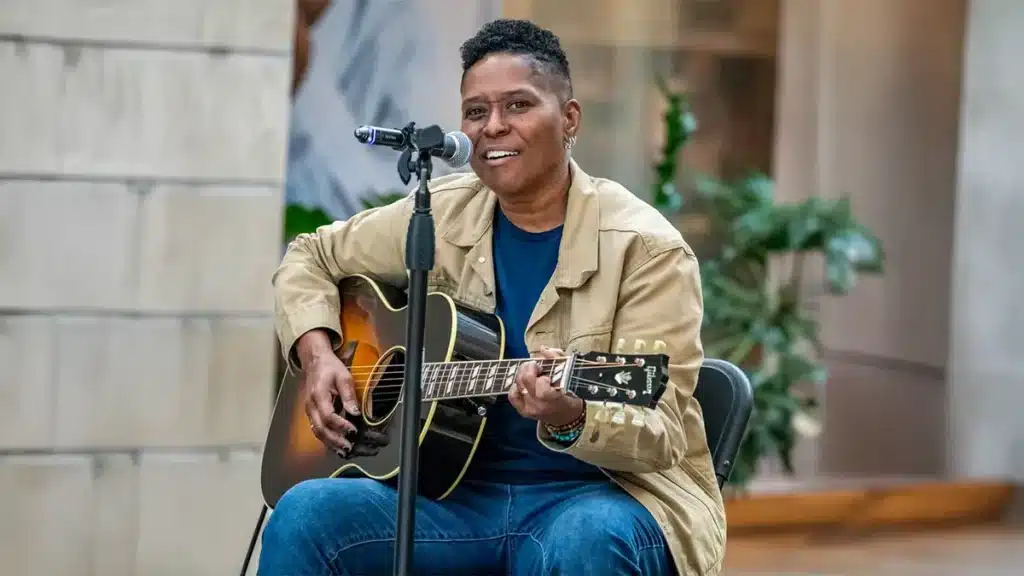
Rabbi Sandra Lawson has built one of the most distinctive public profiles in Jewish life by bringing together Torah, racial justice, music, and a genuinely online presence. Now the executive director of Carolina Jews for Justice, a statewide grassroots organization focused on electoral justice, immigrant rights, and community safety, she describes herself as an activist, writer, public speaker, and musician, and has been known online as both the “Snapchat Rabbi” and the “TikTok Rabbi.” A 2018 graduate of the Reconstructionist Rabbinical College, Lawson has also been an outspoken voice about building a more inclusive Jewish community and about what it means to move through Jewish spaces as a Black, queer woman rabbi.
Rabbi Tali Adler

Rabbi Tali Adler is part of a newer generation of Orthodox women rabbis building influence through teaching, writing, and digital Torah rather than just the traditional pulpit route. A faculty member at Hadar and a graduate of Yeshiva Maharat, she teaches Talmud, Tanakh, and parshanut, and has become especially visible through Hadar’s essays and podcasts on the weekly Torah portion. Her work is marked by intellectual depth and emotional sensitivity, often bringing classical Jewish texts into conversation with questions of grief, obligation, storytelling, and contemporary Jewish life.
Rabbi Yael Buechler
Rabbi Yael Buechler has built one of the most distinctive social media brands in Jewish life by turning Instagram into a mix of holiday guide, pop-culture commentary, and low-key Jewish education. Through Midrash Manicures, the platform she founded, she reimagines Jewish expression through the kind of social media content that feels native to the platform: Hanukkah and Passover shopping hauls, “weirdest Jewish finds” reels, merch-fail roundups, and visually playful holiday content that makes Judaism feel colorful, funny, and easy to enter. At the same time, her feed is not just for Jews already fluent in the references. A lot of her content doubles as accessible explanation, giving non-Jewish followers and allies a way into Jewish holidays, symbols, and culture without making it feel like a lecture. Alongside that work, she has expanded her brand through writing for outlets including JTA, Kveller, Insider, and the Los Angeles Times, making her a strong example of a rabbi whose influence extends well beyond traditional institutional settings.
