

Tu Bishvat, known as the “New Year of the Trees,” is an ancient Jewish holiday that originated as an agricultural marker, used to determine the age of trees and the status of their fruit. Over time, its meaning has expanded far beyond the orchard. In the centuries since, Tu Bishvat has evolved into a moment for reflection on humanity’s relationship with the natural world and our responsibility to care for it.
In 2026, Tu Bishvat begins at sundown on February 1 and then ends at sundown on February 2. To understand why it matters, it helps to start with what Tu Bishvat is — and how its meaning has changed over time.
What is Tu Bishvat?
In its earliest form, Tu Bishvat functioned as a technical cutoff date in Jewish agricultural law, determining when fruit could be eaten and how it was taxed. In ancient Israel, a tree’s fruit from its first three (halachic) years, a period known as orlah, could not be eaten at all. The fruit of the fourth year, called netah revai, was considered holy and had to be brought to Jerusalem to be eaten in a state of ritual purity. Only from the fifth year onward could the fruit be eaten freely.
Additionally, Tu Bishvat marked the cutoff for tithing (ma’aser) cycles. Fruit that blossomed before Tu Bishvat was assigned to the previous year’s tithes, while fruit that blossomed after Tu Bishvat counted toward the new year. This affected which tithe applied, whether it was ma’aser rishon (first tithe given to the Levites), ma’aser sheni (second tithe eaten in Jerusalem), or ma’aser ani (tithe for the poor, depending on the year of the seven-year cycle).
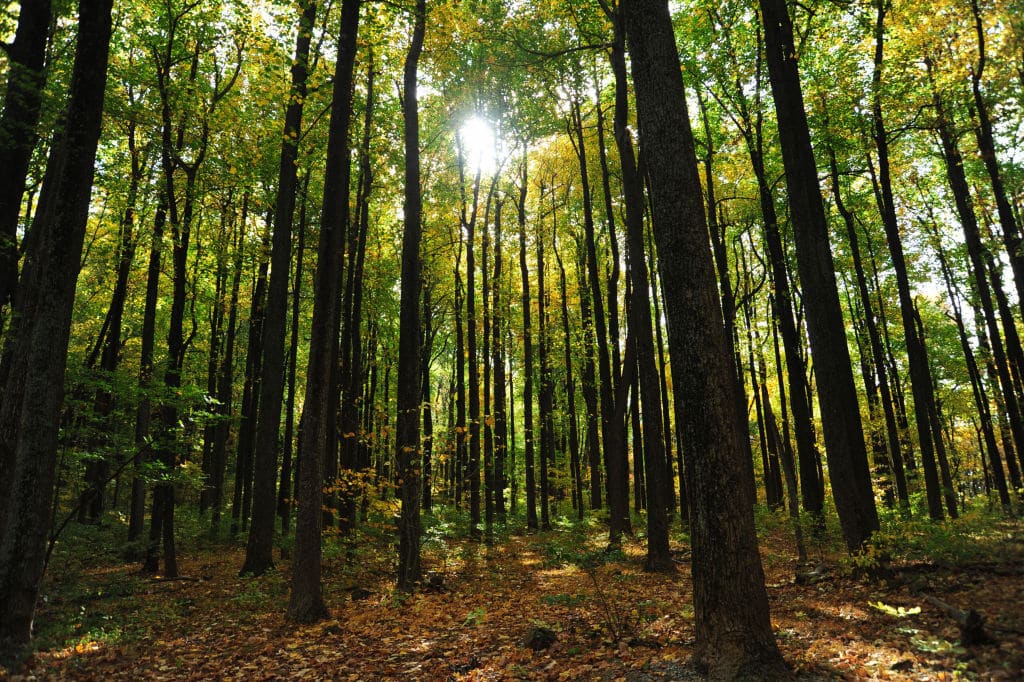
While those laws are no longer practiced in daily life, they shaped a Jewish framework that treats nature not as something to exploit, but as something to steward.
By the 16th-century, Kabbalists in Safed began reimagining Tu Bishvat in spiritual terms, creating Tu Bishvat seders, modeled loosely on the Passover tradition. These seders used fruit, wine, and symbolic rituals to connect spiritual growth with the natural cycles of the year. Participants drank four cups of wine, progressing from white to red, symbolizing the four seasons, and applying the four spiritual “worlds” of Kabbalah into practice.
After the rise of Zionism and mass waves of immigration to Israel from the diaspora in the late nineteenth and early twentieth centuries, Tu Bishvat was revived as a day of meaningful service with hands-on engagement and care for the environment.
How is Tu Bishvat honored today?
Today, Tu Bishvat is marked less by formal ritual and more by intention. There is no single “right” way to observe the holiday. Instead, many Jews use it as a flexible moment to connect Jewish values with contemporary concerns about sustainability, responsibility, and care for the planet.
For some, that connection is social. Hosting a casual Tu Bishvat dinner or tasting of the seven species associated with the Land of Israel — wheat, barley, grapes, figs, pomegranates, olives, and dates — has become a popular way to mark the day. Others choose to participate in environmental volunteering, such as park cleanups, community gardens, or food justice initiatives, treating Tu Bishvat as a hands-on opportunity to give back.

Many people also observe Tu Bishvat on a more personal level. The holiday has become a natural moment to reflect on consumption, waste, and daily habits, encouraging small but meaningful changes that align with Jewish values of stewardship and restraint. In classrooms and family settings, Tu Bishvat is often used to spark conversations about environmental responsibility and humanity’s role in protecting the world we inhabit.
Since 1892, tree planting has become a central symbol of the holiday, particularly in Israel, but its meaning has broadened. For many, planting a tree is less about the act itself and more about what it represents: long-term thinking, responsibility to future generations, and trust in growth that may not be immediately visible.
Tu Bishvat and environmental values
Jewish tradition places strong emphasis on environmental responsibility, including the principle of bal tashchit, the prohibition against wasteful destruction. In contemporary Tu Bishvat programming, this value often serves as a lens for thinking about sustainability, mindful consumption, and the impact of everyday choices. Rather than focusing on abstract statistics or distant crises, Tu Bishvat invites individuals and communities to ask practical questions about how their actions affect the world around them.
Clean water reflects core Tu Bishvat values of stewardship, balance, and responsibility. Just as trees cannot grow without water, human life and dignity depend on access to clean, living water (mayim chayim). Tu Bishvat reminds us that we are caretakers of the Earth, obligated by bal tashchit to prevent environmental harm to protect shared resources. Honoring this day means recognizing that safeguarding water is essential to sustaining all life.
Why Tu Bishvat still matters
Today, Tu Bishvat is widely regarded as the “Jewish Earth Day,” a moment when ancient agricultural wisdom meets modern environmental consciousness. What began as a technical date in the Jewish calendar for calculating the age of trees has evolved into a spiritual and ethical pause, inviting reflection on humanity’s relationship with the natural world without prescribing a single response.

At its core, Tu Bishvat reminds us that caring for the earth is not a modern innovation but a deeply rooted Jewish value. By connecting tradition with contemporary ecological realities, the holiday invites individuals and communities to turn reflection into responsibility and to plant values that will sustain future generations.
In an era of climate crisis and ecological imbalance, Tu Bishvat challenges individuals and communities to move beyond symbolic gestures and toward sustained action — protecting resources, uplifting vulnerable communities affected by environmental harm, and honoring the earth as a divine trust.
Ultimately, Tu Bishvat is not only about trees; it is about responsibility, continuity, and hope. By reconnecting Jewish tradition with contemporary ecological realities, the day calls on us to plant not just roots in the soil, but values that will sustain future generations. In doing so, Tu Bishvat transforms remembrance into responsibility, reminding us that the health of the planet and the moral health of society are inseparable.
