

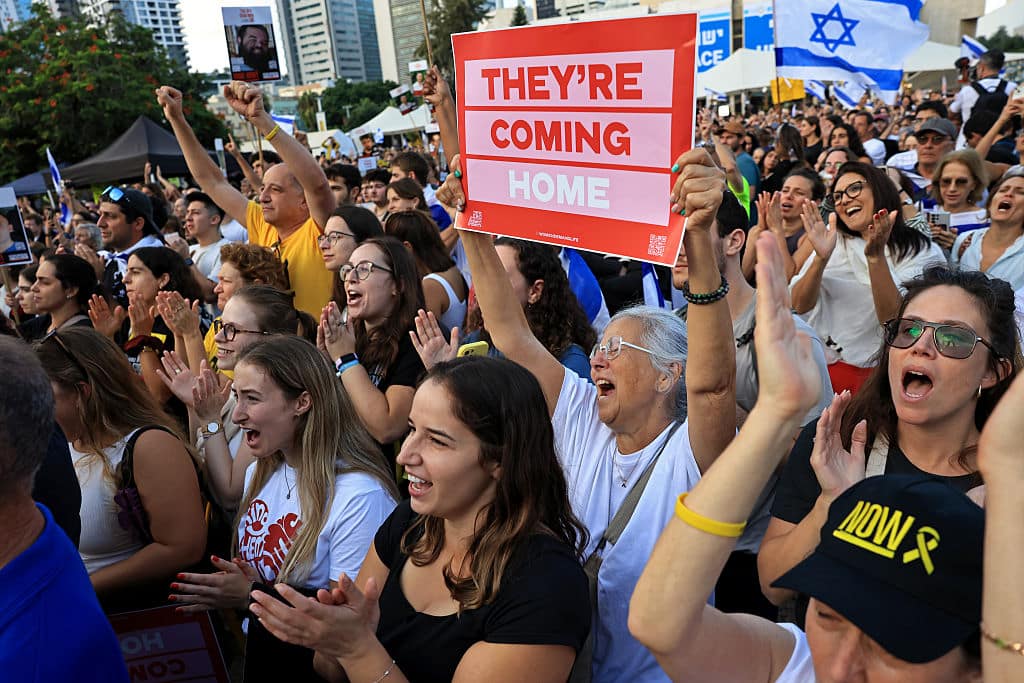
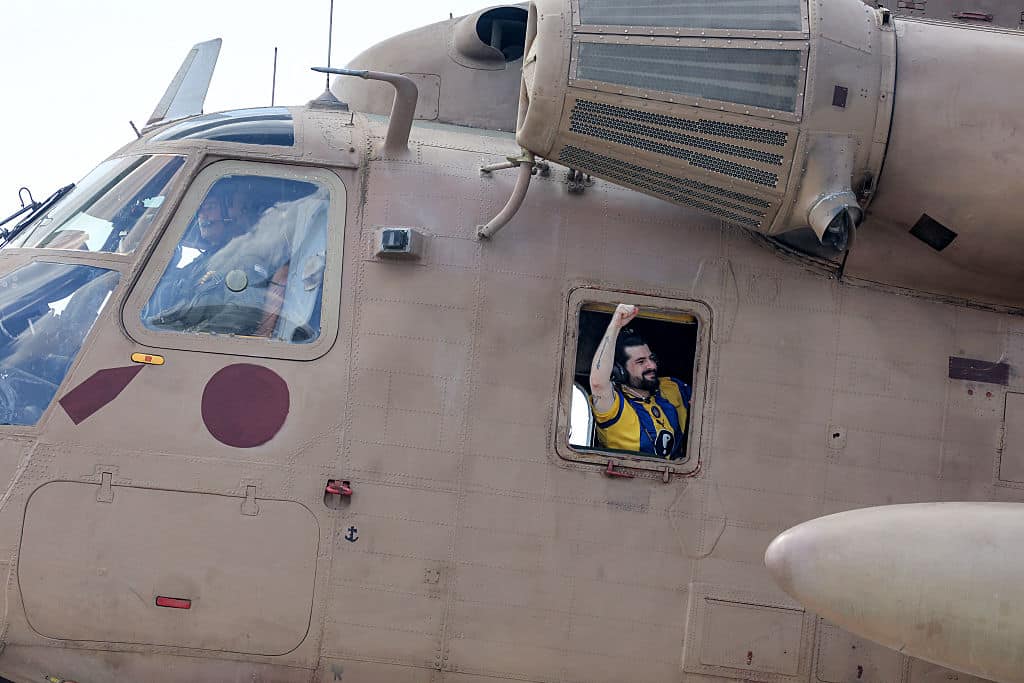
Twenty living Israeli hostages were released by Hamas and returned to Israel last week as part of the hostage and ceasefire deal reached in early October after 737 days in captivity in Gaza.
The living hostages, Bar Avraham Kuperstein, Evyatar David, Yosef-Chaim Ohana, Segev Kalfon, Avinatan Or, Elkana Bohbot, Maxim Herkin, Nimrod Cohen, Matan Zangauker, David Cunio, Eitan Horn, Matan Angrest, Eitan Mor, Gali Berman, Ziv Berman, Omri Miran, Alon Ohel, Guy Gilboa-Dalal, Rom Braslavski, and Ariel Cunio were brought home.
Only four of the bodies of the 28 deceased hostages were released on Monday evening, including the bodies of Yossi Sharabi, Guy Illouz, Bipin Joshi, and Daniel Perez. On Tuesday evening, Hamas transferred four more bodies to Israel. While three of the bodies were identified as Eitan Levy, Tamir Nimrodi, and Uriel Baruch, the fourth was discovered to be the body of a Gazan dressed in an IDF uniform. On Wednesday night, the bodies of Inbar Hayman and Muhammad Al-Atresh were handed over to Israel. Early Saturday morning, the body of Eliyahu Margalit was handed over to Israel. On Saturday night, the bodies of Ronen Engel and Sontaya Ukkharsri were transferred to Israel. On Monday night, the body of Tal Haimi was returned to Israel. The bodies of Aryeh Zalmanovich and Tamir Adar were returned on Tuesday night, meaning the bodies of 13 hostages were still being held in Gaza.
Hamas claimed that it is unable to access or find some of the bodies, although Israeli officials had expected more than just four bodies to be returned last week. Israel has insisted that it has intelligence showing that Hamas is lying about the number of bodies it has already located. Before the ceasefire, Hamas had only claimed that it had lost the location of nine of the bodies.
The agreement signed between Israel and Hamas stipulated that all Israeli hostages must be released within 72 hours of the Israeli government approving the deal. If any of the remains of the deceased hostages couldn’t be recovered within that time period, Hamas would be required to provide Israel with any information it has on the location of the remains. A task force involving the deal mediators and the Red Cross is set to work to ensure all the remains are recovered.
In response to Hamas’s violation of the ceasefire agreement, Israel decided that it would delay the reopening of the Rafah Crossing between Egypt and Gaza, which was set to reopen on last Wednesday, and to slow the increase in the amount of humanitarian aid entering Gaza.
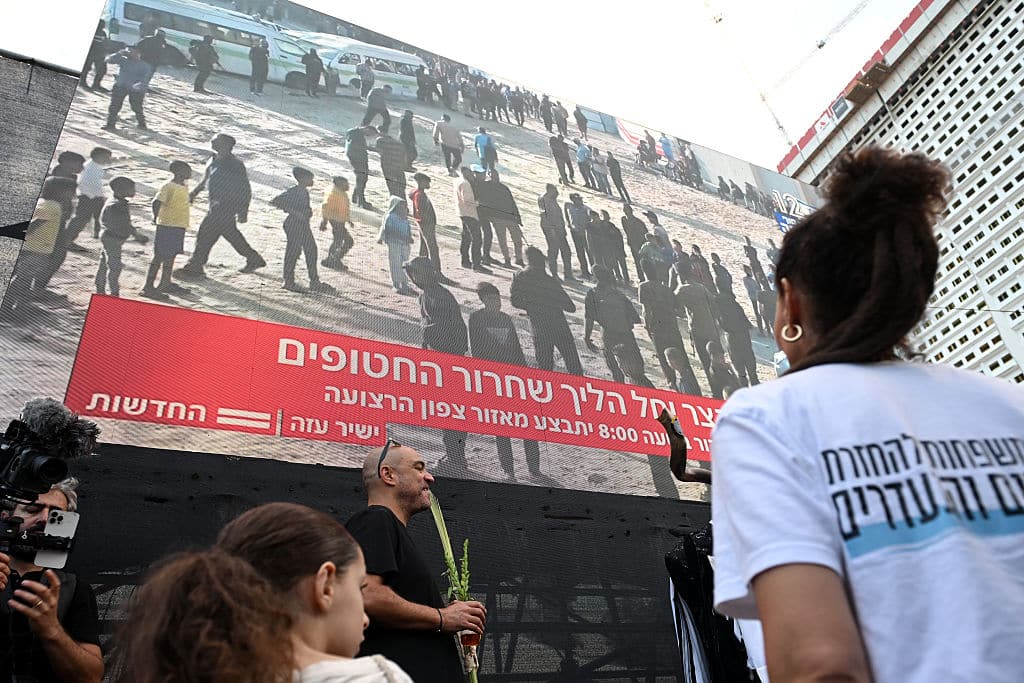
In return for the release of the hostages, Israel released nearly 2,000 Palestinian security prisoners last Monday, including 250 serving life sentences or other lengthy terms.
A task force formed by the U.S., Qatar, Egypt, Turkey, and other countries, approved by both Israel and Hamas, will work to ensure the ceasefire is implemented. Several hundred American troops arrived in Israel last week to start monitoring the ceasefire. Troops from Egypt, Qatar, Turkey, and the United Arab Emirates are expected to join the U.S. team.
Only the first phase
This agreement is only the first phase of a 20-point plan released by U.S. President Donald Trump in late September. At the end of this phase, Israel will still hold over half of the Gaza Strip, and Hamas will remain armed and present in Gaza.
The rest of Trump’s plan includes steps meant to lead to a complete Israeli withdrawal from Gaza and an end to the war between Israel and Hamas.
These steps include:
- The disarmament of Hamas and other terrorist groups in Gaza.
- The creation of an international security force to enforce this disarmament and police the Strip.
- The creation of a technocratic, apolitical Palestinian committee, joined by international experts, to temporarily govern Gaza.
- A “Board of Peace” run by the U.S. and other countries to handle the funding for Gaza’s reconstruction.
- The implementation of sweeping reforms in the Palestinian Authority, including educational and political reform. Once these reforms are completed, control of Gaza will be transferred from the temporary committee to the PA.
- The plan includes other details as well about the entry and exit of Palestinians from the Strip and the handling of humanitarian aid.
While finalizing the hostage deal was already difficult, achieving these other steps will be even more of a challenge. Hamas has already publicly rejected many of these demands, including the requirement to disarm and to give up any role in the future governance of Gaza. In the days since the first phase of the agreement was signed, the terrorist movement repeatedly reiterated its rejection of these demands.
Additionally, Israel has made clear it won’t fully withdraw from Gaza until its war goals are achieved, including the dismantling of Hamas and the demilitarization of Gaza.
World leaders meet in Sharm el-Sheikh to discuss Israeli-Palestinian peace
After visiting Israel, Trump headed to Sham el-Sheikh for a summit with leaders from Qatar, the Palestinian Authority, Turkey, France, Germany, the United Kingdom, Spain, Italy, Jordan, Kuwait, Bahrain, Indonesia, Azerbaijan, Greece, Armenia, Hungary, Pakistan, Canada, Norway, and Iraq. The Secretary Generals of the United Nations and the Arab League, as well as the president of the European Council, also took part in the summit.
Israeli Prime Minister Benjamin Netanyahu was also invited at the last minute but declined, citing the Shmini Atzeret holiday, which began that evening. Israeli prime ministers, including Netanyahu, generally avoid holding official functions on the Sabbath and holidays, although there have been exceptions for certain press statements and urgent meetings. The rejection of the invitation sparked confusion in Israel, as Netanyahu and other prime ministers have made exceptions for smaller events, including congratulatory messages during the Olympics.
Government officials told Israeli media that the actual reason Netanyahu declined the invitation was due to the concern that he would need to shake the hand of Palestinian Authority President Mahmoud Abbas. Abbas was also invited late to the summit, just a day before the event. Additionally, several Arab leaders who planned to participate in the summit reportedly threatened to withdraw if Netanyahu joined. Several of the countries taking part do not have diplomatic relations with Israel and generally refuse to interact with Israeli officials.
At the end of the event, Trump and several regional leaders signed a declaration reaffirming their commitment to carry out Trump’s peace plan. However, the summit did not result in any new details being ironed out, and Trump and other leaders dodged questions concerning how and when the next phases of the plan would play out.
Ahead of the summit, Egyptian Foreign Minister Badr Abdelatty told The Associated Press that 15 Palestinian technocrats have already been chosen to lead the temporary administration of Gaza. He added that this list has been approved by both the Palestinians and Israel, although he did not list any of the names.