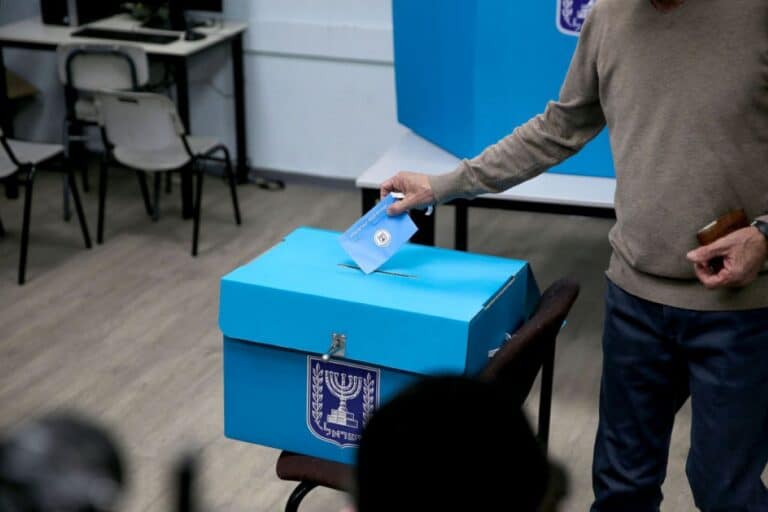
Israeli voters will head to the polls on October 27 to elect a new parliament — but they won’t vote directly for their next prime minister. Instead, they’ll choose a party, setting off a process of negotiations that will determine who leads the government.
Benjamin Netanyahu’s future is at the center of the election, but the choice facing voters goes beyond one man. Parties disagree over security, the role of religion in public life, the cost of living, and who should be held responsible for the failures of October 7. And once the votes are counted, they’ll have to decide which of those differences they can set aside to govern together.
Israel’s election can be understood as two contests: one for votes and another for coalition partners. Even the party that wins the most seats won’t necessarily lead the next government. To understand why — and what’s at stake — here’s a guide to how Israelis vote, the parties competing for power and the issues dividing them.
How does voting work in Israel?
Israelis don’t vote directly for a prime minister, and they don’t elect a representative for their local district. Instead, the entire country votes as one district, with each voter choosing a party.
At the polling station, voters select a paper slip for their chosen party, place it in an envelope and drop it into the ballot box. Each party presents a ranked list of candidates, and voters cast their ballot for the list as a whole. They can’t choose individual candidates or change their order.
The votes determine how the 120 seats in the Knesset, Israel’s parliament, are divided. Under Israel’s system of proportional representation, a party’s share of seats roughly reflects its share of the vote.
But first, a party must win at least 3.25% of all valid votes to enter the Knesset. Parties that fall short receive no seats, and their votes are excluded when the seats are divided.
For example, if a party receives about 10% of the votes cast for parties that pass the threshold, it would win roughly 12 seats. The first 12 candidates on its list would then enter the Knesset. The exact allocation also depends on how remaining seats are distributed.
How is a government formed?
Winning the most seats doesn’t automatically make a party’s leader prime minister. To form a government, a leader usually needs the support of at least 61 of the Knesset’s 120 members. No single party has ever won that many seats on its own.
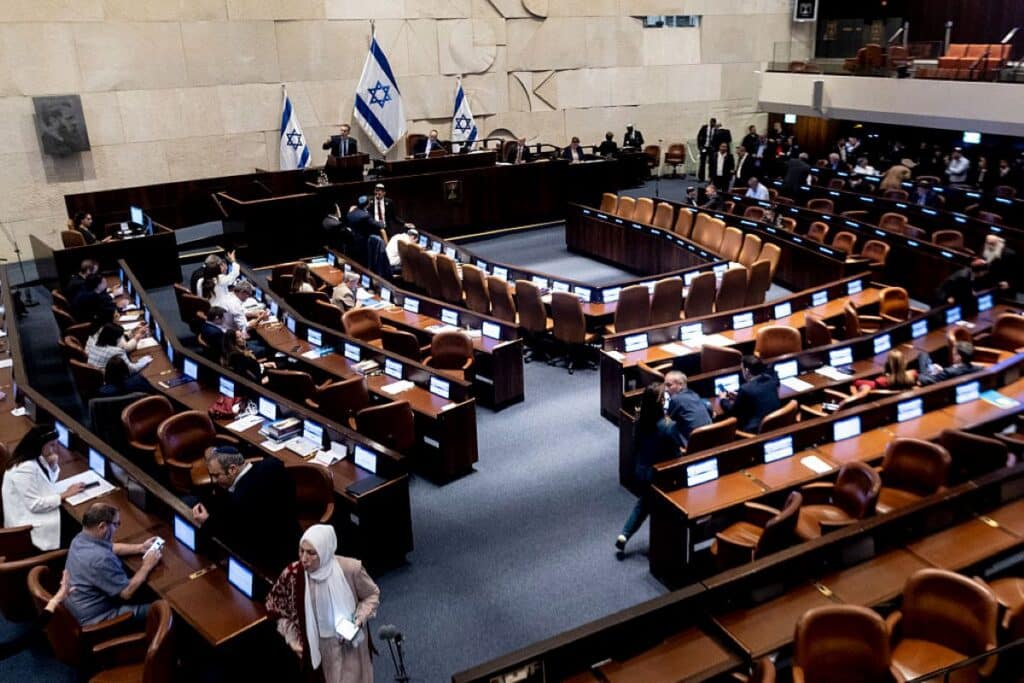
That means parties have to work together to form a coalition. After the election, Israel’s president meets with representatives of the elected parties and asks a Knesset member — usually a party leader — to try to form a government. The president’s role is largely ceremonial; the prime minister leads the government.
Related post: Israel’s Wildest Elections Countdown
The person chosen isn’t necessarily the leader of the largest party. The president selects the person they believe has the best chance of putting together a government.
Imagine that a party wins 30 seats. It’s the largest in the Knesset, but still well short of a majority. If it joins with three parties that have 15, 10 and six seats, their coalition would have 61.
Getting there takes more than adding up seats. Parties negotiate over which policies to pursue, how to allocate funding and who will receive positions in the cabinet. Once a proposed government wins a vote of confidence in the Knesset, it takes office. Parties outside the government make up the opposition.
Why do small parties have so much influence?
In a close election, a party with just a handful of seats can make the difference between forming a government and falling short.
In the example above, the largest party needs its six-seat partner to reach a majority. That gives the smaller party leverage to negotiate for policies, funding or cabinet positions. It can also threaten to leave the coalition if its demands aren’t met.
Supporters of Israel’s system say this gives smaller communities a voice and forces larger parties to listen to them. Critics argue that it can give small parties more influence over national policy than their share of the vote would suggest.

A smaller party can even secure the top job. In 2021, Naftali Bennett became prime minister after his party won just seven seats. He reached an agreement with other parties to form a coalition, with Bennett serving as prime minister first and Yair Lapid taking over afterward.
But forming a coalition is only the beginning. Parties that agree to govern together can still clash over military service, religion, the budget and other issues. If they can’t resolve those disagreements, the coalition can fall apart — potentially sending Israelis back to the polls.
What is at stake in this election?
For many voters, the election is a question of leadership: Should Netanyahu remain prime minister, or is it time for someone else?
Netanyahu’s supporters see his experience as an asset at a dangerous moment. They trust him to confront Iran and its allies, work with world leaders and resist international pressure when Israel’s security is at stake.
His critics point to the failures surrounding October 7, question his handling of the wars and oppose changes his government has sought to Israel’s legal system. But they don’t all agree on what should come next.
Some of Netanyahu’s challengers share his tough security positions but believe Israel needs different leadership. Others want broader changes in policy. They also differ over which parties they would be willing to work with — a question that could determine whether any of them can form a government.
The election will also test voters’ views on the Haredi military draft, the cost of living, the future of Gaza and how Israel should investigate the failures of October 7.
How often does Israel hold elections?
Knesset elections are normally held every four years, but they can happen sooner. The Knesset can vote to end its term early, for example, or an election can be triggered if lawmakers miss the legal deadline for passing a budget.
A change in government doesn’t always require an election. If at least 61 Knesset members support a proposed replacement government, it can take office without voters returning to the polls.

And if no one can form a government after an election, the law gives others a chance to try. If those attempts fail, Israelis head back to the polls. The outgoing government remains in place as a caretaker until a new one takes office.
There are no term limits for prime ministers or Knesset members. They can continue to serve as long as they retain the support they need. Netanyahu has served longer than any other Israeli prime minister, surpassing the country’s first leader, David Ben-Gurion.
Why are there so many parties?
Israeli voters choose parties based on their positions on issues such as security, the economy and religion. Some also look for a party they trust to represent their community.
Some parties draw much of their support from ultra-Orthodox Jews, also known as Haredim. Others appeal primarily to Arab citizens, religious Zionists or secular voters. That doesn’t mean everyone within a community votes alike: People disagree about politics and switch parties.
These community ties help explain why placing every Israeli party on a single line from left to right tells only part of the story. Two parties might share similar views on security but disagree sharply about the role of religion in public life. Others might have different political priorities but work together because they represent communities with shared interests.
The system has roots in the years before Israel became a state, when Jews in the land elected representatives to their community’s governing bodies using proportional voting. Israel kept that approach after its founding, allowing a wide range of political groups to win representation.
In the United States, groups with different priorities often compete for influence within two major parties. In Israel, those groups can form separate parties — and then negotiate with one another to build a government.
Who supports Netanyahu?
Netanyahu’s party, Likud, is the main force on Israel’s right. After the 2022 election, it formed a government with right-wing and Haredi parties.
Among Netanyahu’s partners are two far-right leaders: Itamar Ben-Gvir, who leads Otzma Yehudit, or Jewish Power, and Bezalel Smotrich, who leads Religious Zionism and is running with Moshe Feiglin’s Zehut party. Both want to expand Israeli control over the West Bank and oppose Palestinian statehood.

Netanyahu helped bring these parties into the governing mainstream. Ben-Gvir, who has convictions for inciting racism and supporting a terrorist organization, became national security minister, a position that oversees the police.
Netanyahu has also relied on Shas and United Torah Judaism, which represent different Haredi communities. Their priorities include funding for religious education and protecting exemptions from military service for yeshiva students.
Those partnerships have given Netanyahu the numbers to govern, but they have also made his coalition a focus of the election. Voters are weighing not only whether they want Netanyahu to remain prime minister, but also what kind of government he would lead.
Who is trying to replace Netanyahu?
Netanyahu’s opponents are not a single political camp. They include former military leaders, former prime ministers and politicians with different views on security, religion and the economy.
Gadi Eisenkot, who leads the Yashar party, is a former Israel Defense Forces chief of staff. He joined Netanyahu’s emergency war cabinet after October 7, and his son and two nephews were killed fighting in Gaza. Eisenkot is presenting himself as a leader with both security experience and the ability to restore public trust.

Former prime minister Naftali Bennett has teamed up with another former prime minister, Yair Lapid, to run as B’Yachad, Hebrew for “Together.” Bennett favors tough security policies and opposes Palestinian statehood. In 2021, he led a government that brought together parties with widely different views, including the Arab party Ra’am.
Avigdor Liberman, leader of Yisrael Beytenu, combines hawkish security positions with demands for less religious influence in public life. He has called for Haredi men to serve in the military.
Yair Golan leads the Democrats, a party formed by the merger of Labor and Meretz. It supports a diplomatic path toward a two-state solution and stronger protections for civil rights.
These leaders agree that Netanyahu should be replaced. But they differ on policies, who should lead the next government and which parties they’re willing to work with. Even if their parties collectively win enough seats, those disagreements could make forming a coalition difficult.
What issues are shaping the election?
Accountability for October 7: Israelis are still asking how the country’s defenses failed and who bears responsibility. Opposition leaders have called for an independent state commission of inquiry. Netanyahu has resisted that model, raising a debate over who should appoint the investigators and whether the public would trust their findings.
Security and the future of Gaza: Many candidates favor a tough military approach toward Hamas, Hezbollah and Iran. But they differ over negotiations, who should govern Gaza after the war and whether Israel should pursue a longer-term political settlement with the Palestinians.
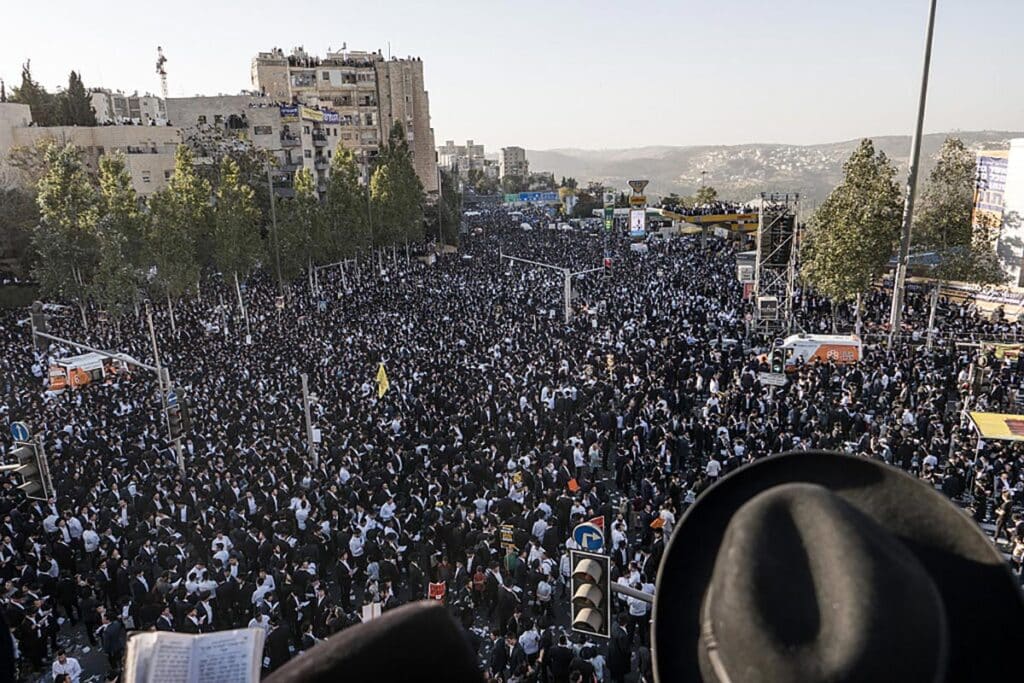
The Haredi draft: As reservists face repeated call-ups, Israelis are debating who should share the burden of military service. In 2024, Israel’s Supreme Court ruled that the state could no longer legally exempt ultra-Orthodox yeshiva students as a group. Haredi parties argue that Torah study is a vital contribution to the country, while other parties demand broader enlistment. The issue also poses a coalition challenge for Netanyahu, who has relied on Haredi parties to govern.
The courts: Netanyahu’s government has sought to give elected officials greater control over Israel’s legal system. Supporters say the changes would make the system more democratically accountable. Opponents argue that they would weaken checks on government power.
The cost of living: Beyond questions of security and leadership, voters are looking for relief from the high cost of housing, groceries and other everyday necessities.
What role could Arab voters play?
Arab citizens of Israel make up a significant share of the electorate, and their turnout could affect how many seats Arab-led parties win. In 2022, turnout among Arab voters was about 53%, compared with roughly 71% nationwide.
Many Arab voters are concerned about violent crime, housing, public services and discrimination, alongside the war and Palestinian rights. But the parties seeking their votes offer different approaches.
Mansour Abbas’s Ra’am focuses on working with Jewish parties to secure funding and influence for Arab communities. Abbas has argued that Arab citizens should pursue equality within Israel while accepting that it will remain a Jewish state. Ra’am joined Bennett’s governing coalition in 2021.

The Joint List, bringing together Hadash, Ta’al and Balad, takes a different approach. The parties differ in their politics, but advocate for Palestinian rights and equality for Arab citizens of Israel. They have also called for a Palestinian state alongside Israel and challenged Israel’s definition as a Jewish state.
Winning seats, however, doesn’t guarantee a place in government. Bennett now rules out a coalition with Arab parties. Eisenkot has said Ra’am would not join a government he leads under its current positions, though he has not ruled out working with Arab parties.
Arab parties could still support a government from outside the coalition, without taking cabinet positions. Whether a potential prime minister would accept that support is another question — and one that could matter if the race for a majority is close.
What happens after the votes are counted?
The first glimpse of the results will come when polls close at 10 p.m. Israel time on October 27. Israeli television networks will release exit polls estimating how many seats each party has won. Those are projections based on voter surveys, not official results.
Election workers will then count the paper ballots, and preliminary results will be updated as the count progresses. Some votes, including those cast by soldiers and other people voting away from their assigned polling stations, are placed in double envelopes and counted separately after officials check that voters haven’t cast a ballot elsewhere.
That means the picture could change after election night, particularly for parties close to the electoral threshold or blocs close to a majority. The final count is expected by October 30, with official results scheduled to be published on November 4.
Follow the official results from Israel’s Central Elections Committee here.
Once the official results are in, President Isaac Herzog will consult the elected parties and ask a lawmaker to try to form a government.
The results will show whether Netanyahu and his potential partners have a path to a majority — or whether his opponents can unite behind an alternative. Even then, negotiations over policies and cabinet positions could take weeks.
The vote is only the first step. What follows is the work of turning Israelis’ choices into a government.