

In the immediate aftermath of the October 7 attack, denial of Hamas’s atrocities proliferated rapidly online. Some institutions, public figures, and activists cast doubt not only on the scale of the massacre but also on whether it had even happened at all. The most pervasive form of October 7 denial, however, has been the rejection or minimization of evidence showing Hamas’s use of sexual violence as a weapon of war.
To combat this growing phenomenon, a group of legal experts, researchers, medical professionals, and advocates united shortly after that Black Shabbat to establish a Civil Commission on October 7 Crimes by Hamas Against Women and Children.
After two and a half years of investigation, the Civil Commission released what is now considered the most comprehensive report to date on Hamas’s sexual crimes during and after the October 7 attacks. Titled “Silenced No More,” the report spans 298 pages and addresses, in excruciating detail, some of Hamas’s most egregious crimes, including the murder of two pregnant women, acts of genital mutilation, and acts of systematic sexual violence inflicted during the massacre itself and in captivity.

To conduct the investigation, the Commission reviewed 1,800 hours of testimony and evidence, combed through 10,000 pieces of digital material, including photos and video, and interviewed 430 witnesses and survivors representing 52 different nationalities. Investigators examined evidence from the Nova and Psyduck music festivals, kibbutzim across the Gaza Envelope, roadside bomb shelters, and attack sites throughout Southern Israel, as well as testimonies and evidence connected to the Israeli hostages in captivity in Gaza. According to the Commission, every piece of evidence was carefully cross-referenced and corroborated wherever possible.
The report’s conclusions were unequivocal: Hamas weaponized sexual and other forms of gender-based violence as “systematic, widespread, and integral to” the massacre on October 7.
Eyewitness and survivor testimony
As part of its investigation, the report compiled testimony from a long list of eyewitnesses and earwitnesses whose accounts frequently corroborated one another across different attack sites and timeframes. The Commission also interviewed more than 10 survivors of sexual violence and other forms of gender-based violence who directly experienced the attacks themselves. Medical documentation and treatment records were used to substantiate many of these testimonies and ensure their accuracy.
Digital footage
The Civil Commission reviewed over 10,000 photos and videos connected to the October 7 attacks, many of which investigators said contained evidence indicative of sexual violence and abuse. According to the report, this included footage featuring genital mutilation, men and women found partially or fully undressed, evidence suggesting the insertion of sharp and blunt objects into women’s genitalia, and other forms of violent degradation.
The Commission stated that the digital evidence underwent extensive verification and cross-referencing procedures in an effort to authenticate the material and establish consistency across testimonies, locations, and timelines.


Forensic evidence
The investigation also relied heavily on forensic evidence gathered from institutions across Israel, including reports from the Abu Kabir Forensic Institute, hospitals, and morgues involved in identifying and examining victims after the attacks. These forensic findings were used alongside eyewitness testimony and digital evidence to help establish patterns of sexual and gender-based violence documented throughout the report.
The findings
According to the report, Hamas systematically carried out acts of sexual violence on October 7, including gang rape, sexual molestation, sexual harassment, genital mutilation, dismemberment of internal organs, decapitation, necrophilia, the insertion of sharp and blunt objects into genitalia, the parading of naked bodies, and other forms of gender-based violence. The terror group also murdered two pregnant women, neither of whose pregnancies survived.
The commission identified patterns across multiple attack sites. In several cases, Hamas shot victims in both the face and the genital area. The report states that most of Hamas’s rape victims were murdered immediately after or even during the assaults, making survivor testimony especially limited. Nevertheless, multiple witnesses from different locations described strikingly similar scenes and patterns of abuse.
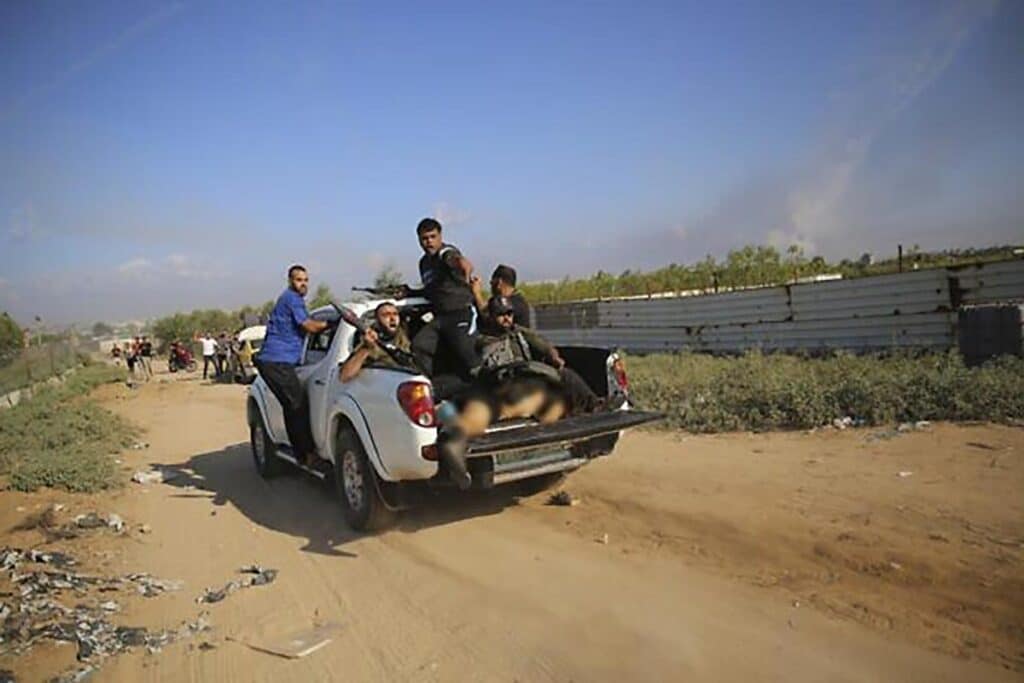
The report also concluded that Hamas used sexual violence not only to physically brutalize victims, but to intensify psychological terror. In numerous cases, Hamas terrorists reportedly filmed acts of gender-based violence and used the victims’ phones to send photos and videos to their family members and loved ones. According to the Commission, this digital dissemination became part of the broader strategy of terrorizing both individuals and communities.
Investigators further concluded that Hamas deliberately targeted the family unit during the attacks. Sexual violence was integral to both the October 7 massacre and the kidnappings into the Gaza Strip, with a significant number of hostages experiencing sexual violence during their abductions and while in captivity.
The report also documented allegations that hostages, including children, continued to be subjected to sexual abuse while in captivity. In some instances, investigators reported evidence that Hamas forced minors and family members to perform sexual acts on each other.
Altogether, the Civil Commission identified 13 recurring patterns of abuse documented throughout its investigation:
- Rape, gang rape, and other forms of sexual assault
- Sexual torture, including intentional burning and mutilation
- Deliberate shootings targeting the head, face, and genital area
- Killings and executions committed alongside or following sexual and gender-based violence
- Postmortem sexual abuse, humiliation, and desecration of bodies
- Forced nudity and exposure
- Handcuffing, binding, and physical restraint of victims
- Public displaying and parading of women and children
- The abduction of mothers and children
- Sexual and gender-based violence committed in the presence of family members
- The filming and online dissemination of sexual violence, including the use of social media to document and glorify atrocities
- Threats of forced marriage
- Rape and other forms of sexual violence committed against boys and men
Conclusions and recommendations
The Civil Commission concluded that Hamas and affiliated groups perpetrated genocidal acts, crimes against humanity, war crimes, and sexual and gender-based violence (SGBV) “amounting to torture.” According to the report, the sexual violence carried out on and after October 7 was widespread, systematic, and an integral component to both the attacks and the subsequent treatment of the hostages.
The Commission argued that prosecuting perpetrators of SGBV is an urgent priority that should be pursued through both Israeli courts and international legal mechanisms.

Among its recommendations, the Civil Commission recommends that both the international community and the State of Israel investigate and prosecute the October 7 crimes of SGBV through the use of specialized professionals with expertise in trauma, sexual crimes, and international humanitarian law. It also recommends targeted sanctions against individuals and entities responsible for the October 7 massacre, including those who have provided material support to Hamas and its affiliates.
The Commission further emphasized that the international community must cooperate to “ensure accountability” and provide mutual legal assistance and support to survivors. The report should be used as part of the historical record, and survivors and their families should be provided with reparations and legal and psychological support.
The Commission also specifically addressed the issue of denial and digital amplification. It called on both the international community and Israel to take action to counter denial of the October 7 attacks and the sexual violence committed during them. The report further argued that social media platforms should be held accountable for their role in the dissemination of Hamas’s atrocity footage to amplify the suffering of the victims’ families.
Within Israel itself, the Commission recommended establishing a judicial mechanism with a specialized judicial chamber to address the sexual and gender-based violence on October 7, establishing a prosecutorial unit dedicated solely to sexual and gender-based crimes, providing specialized training to all investigative, prosecutorial, and judicial units, and developing and enforcing guidelines to prevent the re-traumatization of survivors.
Will it make a difference?
The Civil Commission’s report is important to the historical and legal record surrounding October 7. Its authors hope the investigation will help combat October 7 denial, preserve evidence, and establish a clearer international understanding of the scope of Hamas’s crimes.
At the same time, the report raises a more difficult question: whether additional documentation can meaningfully persuade those already committed to denying the attacks.
After all, Hamas operatives themselves filmed and livestreamed large portions of the massacre, uploading footage to social media in real time. Much of the evidence examined by investigators originated not from hidden archives, but from material openly recorded and distributed by the perpetrators themselves.
For many observers, then, October 7 denial does not come from an absence of evidence so much as a refusal to accept what the evidence shows. The challenge may no longer be proving that atrocities occurred, but confronting the political, ideological, and psychological forces that lead some people to dismiss or rationalize them even when faced with extensive documentation.