
I have been a Jerusalemite since 2004, when my family made Aliyah from the United States. Growing up, once Lag Ba’omer had passed, our schools would organize tours around Jerusalem in honor of Jerusalem Day. I remember seeing all the different groups of young adults, seniors, and fellow students filling the streets of the Old City and gathering near the shouk at Machane Yehuda.
But when I later met people from outside Jerusalem, and especially from outside Israel, I realized that many had never heard of Jerusalem Day or marked it in any way.
What is Jerusalem Day?
Jerusalem Day, marked on the 28th day of the Hebrew month of Iyar, commemorates the reunification of Jerusalem during the Six-Day War in 1967. This year, it falls on May 14, 2026.
The day marks the moment when Israeli forces entered the Old City and regained access to sites that had been inaccessible to Jews for nearly two decades, including the Western Wall. For many Israelis and Jews around the world, it is both a national and emotional milestone, tied to ideas of history, identity, and connection to Jerusalem.
Read more: Why is Jerusalem Day so controversial?
Since 1968, Jerusalem Day has been celebrated to honor the liberation of Jerusalem. However, it was not officially established in Israeli law until 1998, when the Knesset passed legislation recognizing it as a national day commemorating the reunification of Jerusalem.
Why is this significant?
After Israel was founded in 1948, the armistice agreement between Israel and Jordan that ended the War of Independence outlined that East Jerusalem was under the jurisdiction of the Jordanians. The border dividing Israel and Jordan ran through Jerusalem, leaving the Old City in the hands of the Jordanians, including the Kotel (Western Wall) and the Temple Mount. For nearly 19 years, Israelis and Jews were unable to access some of Judaism’s holiest and most historic sites.
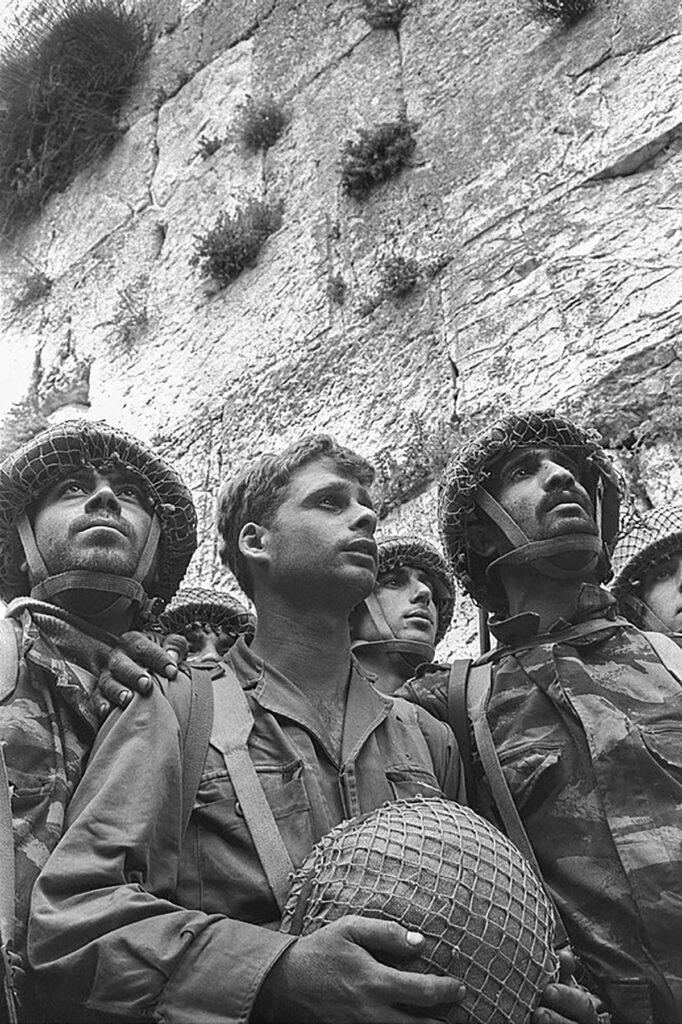
But this changed in 1967. On the third day of the Six-Day War, paratroopers entered and captured East Jerusalem and the Old City. For the first time since the establishment of the State of Israel, Jews were once again able to touch the stones of the Kotel and pray there freely, being as close as they could to one of the holiest and most historic sites in Judaism.
One of the most memorable reactions came from Raphael Amir, a famous broadcaster for the Israeli radio station “Kol Yisrael,” who said: “I am not a religious person, I never was. But this is the Kotel, and I am touching the stones of the Kotel.” His words became iconic because he was a secular person recognizing the significance and meaning of having access to the Kotel. They captured how deeply emotional the moment felt, even for secular Israelis.
The reunification of Jerusalem also left a mark on Israeli culture. Naomi Shemer, one of Israel’s most well-known songwriters and composers, released the song “Jerusalem of Gold” just three weeks before the war by chance. The song mourned the divided city and the inability to access the beauty of Jerusalem and its holy sites. Following the war, she added a fourth verse to the song celebrating the return to Jerusalem and the renewed access to the Kotel.
On a personal note, my grandfather z”l fought in the Six-Day War and had the privilege of entering the Kotel on the first Shabbat after it was liberated. He always spoke of that experience with tears in his eyes, describing it as the moment in his life that he felt the divine presence, the Shechina. The prayers were incredibly inspiring, and the shofar was even blown by the Chief military Rabbi, Rav Shlomo Goren. That moment stayed with him forever
But really, why was this moment so significant?
To understand why the reunification of Jerusalem in 1967 carried such enormous emotional and historical weight, it is important to understand the city’s central place in Jewish history and memory.
Jerusalem has been at the heart of Jewish life for thousands of years. According to Jewish tradition, King David declared it as the capital of the Jewish people and the site where the temple would be built by his son, King Solomon. Both temples were built in Jerusalem, and Jews from all over the world would come during the three pilgrimage holidays: Passover, Shavuot, and Sukkot.
That changed drastically in the year 70 CE, when the Romans destroyed the Second Temple and the entire city, prohibiting Jews from entering. From this point on, Jerusalem was not able to function as the center of Jewish life or as an important site of worship and connection to God and His commandments.
For nearly 2,000 years, Jews across the diaspora continued to pray toward Jerusalem and yearned to return within prayer, blessings, and holiday rituals. At the end of the Passover seder and the Yom Kippur service, Jews traditionally declare, “Next year in Jerusalem.” Even far from the city itself, Jerusalem remained stitched into Jewish consciousness like a thread running through generations.
We also know of important figures throughout history who did visit the city, such as Maimonides, Nachmanides, Rabbi Yehuda Hassid, etc. (This information is beautifully laid out in the podcastJerusalem365 by Rabbi Meir Soloveichik). But for centuries, Jews were not able to properly settle within Jerusalem since the destruction of the Second Temple.
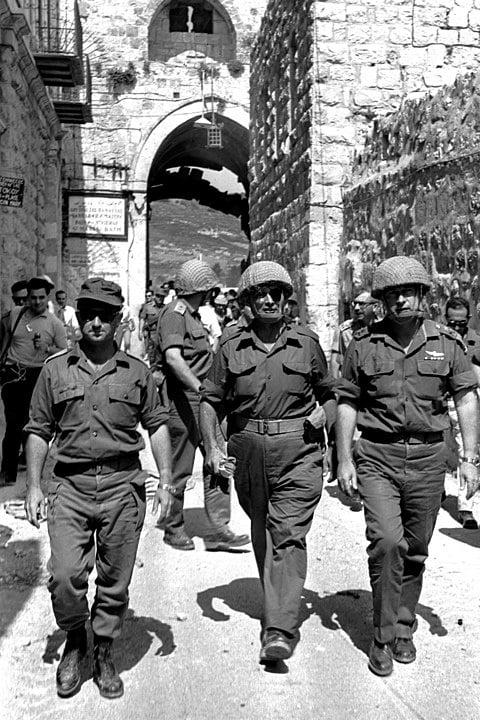
So when the Commander of the Paratroopers Brigade, Mota Gur, announced the famous words on the army radio, “Har Habayit Beyadeinu” (the Temple Mount is in our hands), these words resonated far beyond the military victory. It was not only about gaining access after 19 years under Jordanian control. For many Jews, it symbolized a return to the holiest site in Judaism for the first time since the destruction of the Second Temple nearly two millennia earlier. The weight of history echoed inside those words.
While Jews today have access and the ability to pray at the Kotel, the situation is not the same for the Temple Mount, where the status remains deeply complex. Immediately after the Six-Day War, the Minister of Defense, Moshe Dayan, kept the authority of the Temple Mount under the Islamic Waqf to avoid any religious conflicts. This decision dictated that only Muslims could pray at the site while non-Muslims, including Jews, could visit but were prohibited from worshipping. That policy, often referred to as the “status quo,” remains in place today.
What is done today to celebrate Jerusalem Day?
Today, Jerusalem Day is marked through a mix of national ceremonies, public celebrations, educational activities, and religious practices that have developed for Yom Yerushalayim.
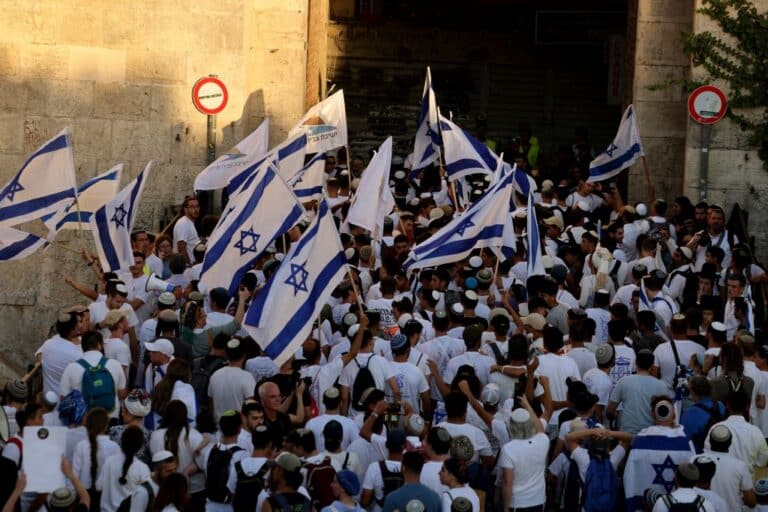
Schools and organizations often hold tours around the city in the days leading up to the holiday, helping participants connect with Jerusalem’s history, geography, and significance. Walking through the streets of Jerusalem during this time can feel almost festival-like, with groups filling the city center, the Old City, and the areas surrounding Machane Yehuda.
Several national celebrations are held to mark this special day. Around two days before Jerusalem Day, primarily members of Kibbutzim (collective community) and Moshavim (cooperative agricultural settlement) march in a parade through Jerusalem. On the eve of the holiday, many religious Zionist leaders and rabbis gather for prayers of praise at Yeshiva Merkaz Harav in Jerusalem. During Yom Yerushalayim, a ceremony is held giving out the “Yakir Yerushalayim” award (Honorable citizens of Jerusalem), recognizing distinguished citizens who have contributed to Jerusalem and Israeli society.
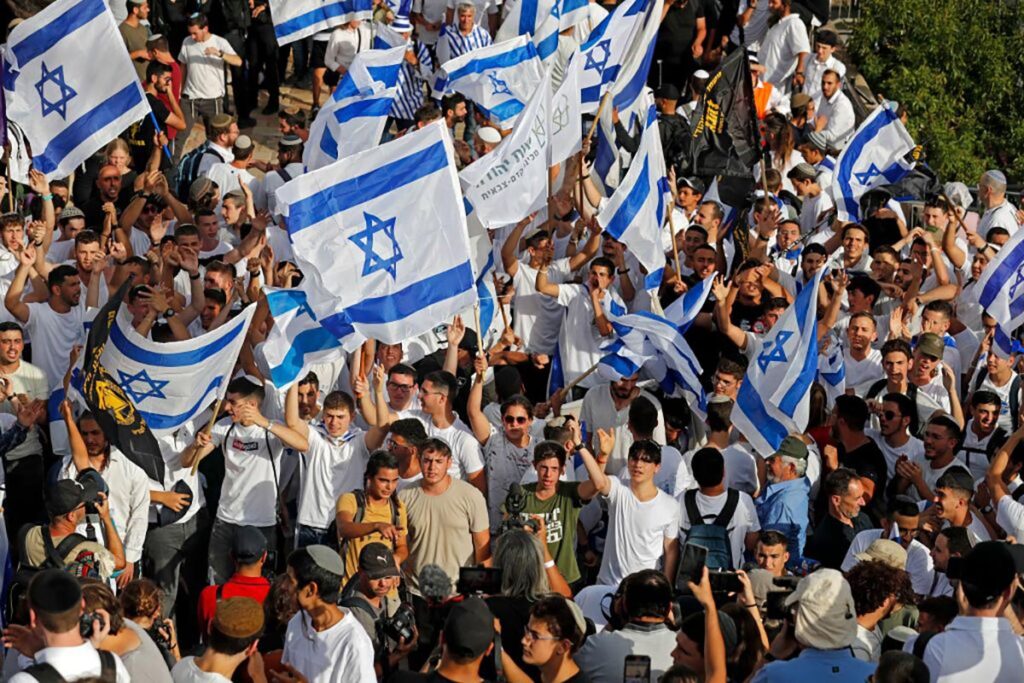
Perhaps the most widely recognized event is the Flag March, or Rikud degalim, that takes place on Jerusalem Day itself, with people mostly from Jerusalem, but some come from outside the city to participate in this special march from the city center to the Kotel, truly celebrating the access we have to the Old City of Jerusalem. Thousands of participants, many of them young people and Religious Zionists, march through central Jerusalem toward the Kotel carrying Israeli flags and singing songs about Jerusalem.
Jerusalem Day has also taken on religious significance, particularly within the Religious Zionist community. Many communities recite the prayer of praise, Hallel, fully. This prayer is generally reserved for holidays and the beginning of the Jewish month. Furthermore, a special insert called “Al Hanissim” (on the miracles) has been added to some designated prayerbooks, alongside prayers focused on Jerusalem or psalms highlighting the importance of the city.
And still, many Jews worldwide don’t mark Jerusalem Day at all.
But Yom Yerushalayim is not only a national celebration of Jerusalem, but it is also a celebration of the profound historic meaning Jerusalem has for the Jewish people. After yearning and praying about ‘Jerusalem of Gold’ for 2000 years from all over the world, Jewish soldiers liberated it. A Jewish state, Jewish leadership, a Jewish military, coming full circle since King David declared Jerusalem as the capital and chosen city of God. Jerusalem Day is an opportunity to mark that, and my hope is that many more will be marking this day for years to come.