
A field weed became an unlikely survival food during the siege of Jerusalem in 1948. Known by Jews and Arabs as kubeza, the mallow plant suddenly took on life-saving importance.
Immediately after the United Nations approved the partition plan in November 1947, Arab militias laid siege to Jerusalem, planning to starve the city’s Jewish population into submission. They blocked the roads to Jerusalem and ambushed trucks bringing vital supplies from the coast, even managing to partially block the underground water system.
As shortages worsened, daily life became a struggle for survival. Families placed buckets and pots on rooftops to collect winter rainwater. Food and water were tightly rationed. In the Old City, supplies dwindled so severely that famine set in, and some residents died of hunger.
Read more: What Is Jerusalem Day? The history and meaning behind Yom Yerushalayim
Yet scattered throughout the fields and empty lots between homes was an overlooked source of free food. Mallows, or Malva sylvestris, a nutritious wild plant nourished by the winter rains, grew abundantly. Long featured in traditional Arab cuisine as a side dish, kubeza could be sauteed with onions and garlic, or used like spinach in omelets and casseroles.
For many Jewish residents, however, the humble plant had largely faded from memory. Though a familiar sight in vacant fields, few considered it food. During the siege, that forgotten weed became an essential source of nourishment, transforming vacant fields into makeshift pantries in a city cut off from the outside world.

But Rachel Yanait Ben-Zvi, wife of the then-President of Israel, Yitzhak Ben-Tzvi, knew that mallows are highly nutritious. An agricultural engineer, graduate of the University of Nancy, France, Ben-Zvi played a major role in shaping Israel’s agricultural education and labor activism in pre-state Israel. Among her many contributions was helping families overcome famine in Jerusalem and Safed by encouraging people to eat mallows.
Jerusalem had endured a long, hungry winter. The sight of field weeds waving in the spring sunshine was a sign for hope, but it was even more meaningful once people realized those weeds were edible. Mallow leaves and seed pods are packed with nutrition, very rich in vitamins C and E, iron, and essential fatty acids. The plant can also be brewed into a medicinal tea that soothes coughs and stomach troubles, a small comfort to the many living in cold, damp stone houses.

Ben-Zvi broadcast recipes for mallows over the Kol Israel radio station. Across the border, listeners in Jordan overheard the broadcasts and relayed them to the authorities. Radio Amman then gleefully reported that the “Jews are now dying of starvation, eating donkey and cattle food. They’ll soon surrender.”
But the broadcasts revealed something very different. Foraging for wild plants was not a sign of collapse, but showed the intelligence, strength, and resilience of Jerusalem’s Jews to sustain life and continue the fight.
Many elderly Israelis who were children in Jerusalem and Safed during the war still remember venturing into open fields to gather mallows, despite the risk of Arab snipers. The hunger back home was too real to ignore any source of nourishment.
Eventually, Jewish forces managed to carve out a hidden alternative route between Jerusalem and the coast: the rough-hewn Burma Road. Lifesaving supplies of food, water, and ammunition came through it at night under the cover of darkness, when they could evade Arab shooters.
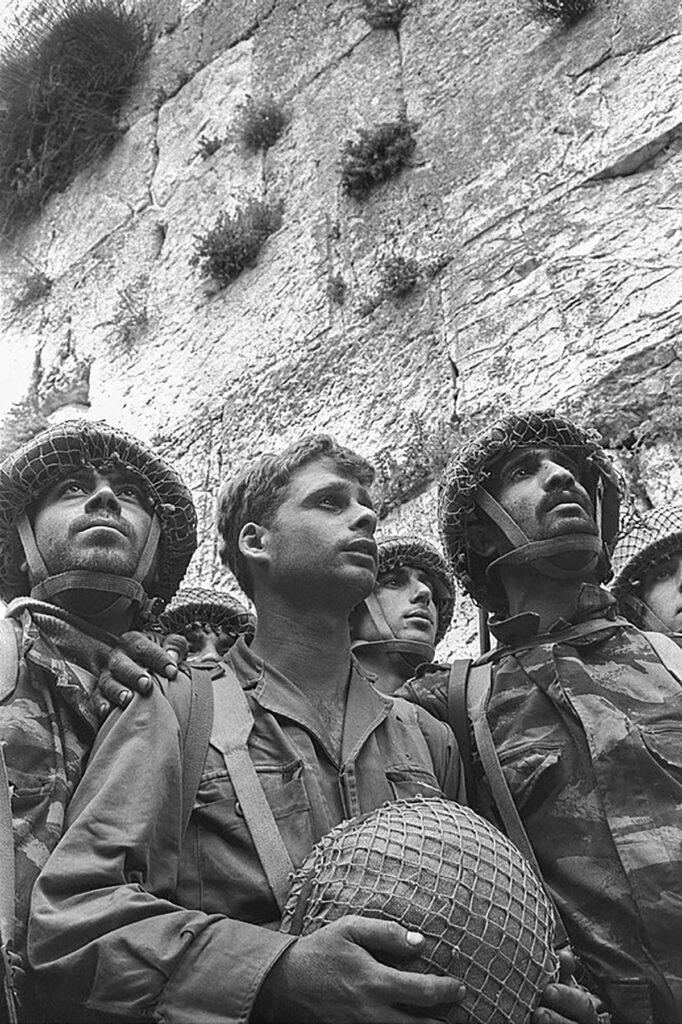
The Six-Day War in 1967 brought about Jerusalem’s reunification as one city. Today, highways carry traffic freely into and out of Jerusalem, with routes transversing the city itself that was once divided by war and barricades. In the springtime, driving up Highway 1, you’ll see beautiful, native wild plants growing on the roadsides: purple hollyhocks, snowy almond trees, grapevines, and rosemary bushes spill over with blue flowers. And among them, lowly khubeza thrives; not very showy, but abundant.
There are countless ways to eat mallows, much like spinach. Children like to pick the green seed pods and munch on them as a field snack. Some Israelis still fry mallow patties on Jerusalem Day, preserving a small culinary memory of survival. I make them myself. Mallows have a mild, almost neutral green flavor that needs dressing up with more flavorful ingredients like onions, garlic, and spices.
Below is a mallow recipe shared by Israeli chef Moshe Basson, an expert in Biblical and historical cuisine. The dish is simple fried patties, or latkes if you like. In Hebrew, they’re called ketzizot khubeza. (For an introduction to Israeli foods any home cook can make, I very highly recommend Basson’s book, The Eucalyptus, available on Amazon.)
Chef Basson says, “Some foods are born not from abundance, but from scarcity.
And what was only a field herb became an almost festive fried patty. This recipe tells a story of poverty, but also of resourcefulness. Of scarcity — and of life.”

Jerusalem Mallow Patties
PrintIngredients
- 700 grams mallows, young leaves and stems If you can't get mallows, 4.5 – 5 cups thawed, frozen spinach can substitute
- 3 slices stale bread soaked, squeezed and finely chopped (can be replaced with 3 medium boiled and mashed potatoes)
- 1 chopped onion
- 3 cloves garlic, chopped
- 3 eggs, beated
- 1 tsp salt
- 1/2 tsp pepper
- 1/2 tsp allspice
- 1/2 tsp turmeric
- 1.5 tsp baking powder
- 3 tbsp olive oil
- bread crumbs for coating optional
Instructions
- Bring a pot with about 1.5 liters of water and a teaspoon of salt to a boil.
- Stir in the mallows in several batches, each time about a quarter of the amount, for about 2 minutes.
- Remove, drain, and cool.
- Chop the blanched mallows coarsely.
- In a large bowl, mix the mallows with the onion, garlic, and bread (or mashed potatoes).
- In a separate bowl, beat the eggs with the salt and spices.
- Add the egg mixture to the rest of the ingredients and mix well until you get a soft but not runny mixture. (If necessary, add breadcrumbs, a tablespoon at a time)
- Form patties with your hands or form ovals with two spoons.
- Heat 2-3 tablespoons olive oil in a frying pan.
- Fry patties on both sides until nicely browned.