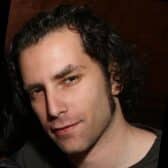

Rudy Rochman has built a public profile around one central idea: that difficult conversations about Israel, Palestinians, Zionism and antisemitism are worth having, even when they are hostile.
That approach was on full display in Jubilee’s recent “Surrounded” episode, “1 Israeli vs. 20 Pro-Palestine Activists,” which placed Rochman at the center of a debate with pro-Palestinian activists. The format is designed for confrontation: one guest sits in the middle while opponents rotate in to challenge them. If the surrounding participants believe a debater is performing poorly, they can raise red flags and replace that person with someone else.
In an era where much of the Israel-Palestine conversation plays out in short clips, comment sections and campus protests, formats like “Surrounded” have become a kind of proxy battleground, shaping how many audiences encounter the conflict.
Similar debate formats have drawn millions of views online, reflecting a growing appetite for high-conflict political content, even when it sacrifices nuance.
Each video flits between debate, spectacle and social-media pressure cooker. For Rochman, who has spent years speaking about Zionism, Jewish identity and Israeli-Palestinian dialogue, the episode offered both an opportunity and a test.
Who is Rudy Rochman
Rochman, an Israeli activist and content creator, has long positioned himself as someone willing to debate Israel’s harshest critics directly. He graduated from Columbia University in 2018 with a degree in political science, specializing in Middle Eastern studies, and helped found a local chapter of Students Supporting Israel while on campus.
He has also become a major online voice, with over 600,000 followers across platforms. His style is notably calm: he rarely raises his voice, does not curse and often refers to Palestinians as “cousins,” emphasizing shared ancestry and a future of coexistence.

After the October 7 Hamas attacks, Rochman was called up as an Israeli reservist and has spoken publicly about his military service in Gaza and Lebanon. He has also appeared on major platforms and podcasts to discuss Israel’s war against Hamas, antisemitism and anti-Zionism.
His activism has taken him far beyond the United States and Israel. In 2021, while filming a documentary in Nigeria about the Igbo community and Jewish identity, Rochman and two others were detained. They were ultimately released unharmed.
The genocide debate
One of the central arguments in the Jubilee episode focused on the accusation that Israel is committing genocide in Gaza.
The term “genocide” was coined in 1944 by Polish Jewish lawyer Raphael Lemkin, combining the Greek word “genos,” meaning race or people, with the Latin “cide,” meaning killing. Under the 1948 Genocide Convention, genocide requires a specific intent to destroy, in whole or in part, a national, ethnic, racial or religious group.
Rochman argued that Israel’s conduct in Gaza does not meet that threshold because, he said, the Israeli military takes steps to reduce civilian casualties, including warnings through calls, texts and leaflets before certain strikes.
One activist attempted to press him on whether any strike without warning would prove genocidal intent. Rochman pushed back, arguing that combat conditions do not always allow for advance warnings, especially during active firefights.
His broader argument was that civilian deaths, while tragic, do not by themselves prove genocide. He noted that the Gaza death toll is reported by the Hamas-run Gaza Health Ministry and does not clearly distinguish between civilians and combatants. Estimates of Hamas combatants killed vary widely and remain difficult to verify.
“If Israel does everything that it can to prevent civilian casualties, that is proof that shows that its intention is not to kill Palestinian civilians,” Rochman said.
Critics of Israel, however, argue that civilian death tolls and humanitarian conditions in Gaza raise serious moral and legal questions, regardless of intent.
Anti-Zionism and antisemitism
Another major point of debate centered on whether anti-Zionism should be understood as antisemitism.
Rochman defined Zionism as the belief that Jews have the right to self-determination in their ancestral homeland. Anti-Zionism, he argued, denies Jews that right.
Several debaters challenged that framing, saying their opposition was to the Israeli government, Israeli policies or the displacement and suffering of Palestinians. Rochman responded that criticism of Israeli policy is not inherently antisemitic, but that denying Jewish peoplehood, Jewish indigeneity or the Jewish right to self-determination crosses a line.
At one point, Rochman invoked the “three Ds” often used to distinguish criticism of Israel from antisemitism: delegitimization, demonization and double standards. He argued that denying Jewish historical ties to Israel, portraying Jews or Israelis as uniquely monstrous, or focusing only on Jewish wrongdoing while ignoring comparable or worse violence elsewhere can reflect antisemitic patterns.
The strongest exchange came when a Palestinian participant tried to define Zionism for Rochman.
“Should I define what a Palestinian is?” Rochman asked in response.
“No,” the participant replied.
“Then don’t define what a Zionist is.”
Claims about history, indigeneity and “colonization”
Much of the debate returned to competing historical narratives.
Rochman argued that Jews are indigenous to the land of Israel, pointing to archaeology, Jewish history, religious texts and continuous Jewish connection to the land. Some participants rejected that claim or framed Zionism as a colonial project.
Rochman countered that while early Zionists sometimes used the language of “colonization,” the term had a different meaning in that context, often referring simply to settlement or building communities. He argued that Israel should be understood not as a colonial project, but as a decolonization movement: a displaced people returning to its ancestral homeland.
The disagreement revealed a deeper divide. For Rochman, Zionism is a national liberation movement for the Jewish people. For many of his opponents, Zionism is inseparable from Palestinian dispossession.
That tension is not easily resolved in a debate format built for speed and confrontation.
False or questionable claims
The episode also included several claims that Rochman challenged in real time.
One participant claimed that Israel does not allow DNA testing. Rochman disputed this, pointing to Israeli-founded companies such as MyHeritage.
Another claimed there had been a sovereign state of Palestine before Israel’s founding. Rochman responded that while there was a British Mandate for Palestine, there was no independent Palestinian state.
Jubilee also fact-checked one participant’s claim about South Africans converting to Judaism and moving to Israel, marking it as false on screen.
At another point, a participant claimed that 270 journalists had been killed in Gaza, more than in multiple major wars combined. Rochman did not fully address the claim in the moment, but the comparison requires careful scrutiny, especially because journalist casualty figures vary depending on methodology, source and whether the count includes media workers, combat-zone deaths or targeted killings.
These moments highlight a core limitation of the format: speed often outpaces verification. One person cannot realistically fact-check every claim in real time, especially in a debate where emotionally charged assertions come quickly.
Rochman’s unusual vision for peace
One of the more distinctive parts of Rochman’s worldview is his approach to the Palestinian “right of return.”
Palestinians often use the term to refer not only to refugees displaced during the 1948 war, but also to their descendants, a population that now numbers in the millions. Many Israelis argue that allowing a full right of return would end Israel’s Jewish majority and, therefore, its identity as a Jewish state.

Rochman has proposed an unconventional solution: reconnecting with communities around the world that he believes may have Jewish ancestry, including communities in Africa and elsewhere, and encouraging large-scale aliyah. In his view, this could allow Israel to absorb more Palestinians without sacrificing Jewish sovereignty.
It is a creative idea, but not one widely seen as realistic by most analysts. The numbers are uncertain, the historical claims are contested, and there is little evidence that tens of millions of people with possible Jewish ancestry would seek to move to Israel.
This is one place where the piece should be careful: Rochman’s vision is worth explaining, but it should not be presented as a mainstream policy proposal.
The final conversation
For the final extended conversation, Rochman chose Dr. Ahmed Soboh, a Palestinian Muslim leader and dentist from Southern California.
Soboh argued that many Palestinians do not believe Israel genuinely wants peace. Rochman responded that the Israeli government should do more to change the status quo, while also pointing to Palestinian rejection of past peace offers as part of the history.
The two also clashed over language. Soboh objected to Rochman’s use of “Judea and Samaria” for the West Bank, while Rochman defended the terms as historically rooted.
One of the sharpest moments came when Rochman raised FBI statistics showing that Jews are the target of a disproportionate share of religiously motivated hate crimes in the United States. Soboh suggested that this was because Jews “report it very well,” a comment that many viewers interpreted as minimizing antisemitism.
After Soboh questioned Rochman’s service in the Israeli army, Rochman replied: “You don’t have a weak Jew in front of you.”
Did the episode accomplish anything?
No Jubilee debate was ever going to solve the Israeli-Palestinian conflict. The format rewards confrontation, speed and viral moments more than depth.
Still, the episode showed why Rochman has become such a prominent figure in pro-Israel advocacy. He remained calm under pressure, challenged misinformation and repeatedly tried to frame the conversation around coexistence rather than revenge.
At the same time, the episode also revealed the limits of online debate. Many participants seemed less interested in persuasion than performance. Some rejected Rochman’s sincerity outright. Others made claims that were either false, misleading or difficult to verify in the moment.
But the conversation was not meaningless. At its best, it forced viewers to sit with uncomfortable questions: Can people debate Israel and Palestine without denying each other’s suffering? Can Zionism and Palestinian dignity be discussed in the same room? Can a format built for viral conflict still create space for real dialogue?
Rochman’s answer appears to be yes, even if imperfectly.
The episode did not produce a breakthrough. But it did show the value, and the difficulty, of continuing to speak across one of the deepest divides in the world.