
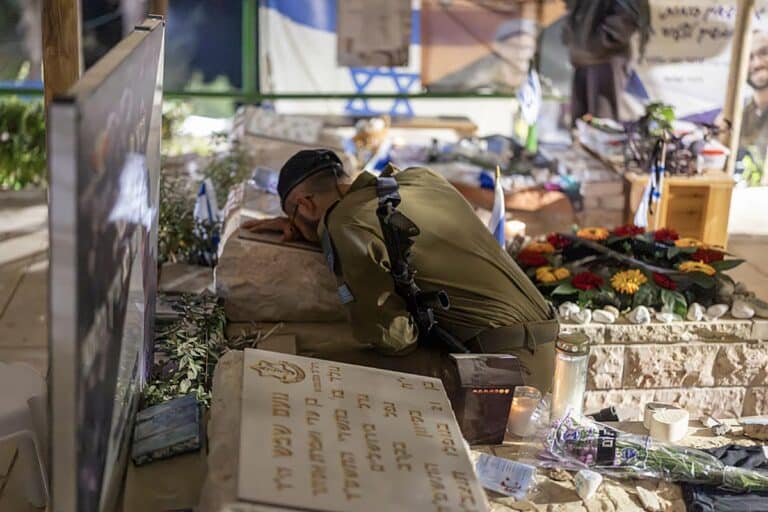
Israel is marking Yom Hazikaron (Memorial Day) and Yom Ha’atzmaut (Independence Day) this week amid fragile ceasefires with Iran and Lebanon, the third consecutive year in which the country is commemorating its fallen and celebrating its independence in wartime.
The weight of immense loss over the past three years and the uncertainty posed by the current situation are heavily shaping how both days are being observed. Adding to the tension is the fact that the ceasefire with Iran is set to expire on Tuesday evening, precisely as Israel transitions from Yom Hazikaron to Yom Ha’atzmaut, and talks aimed at extending the ceasefire have so far hit a brick wall.
Yom Hazikaron starts on the evening of Monday, April 20, 2026, and ends after sundown on Tuesday, April 21, 2026. Yom Hazikaron is followed immediately by Yom Ha’atzmaut. The transition, which is already abrupt in a normal year, is even more jarring this year as many Israelis are still recovering from the whiplash of the sudden transition from war to an uneasy quiet over the past week.
Yom Hazikaron in particular is marked by two moments of silence, one in the evening and one in the morning, during which a siren is sounded. In light of the security situation, some Israelis have expressed concerns that Iran, Hezbollah, or Hamas could attempt to launch rockets during these moments of silence, when distinguishing between a real alert and a memorial siren could take longer than usual. The unfortunate reality of the situation in Israel is that this concern has been raised repeatedly over the past few years.
This year’s Yom Hazikaron is also the first since the war in Gaza ended with a ceasefire last October and since the last Israeli hostage was brought home in January. The war, which began two years prior with Hamas’s brutal surprise attack on October 7, 2023, was one of the deadliest in Israel’s recent history.
Since October 7, 2023, 1,017 civilians and over 1,200 security force personnel have been killed in war and acts of terror. In the past year alone, 174 soldiers fell in battle, and 79 civilians were killed in terror attacks, including Iranian missile strikes. Additionally, 7,165 Israelis have joined the circle of bereaved families — including 55 bereaved parents, 142 Israelis who lost parents, and 140 bereaved siblings just over the past year.
Communities split on how to mourn and celebrate this year
Across Israel, memorial ceremonies and independence celebrations have been canceled or scaled back due to security concerns, in solidarity with border communities, or because many soldiers are still deployed on various fronts in Lebanon and Gaza. For the third consecutive year, the Air Force will not conduct its traditional Yom Ha’atzmaut flyover, with pilots remaining close to base, ready for any renewed threat from Iran or Lebanon.
Part of the disruption to this year’s planning was logistical. Until last week, Home Front Command restrictions had capped gatherings because of the war with Hezbollah. A surprise ceasefire lifted those restrictions, but it was too late to reorganize many of the large-scale events normally held for Yom Hazikaron and Yom Haatzmaut.
Some local authorities who could have put together larger events chose not to in any case, citing the uncertainty of fragile ceasefires and a sense that large public celebrations would be inappropriate given the current situation. Others argued that precisely because of the war and the ceasefires, it was important to hold large events.
The mayor of Kiryat Gat declared simply: “We deserve to celebrate and rejoice!” Bat Yam Mayor Zvika Brot said similarly, “This year too, we will mark the days of remembrance and independence out of responsibility, but also out of a commitment to community resilience and the Israeli spirit. Bat Yam continues to work to enable residents to celebrate these important days together – safely, with dignity and unity.”
Carmiel Mayor Moshe Koninsky struck a balance: “We will remember the fallen and embrace the bereaved families, and at the same time we will know how to celebrate Israel’s independence with strength, responsibility, and unity.”
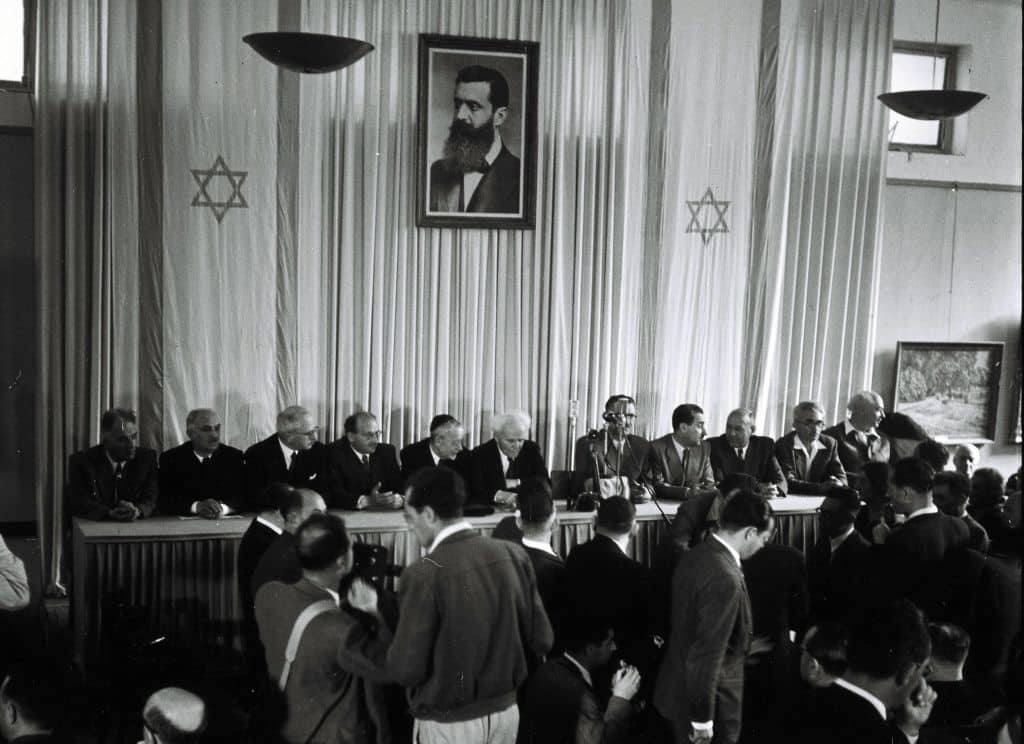
The city of Shoham framed the holiday differently in light of the current situation, stressing that this year, “Yom Haatzmaut takes on a special meaning: this is no longer a celebration or a routine event, but an opportunity to come together and celebrate our independence as a community and as a country.”
Mixed feelings
Beyond the question of celebrations or ceremonies, Israelis are also dealing with the complicated feelings of trying to return to routine after years of war and amid the clouds of uncertainty still in the air.
In an op-ed published last Friday, Israeli singer Shlomo Artzi described the strangeness of returning to any semblance of normal life after weeks of war.
“During the war, we broke away from old habits and invented new ones,” he wrote. “I watched more television than anyone should. I hated and got angry, without knowing at what or why.”
He spoke sardonically about the cumulative 46 hours he spent in bomb shelters — “be proud, we came third place in the country” he told his wife — and about the predictions of politicians and pundits concerning the war in Iran: “That’s how it is in war — you start in Tehran and end up in tough, stubborn talks in Islamabad with the Trumpist question: so, what’s next?”
Artzi, whose mother survived Auschwitz, also reflected on Yom HaShoah, Holocaust Remembrance Day, which Israel marked just last week. “What’s the conclusion on every Yom Hashoah? That the state is our salvation, and it must be guarded — in every respect, from every direction,” he said, stressing that “In the end, however you look at it, the fact that young people — including my own grandchildren — were sitting over a beer a minute before the sirens went off: that is a victory of the spirit…With the ceremonies coming to us over the next two weeks, know that Am Yisrael Chai (the people of Israel live) — not as a mantra, but as a basic truth.”
Writer Abi Dauber Sterne, approaching Yom Haatzmaut a few days after the Iran ceasefire, described carrying contradictions “that are simultaneously dizzying and comforting.”
She pointed to the second-to-last line of Hatikvah, Israel’s national anthem: lihiyot am chofshi b’artzeinu — “to be a people, free in our land” and asked, “What does it mean ‘to be’? Who counts as ‘our people’? What does ‘free’ look like? What is ‘our land’?”
“My heart is heavy with these questions. But truthfully, I would rather be asking them,” Sterne noted. “I hold onto that line — “to be a people, free in our land” — not as a declaration, but as an invitation. This year, on Yom Ha’atzmaut, I imagine asking my Israeli friends, as we gather around the barbecue, how they hear those words, and what they hope the answers to Robbie’s questions might be.”
“I want to hear the full range of answers — the ones that unsettle me and the ones that steady me. I want my children to experience both the friction of disagreement and the comfort of shared searching. I want to remind myself that while the kind of sovereignty we have might be imperfect, it allows us to ask questions and argue about our differing views of our own responsibilities and culpabilities,” Sterne added.
Dr. Sharbel Shoukair, Vice President of Sectoral Development at Ono Academic College, expressed frustration with the expectation from the military and government that the public would just return to routine on a moment’s notice.
“Almost a month and a half of total shutdown, sleepless nights, endless running to bomb shelters, adults who are quietly falling apart but continue to function, savings that are depleted. And then suddenly – in one day – you have to reset everything: get up early, get dressed, smile, work as if nothing happened. Demand from yourself concentration, creativity, professionalism. As if the mind is an electric switch that can be turned off on Wednesday and demand full productivity on Thursday,” Shoukair said.
“Routine is first and foremost a sense of inner security,” he added. “It’s a child who wakes up in the morning and knows that he’s going to study, that there’s a teacher in the classroom, and that no one will stop the lesson to run to a protected space. It’s a father or mother who leaves the house without grabbing their phone as if it were a means of survival – refreshing Telegram every second to know if there’s rocket fire and if they’re close enough to a shelter. Routine is a state of mind and state of society, not a color-coded chart from the Home Front Command or a statement from an IDF spokesman.”
Shoukair stressed that Israelis needed a gradual return to routine in order to deal healthily with the reality of war. He added that it’s important to recognize that this kind of situation is not normal, and that Israelis need to demand appropriate responses that are built to handle the problems caused by the reality of the past few years, including proper solutions for children who have been in and out of school and who haven’t been afforded a full education in light of the chaos.