
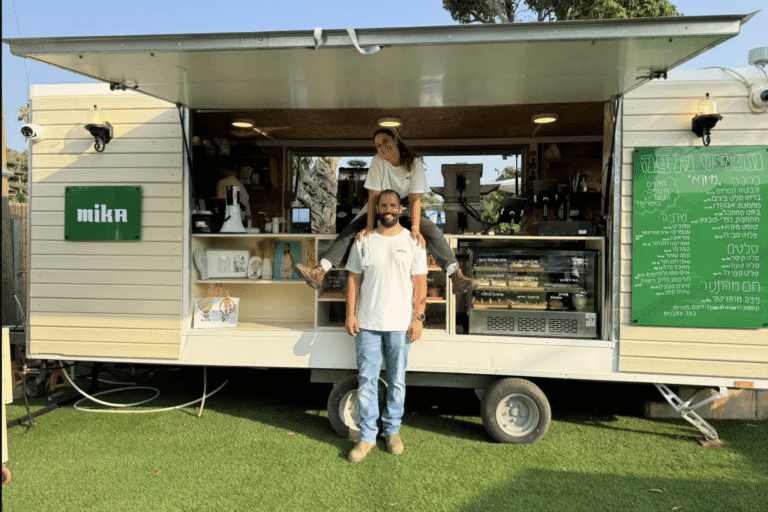
If you ask almost anyone under 30 in Israel about their Friday plans, there’s a good chance the words “coffee cart” will come up. Coffee carts, or agalot café, have become part of the country’s social landscape. They dot beaches, mountaintops, sidewalks, scenic lookout points, and quiet kibbutz corners. For many Israelis, these carts are more than places to grab a cup of joe before moving on with their day. They are gathering spots, miniature communities where soldiers can decompress on weekend leave, families can linger, and groups of friends can gather to play Shesh Besh without needing reservations, makeup, or much of a plan at all.
After October 7, something new and deeply meaningful began to take root within that culture. Families and friends of those murdered on October 7 and of soldiers killed in the war began opening coffee carts in their memory. These carts reflect an instinct that runs deep in Israeli society: to honor loss not only through mourning, but through life, connection, and acts of everyday togetherness.
I interviewed two such carts, Galiki Café in the Galilee and Mika’s Cart in central Israel. Their stories reveal how Israelis are transforming grief into something communal, life-affirming, and hopeful.
Why coffee carts became such a big deal in Israel

Coffee carts first surged in popularity during the COVID years, when outdoor gatherings became one of the only viable ways to socialize. Israelis were already experts at turning any patch of open space into social hubs, so the culture took off quickly. Today, there are well over 200 carts across the country.
So when families began searching for ways to honor loved ones after October 7, the idea of opening a cart felt natural. Many of those killed, especially at the Nova Festival, were young, warm, and deeply social people who loved gatherings and bringing others together. A coffee cart is a place where people meet, laugh, and sit together. It becomes a living reflection of who they were: people who loved connection, laughter, and being surrounded by others.

Galiki Café. A place Gal would have loved
Galiki Café, in the Galilee, was founded in memory of Gal Hershko, a 22-year-old soldier from a nearby kibbutz who was killed in December 2023 as he was leaving Khan Yunis.

I spoke with Gal’s aunt, Carmel, who described her nephew as someone who lived for his friends. His machsan, a storage room he had transformed into an informal hangout spot, was always full of people. There was food, music, drinks, and conversations that stretched late into the night. That atmosphere of easy togetherness was at the core of who he was. Even after he joined the army, any time off base was spent with the same close-knit group of friends, catching up and reconnecting.
After Gal was killed, the family originally hoped to build a lookout point in his memory. But because the kibbutz had been marked as shetach tzva’i, or army land, that plan was not possible. The family became mefunim, evacuees displaced after October 7, and were living in a hotel, which made the situation even more complicated. It was Gal’s mother who ultimately shifted the vision. She told the family she wanted to create something that would bring life and bring people together, a place where everyone would feel welcome.
Carmel, who works in sports therapy, said no one in the family had any real background in food or hospitality. But the community rallied around them. A Headstart crowdfunding campaign helped finance the construction of the cart. Supporters also purchased coffees for soldiers from nearby bases, and some of the cart’s staff come from the kibbutz itself. In that way, Galiki Café has done more than preserve Gal’s memory. It has created jobs for relatives and neighbors, adding another layer of purpose to the space.
Carmel told Unpacked that Gal would have loved it. “It feels like him,” she said. “Simple, open, and full of people.”
Mika Coffee: In Memory of Karina Pritika and Maya Haim
The second cart, Mika Coffee, comes from a story that is just as heartbreaking and equally full of life.
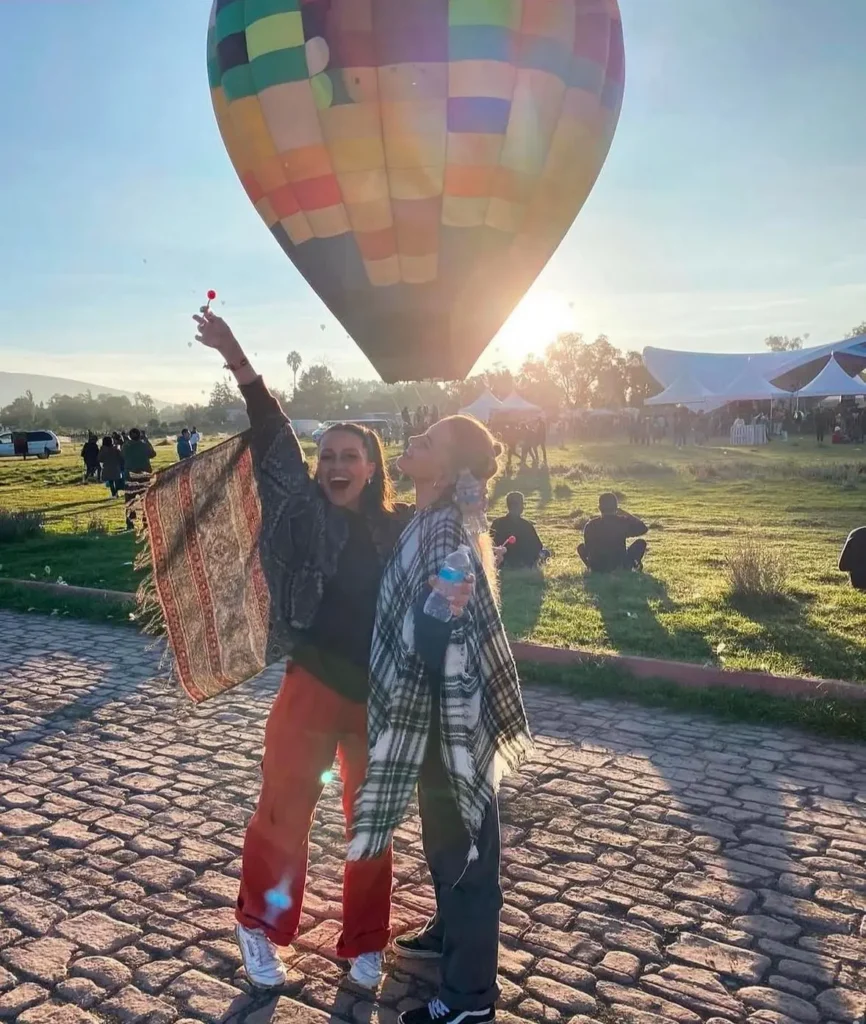
Shon Bar Shlomo, Karina Pritika, and Maya Haim were three close friends who began working together at a coffee shop when they were 18. Even when they were off shift, coffee remained part of their friendship. They loved to visit different agalot and brunch spots together, and their friendship was built on shared love of pastries. So when Karina and Maya were murdered at the Nova festival, Shon knew she wanted to create something that truly reflected who they were.
Opening a coffee cart felt like the natural choice. It was their world, their shared language, their place of happiness.

At just 24, Shon said the process was far from easy. There were constant challenges, logistical setbacks, and the steep learning curve that comes with building something from the ground up. But profoundly, the cart allowed her to continue the friendship in a new form. She created pastries in Karina and Maya’s honor. There is Maya’s Cinnabon, named for her favorite sweet, and a cookie dedicated to Karina, based on the kind Shon used to make for her. In that sense, the cart does more than memorialize them. It keeps small, intimate pieces of them present in everyday life.
For Shon, it was especially important that the cart not feel heavy or mournful. She told Unpacked she did not want to create an andarta, a traditional memorial monument, because she wanted people to think of Karina and Maya and think of life, not death. “They died at the peak of their lives,” she said. “I want this place to reflect that.”
When you visit Mika, surrounded by color and movement, and the easy energy of young people gathered together, it is easy to understand what she means. The cart feels less like a monument than like a continuation of the world Karina and Maya loved: bright, social, and full of life. Living memorials.

Both of these projects connect to something deeply Israeli: the idea of creating living memorials rather than focusing only on loss. Throughout Israel’s history, families and communities have established youth movements, forests, scholarship funds, sports leagues, academic programs, and nonprofits in memory of those who died. After October 7, this instinct only intensified. Hundreds of initiatives emerged, each seeking to honor the fallen by doing something positive in their name.
These coffee carts are more than memorials. They are engines of resilience, giving grieving families a renewed sense of purpose and giving communities new places to gather. Unlike the traditional memorial viewpoint for fallen soldiers and victims of terror, which can be found across Israel, these carts are loud with life. They are filled with the same laughter, conversations, warmth, and friendships that defined the people they honor.
They remind us that sometimes resilience can take humble, everyday forms: a cappuccino machine warming milk on a Friday morning or a friend reinventing a cinnamon bun in memory of someone she loved.
And in a post-October 7 Israel, the act of creating opportunities for joy and laughter just might be the most powerful tribute of all.