
The Jewish calendar is full of anniversaries, but so is the regular calendar.
Every week marks the anniversary of events that helped shape Jewish history, whether that’s a Nobel Prize-winning discovery, a pivotal Supreme Court decision, the birth of an iconic artist, the founding of a community, or a moment that changed the course of the Jewish people.
Welcome to Unpacked’s latest series, “This Week in Jewish History.” Each week, we’ll take a look back at the stories worth remembering and why they still matter today.
Check out previous editions here.
The Nazis force all Jews to take new names (August 26, 1938)
Over the past several years, denial of the Jewish people’s extensively documented ancestral connection to the Land of Israel has become increasingly normalized on both the anti-Israel left and the anti-Israel right. For those seeking to deny or delegitimize Jewish identity, mocking Ashkenazi surnames has become a favorite talking point.
If Israelis come from the Middle East, anti-Zionists argue, why do so many Ashkenazi Jews have European last names? They point to the Hebraization of names among early Zionist pioneers as supposed proof that Jewish immigrants wanted to conceal their European roots. Some radical anti-Zionists, for example, refer to Israeli Prime Minister Benjamin Netanyahu as “Benjamin Mileikowsky,” invoking his family’s former surname. Netanyahu’s grandfather, Nathan Mileikowsky, used Netanyahu as a pen name after immigrating to Mandatory Palestine in 1920, and his son Benzion later adopted it as his surname.

What these critics miss, of course, is that many European governments forced Ashkenazi Jews to adopt fixed surnames in the 18th and 19th centuries. Before then, many Ashkenazi Jews primarily used Hebrew given names accompanied by patronymics, matronymics, places of origin, occupations, or other descriptors.
But that wouldn’t be the last time European authorities forced Jews to take names that weren’t their own.
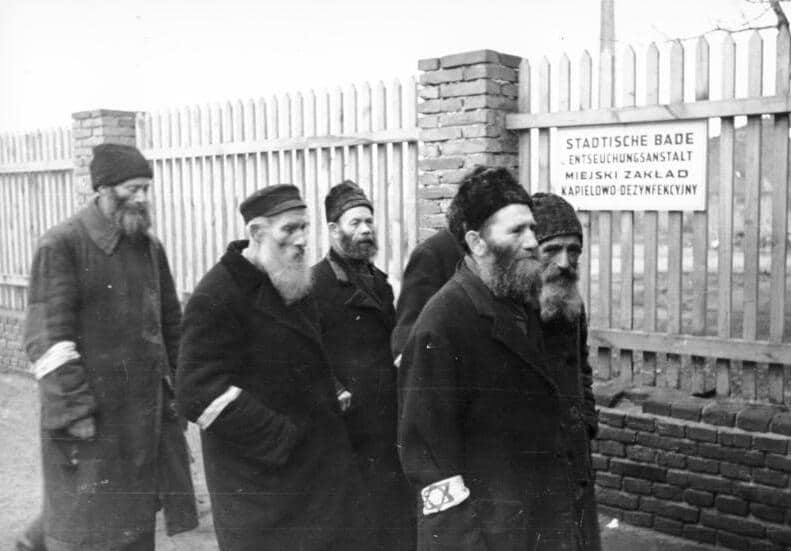
Given all the horrors that transpired in Nazi Germany and Nazi-occupied Europe, it makes sense that the Nazis’ interference with Jewish names has received relatively little attention. But on August 17, 1938, the Nazi regime enacted a decree requiring Jews in Germany and annexed Austria who did not already have government-approved “Jewish” first names to add “Israel” or “Sara” to their names. They were required to use these names in official records and business transactions beginning January 1, 1939.
Why?
The Nazis claimed that, by adopting German names, Jews were attempting to conceal their Jewish identities. In case you’re having trouble following: First, European authorities forced Jews to adopt European surnames. Then, the Nazis condemned Jews for having European names.
It’s almost as though no matter what Jews do — or are forced to do — antisemites will never be happy.
The decree made it easier for authorities and the broader public to identify, control, and segregate Jews. The names “Israel” and “Sara” were chosen because the Nazis regarded them as stereotypically and unmistakably Jewish, reducing millions of individual identities to two government-imposed labels.
Both some anti-Zionists today and the Nazis of the past have objected to the supposed “Europeanness” of Jewish names, though for opposite reasons. Today, critics may present European-sounding surnames as evidence that Ashkenazi Jews are indigenous to Europe rather than connected to the Middle East. The Nazis, meanwhile, regarded Jews as a race foreign to Europe and portrayed their German names as evidence of a supposed plot to conceal that “foreignness.”
At the end of the day, however, the reasoning hardly matters. There’s nothing righteous about mocking people’s names or forcing an oppressed minority to adopt names against its will. Nor are Jews the only marginalized people to have endured this erasure. For communities subjected to imperialism, colonization, enslavement, and forced assimilation, losing the right to one’s own name has been an extraordinarily painful and all-too-common experience.
Jewish history is a story of both tragedy and triumph. This week is no exception.
Operation Magic Carpet concludes successfully (August 24, 1950)
On November 29, 1947, after years of mounting tensions under the collapsing British Mandate, United Nations member states voted to partition Mandatory Palestine into one Jewish state and one Arab state. The Jewish community rejoiced. Arabs in Palestine and across the Middle East were furious.
Within days, a pogrom erupted in Aden, a British colony near Yemen. Rioters murdered 82 Jews and destroyed Jewish schools, homes, and businesses, devastating the local Jewish community’s economy. Although the Jews of Aden and neighboring Yemen had lived in the region for centuries and had nothing to do with the unfolding conflict in Palestine, they were forced to bear their neighbors’ wrath.


As the conflict in Mandatory Palestine intensified — and later developed into the first Arab-Israeli war — the region became increasingly dangerous for Jews. The Aden pogrom was not the only reason Yemenite Jews left; religious and Zionist aspirations had drawn members of the ancient community toward the Land of Israel for decades. But mounting violence and insecurity made the need to leave increasingly urgent.

For this largely isolated community, however, reaching Israel was no easy feat.
In 1949, Israel and the American Jewish Joint Distribution Committee launched an operation officially known as “On Wings of Eagles” and popularly remembered as Operation Magic Carpet. Organized and financed by the JDC, the operation used British and American aircraft — including planes operated by Alaska Airlines — to transport approximately 48,000 Yemenite and Adenite Jews from Aden to Israel. By September 1950, nearly the entire community had been evacuated.
Read more: Aliyah explained — How Jewish immigration built modern Israel
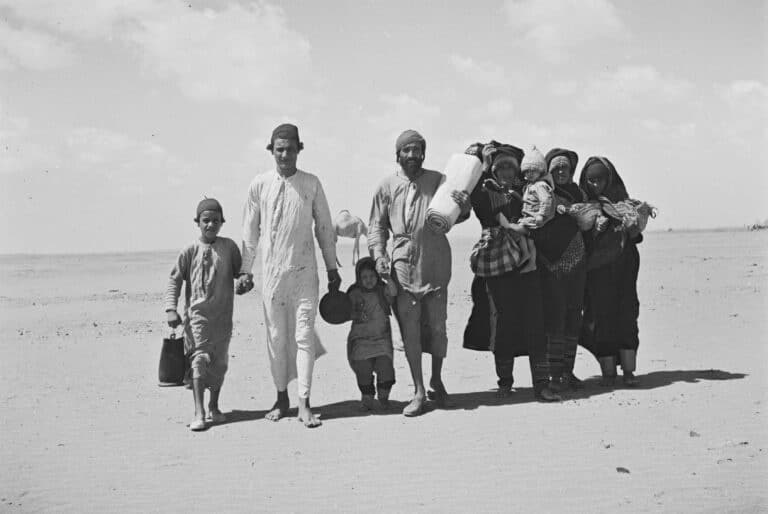
But the journey was hardly magical. Because the planes departed from a British transit camp near Aden, Jews from across Yemen first had to cross deserts and mountains, often traveling on foot for hundreds of miles. Hundreds died along the way from heat, hunger, dehydration, disease, and attacks. Others died after reaching the overcrowded transit camp, where illness spread rapidly.
Life in Israel presented its own hardships. Many new arrivals were housed in austere transit camps and faced poverty, discrimination, and pressure to abandon elements of their culture. The period also remains shadowed by the Yemenite Children Affair, in which hundreds of immigrant families were told that their children had died — often without receiving bodies, death certificates, or clear explanations.
Still, Yemenite Jews persevered. More than seven decades later, their religious traditions, music, food, art, and language remain integral to the cultural fabric of modern Israel. Operation Magic Carpet saved an ancient Jewish community from an increasingly precarious situation — but its history is also a reminder that rescue and belonging can come with profound loss.