
At Rosh Hashanah tables around the world, Jews will repeat the same familiar ritual: dipping an apple into honey and wishing one another a sweet new year.
But the honey will not be quite the same as last year’s — even if it came from the same beekeeper and the same field.
Most people buy honey without thinking much about it. They grab a bear-shaped bottle or whatever the grocery store happens to carry. But honey is not one flavor, and the jar you choose can change what that first bite of the new year actually tastes like.
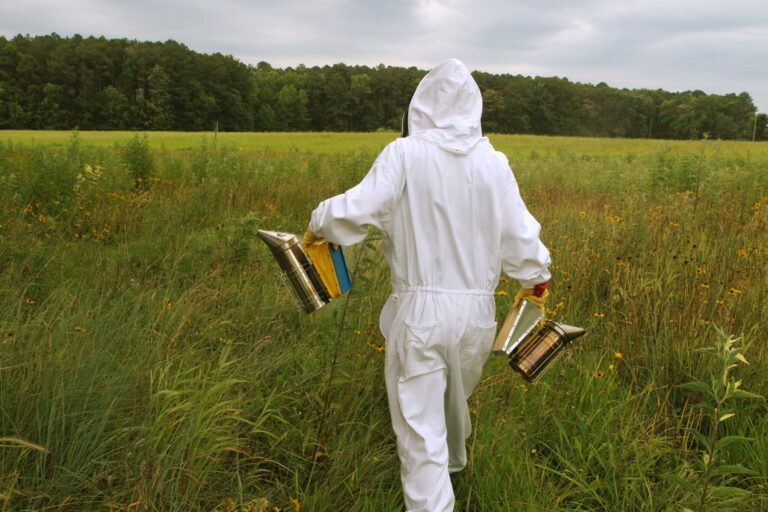
I have kept bees for nearly 20 years on a 102-acre farm on Maryland’s Eastern Shore, where we plant roughly 40 acres of clover and wildflowers each year to provide forage for our hives. After nearly two decades of watching the land, the weather and the bees work together, the thing I most want people to understand is that honey is an agricultural product.
It changes from field to field and from season to season, much like wine. Every jar is a record of a particular landscape at a particular moment in time.
Why Jews eat apples and honey on Rosh Hashanah
Sweet foods appear throughout Rosh Hashanah celebrations as symbols of the year people hope lies ahead. For Ashkenazi Jews, apples dipped in honey became one of the holiday’s most recognizable traditions, although the custom has since spread far beyond Ashkenazi communities.

Before eating the apple, many Jews recite the blessing traditionally said over fruit. After dipping it into honey, they add a short prayer: “May it be Your will to renew for us a good and sweet year.”
The distinction between a good year and a sweet one matters. Goodness can sometimes be difficult to recognize while we are living through it. Sweetness is something we can experience immediately.
Honey makes that hope tangible. But although we repeat the same ritual each year, the substance carrying all that symbolism is constantly changing.
Honey tastes like whatever bloomed
Bees make honey from nectar, and nectar comes from flowers. The flavor in a jar of honey therefore reflects what was blooming around the hive during the weeks the bees were working.
Honeybees often forage within a mile or two of their hive when abundant food is available nearby, although they can travel considerably farther when necessary. That means even honey produced on a farm planted specifically for pollinators will reflect the surrounding landscape as well.
Clover honey is what many Americans picture when they think of honey. It is generally light in color, mild, floral and clean. It is a safe choice, and there is nothing wrong with being the safe choice.

“Wildflower,” meanwhile, is a catch-all term. It simply means that the bees collected nectar from multiple kinds of flowers rather than one dominant floral source. Its flavor can vary enormously depending on where and when it was harvested. One jar might be light and delicate; another might be earthy. In the fall, ours tends to run darker and more complex than clover, with more going on at the finish.
Buckwheat honey is the variety that surprises people most. It is nearly black, with flavors reminiscent of molasses and malt and a distinctive mineral edge. I love it, although it is completely wrong for dipping apples, which I will come back to.
Orange blossom is bright and citrusy, with a floral aroma. Fireweed tends to be light and clean. Tupelo is prized for its buttery flavor and famously does not crystallize. Sourwood, if you can find it, has a lingering flavor that recalls caramel and spice, and it is worth the search.
The descriptions are useful, but they are not absolute. Honey is not manufactured to taste the same every time. That variability is part of what makes it interesting.
Why this year’s honey is not last year’s honey
Ask any beekeeper about a season, and you will get a weather report. A wet spring can wash the nectar out of a bloom. A dry July can shut one down early. The crop you count on can come up thin, and a plant you barely planned for can carry the hives instead.
That is roughly what happened on our farm this summer. Our clover came in thin, and a run of heat followed by heavy rain kept the wildflowers blooming week after week to fill the gap. Whether there will be a fall harvest at all, I will not know for a few more weeks.
Years ago, that uncertainty would have kept me up at night. Now I understand it as part of keeping bees. We can plant, prepare and pay attention, but we cannot command rain to fall or flowers to open. The bees can work only with what blooms.
How to choose honey for Rosh Hashanah
For dipping apples, I generally recommend a light, delicate honey that complements the fruit rather than steamrolling it. Apple blossom, lavender and fireweed all work beautifully here, as do blueberry, orange blossom, sweet clover, and a light wildflower.
Strong dark honey works against you here, because the whole point of the ritual is tasting the sweetness, not wrestling with it.
Honey cake is a different matter. Cake batter also contains flour, eggs, sugar and often coffee and assertive spices. A delicate honey can disappear into that mixture. Buckwheat honey or a robust wildflower honey will stand up to the other ingredients and give the finished cake greater depth.
For challah, a spring honey or a medium-amber wildflower will stay noticeable without dominating the bread.
Color can offer a clue to intensity, but it is not a perfect measure of flavor. When shopping, look for a label that identifies the honey’s floral source, geographic origin or harvest season. Terms such as “single-origin” or “monofloral” can be useful, but they do not necessarily mean that every drop of nectar came from one type of flower. Bees do not obey property lines or crop maps.
And if you want the holiday to feel like it came from somewhere, buy from a local beekeeper within driving distance of your table. Farmers markets in September are full of honey harvested just weeks earlier. Ask what was blooming. Most of us will talk your ear off about it.
Four things beekeepers wish you knew

Crystallized honey is not spoiled
Crystallization is a natural process that can eventually occur in almost any honey. How quickly it happens depends on several factors, including the honey’s ratio of glucose to fructose, its water content, how it was filtered, and the temperature at which it was stored. It often means the honey is raw and minimally processed.
To bring it back, set the jar in warm water off the heat, and be patient. Do not microwave it, which cooks off the aromatics you paid for.
“Raw” does not tell you everything
Raw is not a regulated term. It generally indicates that honey has not been heavily heated or finely filtered beyond straining out the wax. But the word does not give shoppers a complete or standardized account of how a particular product was handled.
Ask the beekeeper or producer whether the honey was heated, how it was filtered and where it was harvested. A person who can answer those questions clearly may tell you more than a word on the front of the label.
Babies should never be given honey
Never give honey to a child younger than 12 months. Honey can contain spores of the bacteria that cause infant botulism, a rare but serious illness. Older children and adults have digestive systems mature enough to handle those spores; infants do not.
This warning applies even during Rosh Hashanah. A baby can participate in the sweetness of the holiday without tasting honey.
Knowing the source matters
Honey adulteration — in which honey is diluted or substituted with other sweeteners — is a documented problem in the global supply chain. That does not mean every inexpensive bottle is fraudulent, and price alone cannot tell you whether honey is authentic.
The simplest protection is transparency. Buy from a producer, retailer or beekeeper who clearly identifies where the honey came from and is willing to explain how it was produced.
The sweetness of an unpredictable year
There is something I love about using a food that changes every year to express our hope for a sweet year ahead.
The jars from this season will preserve the record of a hot, wet and strange summer on one particular piece of land. Next year’s honey will tell a different story.
Nobody dipping an apple needs to know what happened in the field where the honey began. The ritual works either way.
But I think the sweetness lands a little differently when you do.
