
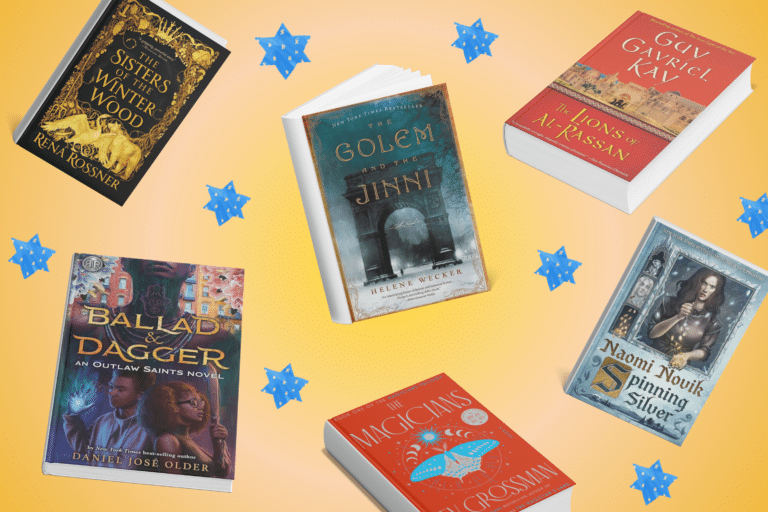
Jewish writers have a long, time-honored tradition of spinning the fantastical, from the numerous Jewish fairy tales and folktales that have been retold for generations to modern stories that remix old legends into new worlds.
In recent years, a growing number of fantasy novels by Jewish authors, rich with Jewish characters, themes, and cultural touchstones, have earned international acclaim well beyond what might once have been a more niche readership. Many Jewishly-inspired fantasy works have been recognized with prestigious literary awards, and some have even leaped into film and television productions.
If you’re looking for the perfect read to immerse yourself in another world, as the best fantasy reads can do, consider starting with some of these standout Jewish-inspired books.
Read more: Spooky, scary, and mystical Jewish books
“Spinning Silver” by Naomi Novik
“Spinning Silver” is a relatively rare and noteworthy entry in the historical fantasy genre: it features an explicitly Jewish protagonist. Loosely inspired by “Rumpelstiltskin” and set in a world reminiscent of medieval Eastern Europe, it builds a richly textured setting and a memorable cast of characters.

Miryem Mandelstam takes over her father’s moneylending business and earns a reputation for “turning silver into gold,” a talent that draws the attention of the Staryk, mythological winter beings that feature elements of historic Cossacks. Their ruler demands Miryem transform his silver and become his queen in return, pulling her into a dangerous bargain where power, survival, and identity are constantly being renegotiated.
Beautifully written and compulsively readable, “Spinning Silver” is a total page-turner and grapples with feminist themes and antisemitism in a subtle but powerful manner. It’s also a perfect wintry read: much of the story unfolds amid snow, ice, and long dark nights, with an all-female ensemble of protagonists navigating the cold both outside and within their world.


“Lions of Al-Rassan” by Guy Gavriel Kay
Canadian Jewish author Guy Gavriel Kay has been a beloved fixture in contemporary fantasy for years, and for good reason: his novels blend historical lore and magical worlds that still wrestle with big, human questions. “Lions of Al-Rassan” is loosely inspired by medieval Spain, particularly the conflicts that shaped the Iberian Peninsula in that era.

Astute readers will notice that each of the three major faith traditions depicted in “Lions” echoes, in broad strokes, Christianity, Islam, and Judaism as they would have existed in that time and place. Through that lens, the Kindath female physician, Jehane bet Ishak, can be read as a Jewish-coded character. Kay’s period-based expertise and sharp writing let readers experience a fascinating form of historical escapism.
“The Magicians” by Lev Grossman
The first book in a trilogy, “The Magicians,” is a darkly sardonic, wickedly witty read that borrows from, pokes at, and occasionally skewers a whole shelf of beloved fantasy worlds ranging from E. Nesbit’s books to “Narnia,” “Harry Potter,” and George R. R. Martin’s “A Song of Ice and Fire.”

Quentin Coldwater, a high-achieving but restless kid from Brooklyn, earns admission to a secretive college for magicians (so much for the Ivies), and Lev Grossman delivers a sharp, unsettling twist on the classic “gifted young people discover magic” setup. Instead of uncomplicated wonder, the book asks what happens when smart, anxious, emotionally undercooked twenty-somethings are handed enormous power, very little supervision, and no clean instructions for how to be a person.
While it isn’t an explicitly Jewish novel, Grossman sprinkles in intriguing, blink-and-you ’ll-miss-it Jewish textures. Readers meet, in what may be fantasy literature’s rarest cameo, a Hasidic student taking a magical entrance exam, and several other subtle references to Jewish culture and literary elements throughout.
And for anyone who gets heavily invested in the trilogy, there’s also an excellent TV adaptation as well.
“The Golem and the Jinni” by Helene Wecker
As perhaps the most well-known figure in Jewish folklore, the golem has had its fair share of literary portrayals. In “The Golem and Jinni,” Helene Wecker breathes new life into the ancient legend (pun intended!): a female golem arrives in 19th-century New York City and forges an unlikely friendship with a jinni from Arabic folklore.

Wecker deftly blends elements of urban fantasy with richly detailed historical research, weaving immigrant-era Manhattan into a setting that feels both grounded and enchanted. The result is a beautifully written novel that leans into the wonder of mythic beings while staying deeply invested in the interior lives of its characters. For fantasy readers who love a slow-burn, emotionally satisfying friendship arc, the character development here is especially rewarding.
“Sisters of the Winter Wood” by Rena Rossner
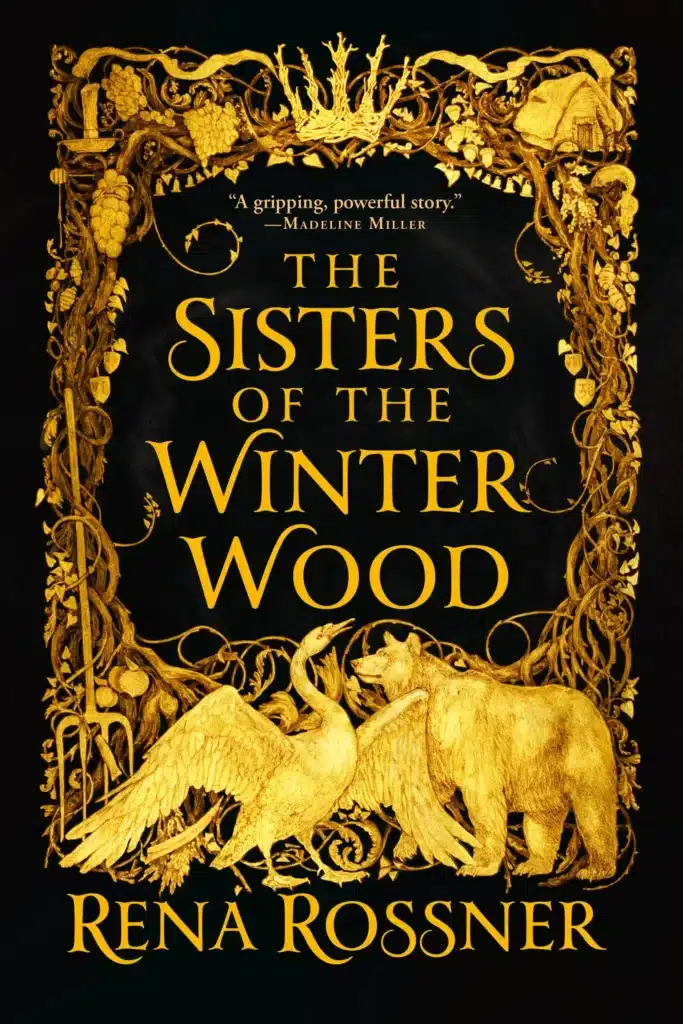
One of fantasy’s fastest-growing offshoots in recent years is romantasy, and for readers craving a Jewish fantasy with a dose of romance (and some rather unusual folklore-inspired love stories that veer delightfully into the strange), “Sisters of the Winter Wood” ticks that particular box. Rena Rossner offers a fairytale glimpse into pre-revolutionary Eastern Europe through the eyes of Laya and Liba, two forest-dwelling Jewish sisters. Each sister provides her own unique perspective, and Rossner brings the dangers and legends of a fictionalized Czarist realm to life.
“Ballad and Dagger” by Daniel Jose Older
It can be hard to find YA mainstream novels that prominently feature Sephardic and Latino Jews, let alone YA fantasy novels. “Ballad and Dagger” does so in a deeply imaginative manner. Published under Rick Riordan’s (bestselling author of Percy Jackson) imprint, the novel introduces readers to the fictional Caribbean island of San Madrigal, which has vanished into the sea, leaving behind a diaspora community that rebuilds its lives in New York as Little Madrigal.

As Sephardic Jews were an integral part of San Madrigal — a historical parallel to many Caribbean islands with longstanding Jewish communities such as Curaçao and Jamaica — they are also an integral part of the diaspora community. Throughout the novel, Sephardic Jewish characters and traditions crop up, from Rabbi Hidalgo and his daughter Chela to the presence of Ladino as an integral language of the Little Madrigal community. There’s plenty of suspense and fantasy intrigue to hook readers, including murder, battles, and dark forces at play — and it’s incredibly refreshing to finally have a YA fantasy novel with a significant Sephardic element.