

Fantasy novels are full of deadly trials, ancient magic, and brooding love interests. But for millions of readers, the worlds created by Sarah J. Maas have always carried something quieter beneath the spectacle: traces of her own story.
Maas finally stepped out from behind the curtain and into the pop culture hot seat and announced on “Call Her Daddy” that new “A Court of Thorns and Roses” books are officially on the way. In her March 4 appearance (in which she wore an adorable Hamsa necklace), she revealed release dates for the next two ACOTAR installments, one of which will land in our laps on October 27, 2026.
Maas, the blockbuster writer behind the “A Court of Thorns and Roses,” “Throne of Glass,” and “Crescent City,” is one of the most successful fantasy authors of the 21st century. Her books have sold tens of millions of copies worldwide and helped define the BookTok “romantasy” boom.
Yet while Maas’ work is often discussed for its sprawling lore and passionate fanbase, another part of her identity rarely makes it into the conversation: she’s Jewish.
Maas has spoken openly about growing up Jewish and about how Jewish history and cultural memory shaped her imagination. In interviews, she has reflected on how stories of survival, diaspora, and resilience formed part of the backdrop of her childhood. Those themes echo in the worlds she builds, where characters endure exile, persecution, and long histories of conflict while struggling to hold onto identity and community.
At a moment when conversations about Jewish identity in popular culture are gaining renewed attention, Maas’s work offers an interesting case study. Her books are not explicitly “Jewish fantasy.” There are no synagogues in Prythian or menorahs in Midgard. But the emotional architecture of her stories often mirrors questions that have long animated Jewish storytelling: What does it mean to survive catastrophe? How do people preserve identity across generations? And how do communities rebuild after destruction?
Read more: Cassandra Clare wants readers to feel Jewish magic in ‘Sword Catcher’
Looking at Maas through that lens reveals a different way of reading one of fantasy’s most influential writers. Beneath the faerie courts and starborn powers lies something older: the enduring narrative DNA of a people whose stories have always been about exile, endurance, and return.
Here’s everything you want to know about Sarah J. Maas’ Jewish identity and how that has come across in her storytelling.

The basics
Sarah J. Maas was born on March 5, 1986, in New York City and grew up on Manhattan’s Upper West Side. She was adopted and raised in an interfaith household: her mother is Catholic and her father is Jewish. Maas has described a childhood that included Hebrew school and a bat mitzvah.
Long before the blockbuster series and the BookTok fame, Maas was simply a kid who couldn’t stop disappearing into fantasy. She fell hard for epic worlds and mythology, becoming especially obsessed with “The Lord of the Rings,” and she started building worlds of her own. She spent weekends and school breaks drafting stories almost obsessively.
That early obsession turned into a defining origin story. At 16, inspired by Tolkien and the fantasy she devoured, Maas began writing the book that would eventually become her debut novel, “Throne of Glass,” completing chapters after (and commonly before) she worked on her homework. In its earliest form, it was called “Queen of Glass,” and she posted chapters online on FictionPress, where it quickly attracted a devoted readership and became one of the site’s most popular stories. Even then, she already had a sharp elevator pitch for her premise: a fairy-tale framework with teeth, a “Cinderella” story flipped into something darker, where the heroine isn’t dreaming of the prince, she’s trained to kill.

By her early twenties, the online project was becoming a professional one. In 2008, at 22, Maas signed with literary agents. Two years later, she sold “Throne of Glass,” launching what would become an eight-book series. By 2022, that series alone had sold more than 12 million copies, redefining modern fantasy for a new generation of readers.
Sarah J. Maas’ Jewish identity
On a Birthright trip to Israel during college, Maas did what a lot of travelers do when they reach the Western Wall: she tucked a folded note into the stones and made a private wish public in the most ancient way she could. Her prayer, she has said, was for world peace and also to become a published author.
By the time she was standing at the Kotel, that dream wasn’t abstract. At that point, she had already finished the first three installments of “Throne of Glass.” And while her wish may have contributed to her future success, it did instill a deeper love for her Jewish identity: “The Wall on Shabbat was one of the coolest experiences, full of joy and energy. I left Israel overflowing with pride. It’s a magical, welcoming place,” she said.
Read more: Leigh Bardugo delves into magic, intrigue, and her Sephardic heritage in ‘The Familiar’
That deepened connection didn’t stop there. In college, Maas has said, Judaism clicked into place in a new way. She studied creative writing and religious studies at Hamilton College in upstate New York. As a freshman, she met Josh Wasserman, who would later become her husband, at a Hillel event. The future “Papa Maas” was Hillel president at Hamilton and her resident advisor. “He made Judaism cool for me,” Maas said of meeting Wasserman.
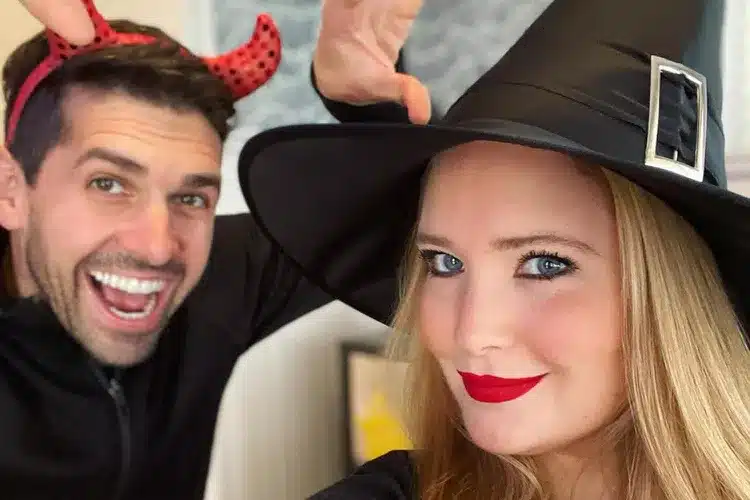
Maas has spoken about a family history shaped by the Holocaust, a legacy she has connected to her understanding of survival and memory. One of her closest real-life touchstones is her grandmother, Camilla, who was born in Frankfurt and escaped the Nazis with the help of a Belgian Catholic family. Maas has shared that Camilla fled during the occupation under gunfire and eventually made it to the United States. On another branch of the family, Maas’s great-grandfather survived Auschwitz and Buchenwald, while her great-grandmother was murdered in Majdanek. In adulthood, Maas and her husband marked that lineage in personal ways, including hosting Camilla at their first Passover Seder in their Philadelphia home.
Judaism within the Maasverse
If you go looking for explicit Judaism in Sarah J. Maas’ books, you won’t find a one-to-one translation of Jewish life. No synagogue scenes and no characters are stopping a battle to daven Mincha. What you do find, instead, is a scatter of Jewish-coded details and Biblical story shapes that show up differently in each series.
In “Throne of Glass,” the Jewishness is often quiet and easily missed. One of the clearest moments comes when the heroine, Aelin, visits graves and leaves stones behind, a gesture that mirrors the Jewish custom of placing a small rock on a headstone as a sign of presence, memory, and continuing connection. Elsewhere, the references are more like breadcrumbs: names and words that ring with Hebrew resonance — like the Hebrew name Abraxos, the name Lehabah (Hebrew for “flame), the name Suriel (meaning “my rock is God” in Hebrew), the Hebrew word for market, shouk —, and narrative arcs that echo Biblical themes.
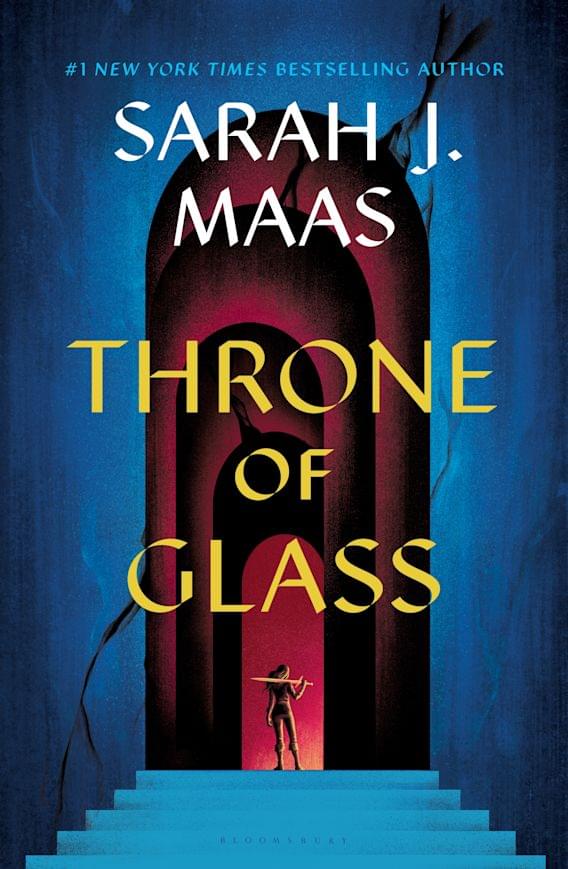

That’s also where some readers see Maas drawing on Torah-adjacent inspiration for character building. Nehemia Ytger, the princess who becomes a catalyst for revolution, is frequently read as a character whose very name invites comparison to the Biblical Nehemiah: a figure associated with rebuilding, communal restoration, and the work of bringing a threatened people toward safety. Both are leaders who become hinges between oppression and collective renewal.
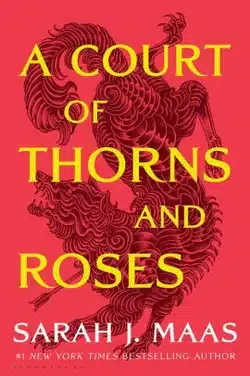
It’s in “A Court of Thorns and Roses” that Maas starts playing more openly with religious language, weaving them into the logic of her world. One of the most striking examples is the introduction of “Lashon HaKodesh”, literally “the holy tongue”, a term many Jews recognize as a way of referring to Hebrew. In the series, this “holy language” is framed as ancient, powerful, and uniquely capable of unlocking or controlling forces that threaten to destroy the world. It’s a fantasy move, but it’s also a Jewish idea: language as spiritual technology, words as tools that don’t just describe reality, but change it.
From there, the Biblical references get louder. A warrior named Miryam, born a slave to a faerie queen, carries the unmistakable outline of Miriam from Exodus, and her story is clearly inspired by the escape-from-slavery narrative, including a sea-crossing sequence that reads like a fantasy parting of the Red Sea. Later, the series includes an image of doorways in Velaris that are marked for protection with lamb’s blood, which also recalls the Passover story, when Israelite homes are identified so the Angel of Death “passes over” them.
Maas also reaches for Jewish text when she wants to heighten romance into ritual. When Feyre and her lover, Rhysand, acknowledge that their bond extends beyond their physical bodies, they say, “I am yours and you are mine.” Maas taps the language of Song of Songs, a Biblical love poem that has long been included on ketubahs and under the chuppah.
Feyre’s moral compass and her reflex to help even when it costs her can read as resonant with Jewish ethical language. When Feyre first encounters the Suriel, it is bone-thin, corpse-pale, with eyes like cloudy glass. Her instinct is fear. But it doesn’t stay there. True to character, Feyre chooses curiosity over cruelty. She protects the Suriel when others would treat it as disposable, and over time, their exchanges become some of the series’ most unexpectedly tender moments.
Near the end, as the Suriel is dying, it presses a final lesson into Feyre’s hands: the obligation to practice Tikkun Olam, repairing what’s broken, to keep trying to make the world more whole. Feyre absorbs that charge as a personal mitzvah, and it shapes the way she moves through the war that follows. Again and again, she pushes her allies to save as many lives as they can, holding fast to the idea that every life is worth saving. It’s a sentiment that lands close to a classic teaching in Jewish tradition, often summed up as: saving a single life is like saving an entire world.
Anti-Israel backlash against Sarah J. Maas
Around two decades after her Birthright trip, a throwaway biographical detail has become a recurring point of online controversy: Maas once spoke positively about visiting Israel, and that quote keeps resurfacing in boycott conversations.
In recent years, that interview excerpt has been recirculated by accounts that track and flag authors for readers who want to boycott, including the X account Zionists in Publishing (also known as Zionists in Books). In posts about Maas, the account cites her Birthright trip and those older remarks, and also notes that she hasn’t publicly posted about either side of the Israel-Hamas war.
From there, the story spreads the way book-internet stories usually do: screenshots replace context, summaries get shorter each time they’re reposted, and a comment from years ago becomes a kind of shorthand, repeated in new threads as if it’s breaking news.