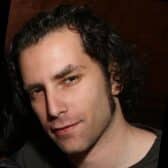

When Nick Matau first posted a video defending Israel five years ago, he expected disagreement. He did not expect death threats or messages praising Adolf Hitler.
Matau, who was raised by a Samoan father who spoke forcefully against terrorism, said he felt compelled to speak out after Hamas and other Palestinian militant groups fired thousands of rockets toward Israel in May 2021. The ferocity of the response stunned him.
“It was a shock to my system,” Matau, 34, told Unpacked. “I didn’t know it was that bad. I didn’t grow up around Jews.”
Many of the people attacking him assumed he was Jewish. He is not, though he is married to a Jewish woman. Matau said he believes in God but does not identify with a particular faith.

Five years later, speaking out for Israel has become a central part of his life. Under the name “Nicholas the Zionist,” Matau livestreams nightly, debating anyone willing to challenge him on Israel, Zionism and antisemitism. His following has grown to hundreds of thousands across Instagram, TikTok, X, Facebook and YouTube.
His willingness to enter some of the internet’s most hostile political spaces has helped him build that audience. In recent months, he has debated several prominent anti-Israel streamers, including Sneako and Myron Gaines, along with 10 pro-Palestinian activists at once. Clips from those exchanges have spread widely online. In the debates, Matau frequently presses his opponents to define their terms and provide evidence for their claims.
How Nick Matau approaches a debate
Matau’s approach relies not only on his command of dates, laws and historical events but also on his familiarity with the rhetorical techniques people use to avoid answering difficult questions.
One example is the “Gish gallop,” a debate tactic in which someone overwhelms an opponent with a rapid succession of claims, half-truths and distractions. Addressing each claim requires far more time than making it, allowing the person using the tactic to appear dominant without necessarily proving anything.
Matau tries to slow that process down. Rather than chasing every new allegation, he asks his opponent to define a term, identify a source, or defend one claim at a time.
That approach was on display in his debate with Sneako, whose real name is Nicolas Kenn De Balinthazy. The streamer, who has more than a million YouTube subscribers and millions of followers across platforms, has repeatedly spoken against Israel. He was also among a group of controversial influencers filmed at a Miami nightclub while Ye’s song “Heil Hitler” played.
During their debate, Matau repeatedly challenged Sneako’s claims about Israel and disputed his account of Islamic history. Matau said Sneako later blocked him and removed the debate from his own YouTube channel.
“He blocked me, but I was told he deleted the video from his own YouTube because even his own supporters were saying, ‘Yeah, you should probably delete this. You lost,’” Matau said.
[VIDEO: “I Debated SNEAKO … and He Completely Melted Down After Trying to Bring Up History”]
Matau used a similar approach with Myron Gaines, co-host of the “Fresh & Fit” podcast, a manosphere program with nearly 1.6 million YouTube subscribers. Gaines has praised Hitler and has brought his confrontational style to college campuses.
When Gaines accused Israel of genocide, Matau asked whether he had read the United Nations Genocide Convention. Gaines ultimately acknowledged that he had not.
In another video, Matau faced 10 pro-Palestinian activists in succession. Even when one participant mocked him for being autistic and repeatedly insulted his intelligence, Matau remained composed and continued pressing the participants on their evidence.
Matau’s performances have also attracted attention outside firmly pro-Israel circles. Conservative Christian podcaster Andrew Wilson, host of “The Crucible,” recently called Matau “an excellent debater in that field” and predicted that he would become “the largest pro-Israel debater on planet Earth.” The praise was notable because Wilson is not consistently pro-Israel.
The person he would most like to test himself against is Mehdi Hasan, the founder and editor-in-chief of Zeteo, a former MSNBC host and the author of “Win Every Argument: The Art of Debating, Persuading, and Public Speaking.”
Matau believes that, despite Hasan’s reputation as a skilled debater, he sometimes relies on manipulative tactics.
“I would look forward to debating him if he is up for it,” Matau said.
Nick Matau’s “secret weapon”
Matau said his debating style grew out of a lifelong instinct to argue, later sharpened by formal debate classes and 12 years in the U.S. Navy. He served as a nuclear engineer until 2023, spending part of that time aboard a submarine.
Life underwater required discipline and patience. Communication with the outside world was limited, and even a basic email could take days to arrive.
Matau is also autistic, which he believes may help him process information, recognize patterns and anticipate where an opponent’s argument is going.
Matau’s debating style combines rapid recall with patience. He is often at his most effective when an opponent resorts to slogans or emotional appeals because he refuses to match their intensity.
“Once you get past their slogans, they have nothing to say,” he said.
Matau said his research extends beyond writers who share his views. He reads Israeli historian Benny Morris and attorney Alan Dershowitz but also seeks out Palestinian authors. His regular media diet ranges from The Jerusalem Post to Al Jazeera.
He recently discussed that preparation with rapper and podcaster Nissim Black, who lives in Israel.
The battle over the word “genocide”
One of the most frequent — and emotionally charged — claims Matau encounters is that Israel is committing genocide in Gaza.
Matau said young Jews are often confronted with what he considers loaded questions about whether they support “genocide” or the killing of children. He believes the framing is designed not only to criticize Israel’s conduct but also to make Jewish people feel ashamed or afraid to defend it.
“Their point is to make Jewish people, especially Gen Z, feel isolated in the world,” Matau said. “I personally feel there are not enough gentiles in the world like me speaking out because they feel it’s not their problem. They’re winning the PR battle by making young Jewish people feel scared and afraid to even speak out.”
On his streams, Matau begins by asking opponents to define genocide. He then turns to the legal standard, which requires proof of a specific intent — sometimes referred to by the Latin phrase “dolus specialis” — to destroy a national, ethnic, racial or religious group, in whole or in part.
That does not settle every dispute over Israel’s conduct in Gaza. But Matau argues that it forces debaters to distinguish between the horrors of war, allegations of war crimes and the separate legal claim of genocide.
He recently debated socialist philosopher Ben Burgis on Jillian Michaels’ podcast, where the two clashed over Gaza, Palestinian rights and whether a one-state solution could protect Israelis.
Matau believes foreign actors have helped spread false or misleading claims about Israel online, particularly among young people. He argues that the sheer volume of this content “floods the zone,” allowing Israel’s opponents to set the terms of the conversation.
“We need to take back the narrative and talk about Islamic terrorists who want Americans dead, not just Israelis,” he said.
Antisemitism on the right
Matau is also concerned about the growing influence of antisemitism within parts of the political right. He pointed to Tucker Carlson and Candace Owens, both of whom have increasingly criticized Israel and challenged Christian support for Zionism, as examples of that shift.
“Those who know the Bible don’t listen to the nonsense of Tucker and Candace,” Matau said. “I hope Christians who care about their faith know it’s a problem and start to isolate this cancer that’s trying to infect the Christian people.”
He is particularly frustrated by arguments that Israel should limit its response to terrorist attacks because military action will inevitably radicalize a new generation. Matau believes that reasoning denies societies the right to defeat violent enemies and places responsibility for future terrorism primarily on its victims.
Matau has also applied that framework to Iran. He said he understands why many Americans — especially younger Americans — are wary of war after the experiences of Iraq and Afghanistan. But he argued that those conflicts have led some people to treat every Middle Eastern confrontation as interchangeable.


“Nobody likes war,” Matau said. “I don’t like war. I like destroying evil. The Iranian people have gone through enough oppression and murder.”
He said he opposed making a deal with Iran because he does not trust the regime to abide by one.

“Am Yisrael Chai”
Matau recently returned from Israel, a country he said he has come to love for the warmth of its people. Some Israelis now recognize him and thank him for his advocacy. On his right arm, he has a tattoo reading “Am Yisrael Chai” — “the people of Israel live.”
During his latest visit, he sensed that many Israelis felt isolated by the world’s response to the war in Gaza and worried that the country was increasingly being cast as uniquely evil.
Matau said Zionism was not always treated as a dirty word in mainstream discourse. He believes conspiratorial claims about an all-powerful “Israel lobby,” once largely confined to the political fringes, have become increasingly common in mainstream discourse. He wants Israel’s defenders to respond by speaking more directly about Hamas’ ideology, the Iranian regime’s ambitions and foreign influence on American institutions and media.
He also wants them to stop treating public opinion as proof. Matau frequently encounters the argument that widespread belief in the genocide allegation makes it self-evidently true. But history, he noted, is full of popular beliefs that were rooted in prejudice or misinformation.
A fight beyond the Jewish community
Matau does not view antisemitism as a problem for Jews to confront alone. He sees attacks on Israel as part of a broader ideological battle over truth, democratic values and the future of the West.
“What I am trying to do is make sure I fight for what’s right because I don’t see it as only a Jewish problem,” he said. “Even though I’m not Jewish, I see this as a fight for truth and a warning sign for what’s going to be the fall of Western civilization.”
He also wants to set an example for his 13-year-old son by showing him that defending one’s convictions sometimes requires entering hostile spaces. Matau has attended anti-Israel demonstrations and challenged protesters to defend their claims on camera. His videos show people shouting at him, though few agree to a sustained debate.
Matau said anti-Zionism is often a socially acceptable cover for antisemitism. Although criticism of Israel is not inherently antisemitic, he believes many activists cross that line by denying Jews the right to national self-determination, applying standards to Israel that they do not apply elsewhere, or repeating old conspiracies about Jewish power.
He recently carried that message to Toronto, where he appeared alongside Christian pro-Israel advocate Jacob Smith on a panel at the inaugural World Symposium Against Antizionism.
Matau told the audience that he had been shocked to receive messages telling him to “burn and die” simply for defending Israel. He argued that Israel has the stronger factual case but that its opponents often have the catchier slogans.
He remains optimistic, though not passively so.
“One of my favorite things about the Jewish people is tikkun olam,” Matau said, referring to the Jewish concept of repairing the world. “Nobody said it is a quick or fun project. It’s something you strive to do, and I think of that in terms of everything, including dispelling disinformation.”
“Even though it may feel like an uphill fight, the only way the fight can still be won is if you fight,” he continued. “I don’t believe truth wins just because. You have to go out and put in the effort.”