

Two new United Nations reports on children affected by the Israeli-Palestinian conflict have received widespread media attention. But do the reports themselves support the headlines they generated?
The first report, published on June 16 by the UN Secretary-General’s office on the topic of “Children and armed conflict.” It examines harm to children across conflicts around the world, not just Israel.
The second report, published on June 23, was presented by a Commission of Inquiry established by the UN Human Rights Council in 2021 to investigate Israel specifically. Titled “‘The essence of childhood has been destroyed:’ Israel’s deliberate targeting of Palestinian children in the Occupied Palestinian Territory since 7 October 2023.”
What does “verified” mean?
The UN Secretary-General’s report on “Children and armed conflict” found that violations against children in armed conflict reached a record level of the number of children affected in 2025, with 38,558 verified violations recorded affecting 24,174 children. The report includes both incidents that occurred during 2025 and from previous years that were only verified in 2025.
The violations include killing, maiming, the denial of humanitarian access, the recruitment and use of child soldiers, and abductions. The report determined that across the countries the UN monitored, “Parties to conflict failed to uphold or proactively undermined their obligations under international humanitarian law and international human rights law and continued to commit grave violations with near-total impunity, resulting in excessive humanitarian consequences for civilians and civilian objects, disproportionately affecting children and the facilities and services they rely on.”
The report’s section on Israel does not attribute violations only to Israel. It also attributed violations to Hamas and other Palestinian armed groups, and specifically condemned indiscriminate attacks toward Israeli population centers, alongside its findings against Israeli forces.
Among all the situations monitored by the UN, the highest number of verified violations in the report was recorded in Israel and the Palestinian territories, followed by the Democratic Republic of the Congo, Nigeria, Myanmar, and Somalia.
The key term there is the word “verified.”
The Secretary-General’s report counts only incidents that the UN can investigate and verify, according to a set of standards noted in the report.
In Israel and the Palestinian territories, the UN has an unusually robust ability to examine and verify cases. Multiple UN agencies maintain a significant presence on the ground, casualty reporting by the local health ministries in Gaza and the West Bank is constant, and the conflict receives intensive international attention.
By contrast, in many other conflicts the UN report examined, including Sudan, the Democratic Republic of the Congo, and Yemen, the UN’s verification capabilities are much more limited. In some areas, it is nearly non-existent. In Sudan, for example, UN monitoring missions have been shut down in recent years, communication is extremely difficult, and government and central reporting systems have largely broken down.
The effect this has on the numbers is striking.
The Secretary-General’s report verified 1,889 violations and 847 children killed in Sudan for all of 2025. Yet in just one battle, the fall of El Fasher, the UN Human Rights Office reported that more than 6,000 people were killed in three days. Around 130,000 children were trapped in the city, according to UNICEF, cut off from virtually all aid – itself a violation the Secretary-General’s report would count – and an estimated 6,000 children with severe acute malnutrition were left without treatment. Both agencies stressed that even these figures were almost certainly a significant undercount. Estimates of Sudan’s total death toll over the past four years exceed 150,000, and many experts believe the true number is significantly higher.
This is why the ranking has to be read carefully. If the actual toll in a country like Sudan is many times higher than what the UN could verify, then the list isn’t necessarily measuring where children are harmed most. Rather, it reflects where the UN is best able to document and confirm violations.
Israel and the Palestinian territories appear at the top of the list because the UN can verify far more in Gaza than in Sudan. By itself, that doesn’t establish that Israel harms children more than anyone else; it tells us Gaza is being watched more closely than almost anywhere else.
None of this is meant to minimize the situation in Gaza. The suffering caused by war is a tragedy, whether in Sudan, Gaza, or Israel, and children are often among the first impacted and the hardest hit in any conflict. That is one of the many disturbing realities of any war. The point is a narrower one: headlines built on these reports suggest Israel is uniquely or deliberately harming children more than any other party in a conflict. But that is not what the Secretary-General’s report itself establishes. It counts only incidents the UN has been able to verify, and it makes no finding about intent.
A different kind of report
The second report operates very differently from the first, and understanding that distinction is the key to understanding its findings.
Unlike the Secretary-General’s report, the Commission of Inquiry is not a global monitoring body that compares conflicts. It was established by the UN Human Rights Council in 2021 with a standing mandate to investigate Israel and the Palestinian territories. Its reports are built to support future legal proceedings, including at the International Criminal Court, which prosecutes individuals, or the International Court of Justice, which handles disputes between states, rather than to produce a comparative annual accounting of violations.

That purpose shapes everything about it, including the standard of evidence it uses.
Where the Secretary-General’s report includes only what the UN can independently verify, the Commission evaluates evidence using a lower threshold that it calls “reasonable grounds to believe.” This is the evidentiary standard that fact-finding bodies and commissions of inquiry commonly use. It is appropriate for this kind of work, but it falls well short of the “beyond a reasonable doubt” standard that a criminal court would require. It is also a lower bar than the incident-by-incident verification used in the Secretary-General’s report. In other words, the Commission’s role is to identify conduct that may warrant legal scrutiny, not to establish criminal liability.
That methodological difference is why the two reports cite such different numbers for the same war.
The Commission’s headline figure is at least 20,179 Palestinian children killed and 44,143 injured between October 2023 and October 2025, roughly 30 percent of those reported killed in Gaza. But that figure was not confirmed by the Commission on a case-by-case basis. It is adopted from the running total kept by the UN humanitarian office, which in turn relies primarily on reporting from the Gaza Health Ministry.
By contrast, the Secretary-General’s report largely excludes those same reported casualties unless they have been individually verified through the UN’s monitoring process. In other words, the two UN reports use the same underlying data but use it in fundamentally different ways. One counts only what it can independently confirm, while the other uses the full reported figure as its starting point for its legal and factual assessment.
Neither approach is necessarily dishonest in this regard, but they answer different questions, and their numbers cannot be compared or treated as mutually confirming.
What does “deliberate” mean?
The numbers are only part of what sets the Commission’s report apart. Its most serious claim isn’t a figure at all, it’s the accusation in the report’s own title: that Palestinian children weren’t accidentally killed during the fighting, but were deliberately targeted by Israel.
That is a far more serious charge. Both morally and legally, there is a fundamental difference between children who die in a strike aimed at a military objective and children who are singled out as targets. The Commission argues the second.
How does it reach that conclusion?
The report relies on two different kinds of evidence. In a small number of cases, it presents specific, closely documented evidence. For the overwhelming majority, it infers intent from the broader pattern of Israel’s conduct during the war. Those are very different kinds of claims, and they are worth considering separately.
For a limited number of incidents, the Commission investigated in forensic detail. It reviewed 17 medical files of children treated for gunshot wounds, ran independent forensic analysis on 15 of them, found wounds consistent with a single precise shot in most, and documented several incidents it determined involved Israeli snipers and drones. Based on those cases, it concluded that Israeli forces directly and intentionally targeted individual children.
Critics, however, have challenged whether the report fully explains how some of those conclusions were reached.
In one case, the Commission determined that a 15-year-old boy had been shot by Israeli soldiers using a sniper rifle after exiting his home. Yet the report itself states only that family members heard gunfire while Israeli security forces were operating nearby. There is no mention of whether any Hamas or Palestinian Islamic Jihad combatants were also present in the area, no mention of how investigators determined that a sniper rifle was used, and no mention of how it was determined the fatal shot came from Israeli forces rather than another source.
Another case involves the shooting of a baby who was being fed by his mother inside a tent in central Gaza. The Commission concluded that an Israeli quadcopter equipped with a sniper rifle deliberately fired into the tent, relying in part on a photo of a bullet reportedly recovered after the incident. It’s not clear from the Commission’s report how investigators determined the bullet’s origin, who fired it, or the intent behind the shot from that evidence alone.
The advocacy organization UN Watch noted that, for the Commission’s description to be true in that case, “the quadcopter would have had to descend to near ground level, visually identify a breastfeeding mother and a 10-day-old infant inside the tent from its opening (which is unlikely to have been constructed from transparent material), distinguish the baby’s approximately 35-centimeter head from any other object or person, and then intentionally fire a precision shot at the child’s head which then exited the baby’s head and struck a pillow. The COI provides no forensic reconstruction, no corroborating witnesses, no video footage, and no evidence that any witness even observed a quadcopter hovering near the tent opening. Instead, the COI simply assumes the presence of a quadcopter, assumes visibility into the tent, and assumes deliberate intent without evidence.”
In addition, the cases the Commission describes represent only a small fraction of the more than 20,000 child deaths it points to. The overwhelming majority of children in the report were killed in airstrikes on residential areas. For those cases, the finding of intent reaches its conclusion differently. The Commission argues that because Israel continued to use wide-area explosive weapons in densely populated neighborhoods over an extended period, knowing children were present, the resulting deaths should be understood as intentional rather than incidental. The Commission also pointed to several comments by Israeli officials that it asserted proved that its framing was accurate.
This is where the Commission’s reasoning becomes the subject of significant legal debate.
Under international humanitarian law, knowing that civilians will likely be killed does not, by itself, establish that civilians were the intended target of an attack. A military is permitted to attack a legitimate target despite foreseeable civilian deaths, as long as the expected harm is not disproportionate and precautions are taken.
The Commission argues that Israel’s repeated conduct demonstrates intent to target children. Critics argue that the same evidence demonstrates knowledge that civilian casualties would occur, but not necessarily an intention to kill children specifically. The distinction is central to the legal analysis.
The report itself notes that children are seven times more likely than adults to die from blast injuries, a fact that helps explain why child casualties make up such a large share of those killed in urban warfare, although the Commission argues it does not fully explain the pattern it documents.
None of this means the deaths did not happen. What it does mean is that the report’s central claim, that the killings were deliberate, is a legal argument based on the Commission’s interpretation, not a number it has measured. It’s also a finding about Israeli conduct only, since this particular report does not examine the actions of Hamas or other Palestinian armed groups.
That distinction concerns how the deaths are legally characterized, not whether they happened. The scale of the casualties in Gaza is devastating and broadly undisputed. That is the tragic nature of urban combat, especially in a conflict in which one side has a long-standing practice of using human shields. The Gaza Health Ministry’s count, cited by the UN and adopted by the Commission, puts the number of Palestinians killed since October 2023 at more than 65,000, of whom the Commission counts at least 20,179 children. Tens of thousands more children have been wounded, many left with permanent disabilities, and the Commission notes that thousands more are believed to lie uncounted beneath the rubble.
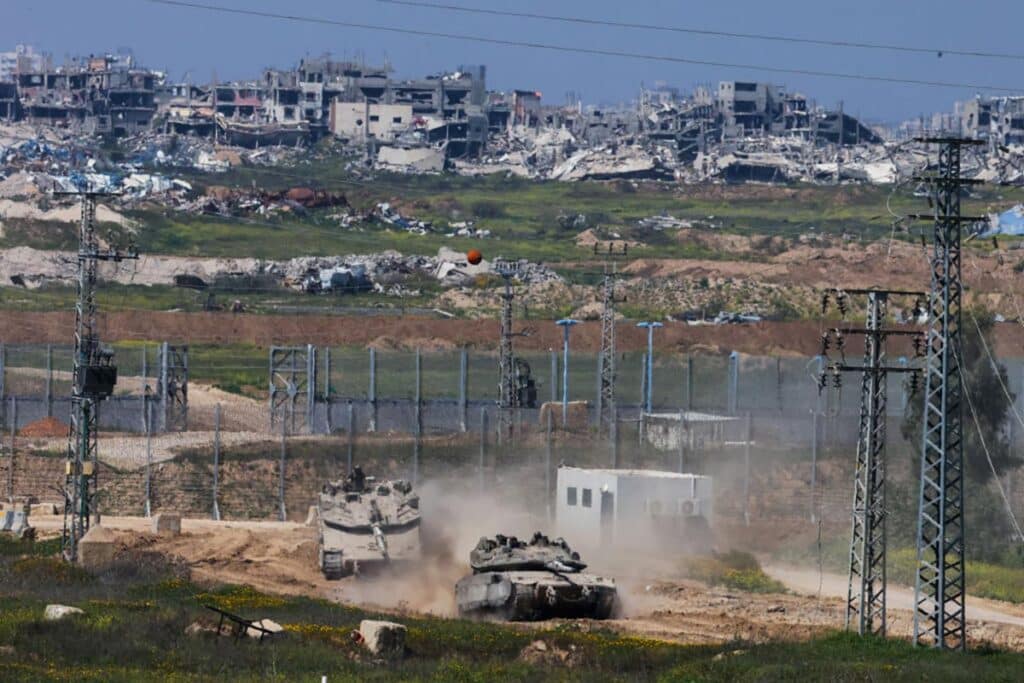
The destruction extends well beyond casualties. The Commission reports that by late 2025, more than 97 percent of Gaza’s schools had been damaged or destroyed, with hundreds of school buildings, many sheltering displaced families, directly hit; the UN counts more than 637,000 Gazan children with no school left to attend. Hospitals, water systems, and sanitation have been devastated, feeding outbreaks of disease and widespread malnutrition. The UN estimates that essentially all of Gaza’s roughly 1.2 million children now need some form of mental-health support. Whatever one’s view of the Commission’s legal conclusions, the war’s impact on Gaza’s children is undeniable.

The broader context is also important. This report builds on an earlier claim that this same Commission made in September 2025 that Israel is committing genocide in Gaza. Here, the Commission presents the harm to children, in part, as evidence of that intent.
The genocide accusation
Genocide charges are incredibly difficult to establish because proving such charges requires more than widespread destruction or mass death. It requires proof of a specific intent to destroy a national, ethnic, racial, or religious group, in whole or in part.
In its September 2025 report, the Commission argued that this intent could be established in two ways: through direct statements by Israeli leaders, and by inferring it from the overall pattern of conduct. Taken together, the Commission concluded genocide was the “only reasonable inference,” legal language for the idea that no other explanation can reasonably account for the pattern.
Much of the weight falls on statements by senior Israeli officials. The most-cited is a remark by then-Defense Minister Yoav Gallant on October 9, 2023, as he announced a full siege of Gaza, in which he said Israel was fighting “human animals” and would act accordingly. The Commission also pointed to President Isaac Herzog‘s comment that “an entire nation out there is responsible” for the October 7 attack, along with remarks by other ministers and lawmakers. Separately, it argues that Prime Minister Benjamin Netanyahu, Herzog, and Gallant had engaged in incitement to genocide.
These statements are real, and they cannot be simply dismissed, particularly since they came from Israel’s highest political leadership rather than fringe politicians. However, whether they legally prove genocidal intent is sharply disputed by international law experts.
Israel and a number of legal scholars argue that the quotes are read out of context, that Gallant’s phrase referred to Hamas rather than all Palestinians, that Herzog also emphasized Israel’s obligation to abide by international law, and that inflammatory wartime rhetoric by politicians is not the same as military orders the IDF actually operates under, which included repeated evacuation warnings and, at points, the facilitation of aid.
Director of the Israel Democracy Institute’s Center for Security and Democracy Dr. Eran Shamir-Borer, a former head of the IDF’s International Law Department who also served on Israel’s defense team at the ICJ, argued in a PBS NewsHour interview that the report cherry-picks selective quotations while ignoring their context. He stressed that the IDF operates according to written rules of engagement approved by the War Cabinet, not the off-the-cuff remarks of individual politicians.
“It’s a very disciplined military operating under very clear and written decisions of [the] Israeli War Cabinet, basing its operational decisions on standing operating procedures and rules of engagement. And this or that statements, even though some of them I think are highly regrettable, some of them even reprehensible statements, I would say, but that’s not the way that the military in democracies, including in Israel, operates,” Shamir-Borer said.
Those defending the Commission’s approach counter that the speakers were too senior and the pattern too extensive to be dismissed as a few stray words. That disagreement lies at the heart of the debate.
Shamir-Borer’s deeper objection is about the Commission’s investigative methodology. To judge whether a specific strike was lawful, he argues, requires knowing its military justification, information the Commission often did not have. Without that context, he says, it becomes difficult to judge whether an attack was lawful or proportionate.
He offered a concrete example: the Commission cites a strike on the European Hospital in Khan Younis, but does not mention that Israel says it was targeting a Hamas command center in a tunnel beneath the site.
That strike, on May 13, 2025, killed Muhammad Sinwar, by then the de facto head of Hamas in Gaza, along with two other senior commanders, Israel confirmed after recovering the bodies. Hamas itself eventually acknowledged Sinwar’s death.

The strike illustrates why proportionality is one of the hardest concepts in the laws of war to apply.
There was a legitimate military target beneath the hospital, something now acknowledged by Israel, Hamas, and outside reporting. At the same time, roughly two dozen other people were killed and dozens more wounded, according to Gaza’s Health Ministry and other estimates, after Israel dropped more than fifty munitions in roughly thirty seconds.
The dispute isn’t whether there was a military target at the site or whether civilians died; both are established. The question is whether this strike was proportionate.
Israel argues that killing Hamas’ top commander in Gaza, while several senior commanders were gathered together in an underground tunnel, represented an extraordinary military opportunity that justified the use of heavy bunker-busting munitions.

The counterargument is that dropping more than 50 bombs in 30 seconds on the grounds of a functioning hospital, despite the presence of civilians, tipped past what the target could justify. Craig Mokhiber, who defended the Commission’s findings in the same PBS interview, emphasized that the presence of a combatant near civilians does not relieve a military of its obligations under the principles of distinction, proportionality, and precaution.
Reasonable people, and reasonable lawyers, are divided on which side of the line these cases fall, and that’s exactly the point.
Some arguments focus almost entirely on the civilian casualties, while others emphasize only the military objective.
But many observers accept both facts simultaneously, the senior target and the two dozen dead, and remain genuinely divided about where a strike like this lands. That’s the dilemma posed by the proportionality requirement. There is no fixed exchange rate between a commander’s death and a civilian’s, so the weighing comes down to the judgment of each observer, which is why it divides even people who agree on every fact.
That uncertainty also helps explain why the Commission’s findings are not universally accepted as the position of “the UN.”
The Commission is a panel of independent experts appointed by the Human Rights Council; it does not speak for the United Nations as an institution. The UN’s own most senior human rights official, High Commissioner Volker Türk, has pointedly declined to call Israel’s conduct genocide, arguing that only a court can make that determination. That court, the International Court of Justice, is currently hearing a case in which South Africa has accused Israel of committing genocide in Gaza.
In early 2024, the ICJ ordered Israel to take several measures, including preventing genocidal acts, punishing incitement to genocide, and letting humanitarian aid into Gaza. But it’s important to be clear that the order was not a ruling that Israel is committing genocide or even that it was “plausibly” committing genocide, as some reports at the time said. To order emergency measures this early, the Court doesn’t decide whether the accusation is true. That’s the heart of the case and won’t be resolved for years.
Instead, the Court asks two much narrower questions: First, is this a serious enough legal claim to move forward, meaning, could the Palestinians in Gaza plausibly be entitled to protection under the Genocide Convention at all? Second, is the situation on the ground urgent and dangerous enough that the Court shouldn’t simply wait for the full case to play out? Answering yes to those questions does not mean the Court believes genocide is occurring.
Instead, it means the case is legally serious enough to hear, and the circumstances are urgent enough that waiting several years for a final ruling could risk irreparable harm.
Judge Georg Nolte made that distinction explicit in a separate opinion. While supporting provisional measures, he wrote that he did not conclude Israel was acting with genocidal intent. Rather, the combination of the humanitarian situation and inflammatory statements by senior officials created sufficient concern to warrant temporary protections while the case proceeds.
Notably, the Court also refused South Africa’s central request to order Israel to halt its military campaign, which it had been willing to do against Russia concerning the war in Ukraine. Legal analysts read that refusal as the Court treating Israel’s self-defense argument as at least plausible in its own right. The full question, whether genocide has occurred, remains completely undecided.
In the meantime, major human rights organizations, including Amnesty International and Human Rights Watch, have sided with the Commission. However it is worth noting that both organizations have themselves been criticized for focusing disproportionately on Israel. Israel and a significant number of international lawyers reject the Commission’s conclusion, accepting at most that war crimes may have occurred but disputing that the far higher threshold for genocide has been met.
Israel has refused to cooperate with the Commission since 2022, calling it structurally biased. It also dismissed the genocide report as “distorted and false” and, in its foreign ministry’s words, a modern blood libel. It has called for the Commission to be disbanded, accusing its authors of acting as proxies for Hamas.
Critics have also pointed to differences in how the Commission frames Israeli and Palestinian conduct. Its reports on Israel bear such titles as “‘The essence of childhood has been destroyed:’ Israel’s deliberate targeting of Palestinian children in the Occupied Palestinian Territory since 7 October 2023” and “‘More than a human can bear:’ Israel’s systematic use of sexual, reproductive and other forms of gender-based violence since 7 October 2023.” In comparison, its report on Palestinian groups, including Hamas, appeared under the far more clinical heading “detailed findings on attacks carried out on and after 7 October 2023 in Israel,” and it has never given them the same kind of dedicated, thematically framed report.

The same data, two different methods
As described earlier, the two reports treat uncertainty in opposite ways, and that shows up concretely in the numbers.
In the Israel section alone, the Secretary-General’s report set aside several thousand reported violations it could not independently verify, including 4,588 reported child deaths in Gaza held back as pending verification. The Commission, by contrast, adopted the full reported toll as its starting point. That is the single clearest reason the two UN documents can describe the same war with such different figures.
Nor is this distinction unique to Israel and Gaza.
Earlier in the war, the UN itself revised its own presentation of the casualty data, shifting from higher figures for women and children to lower, “fully identified” counts as it moved to a more conservative accounting, adjusting information as it became available. The change was read by critics as a walk-back and by defenders as ordinary verification catching up. Either way, it illustrates the same point: “reported,” “verified,” and “identified” are different thresholds, and in order to read these reports accurately, a reader has to know which one a given number rests on.
The limitations of verification also work in the opposite direction.
Nearly half of the 12,445 violations verified by the Secretary-General in Israel and the Palestinian territories involved the denial of humanitarian access rather than children who were killed or injured. Yet by that same definition, the siege of El Fasher in Sudan should have generated an enormous number of comparable violations. Few appear in the report, not because aid restrictions were less severe, but because the UN had little ability to document them. The same verification standard that captures large numbers of violations in Gaza leaves many of them effectively invisible in places where monitors cannot safely operate.
It’s important to reiterate that none of this diminishes the situation in Gaza. The harm caused by the war between Israel and Hamas to Gaza’s children is real, vast, and documented in painful detail. Even beyond these reports, this has been established beyond serious doubt. Where the reports run ahead of the data is in the certainty they attribute to the claim that the killing was deliberate, that Israel stands alone as the worst offender on earth, and that the UN has conclusively found evidence of genocide. The Secretary-General’s report makes no finding about intent and counts only what it can verify, recognizing that it can verify far more in some places than in others. The Commission’s gravest charges are legal arguments built to a deliberately low threshold, disputed by other lawyers, and not yet weighed by the court that will actually rule on them. None of that shrinks the suffering. It simply means that, as with many other aspects of this conflict, there is very little here that can be reduced to a simple black-and-white picture. An honest accounting is more complicated and more uncertain than a headline has room to hold.