

For much of Jewish history, freedom was fleeting.
Across Europe, North Africa, and the Middle East, Jewish communities built synagogues, schools, businesses, and vibrant cultural lives. Some flourished for generations, even centuries. But again and again, the pattern repeated itself. A ruler changed. A war broke out. An empire fell. Jews were expelled, forced to convert, confined to ghettos, or killed. Jewish history often became a story of beginning again somewhere else.
Then came the United States.
Read more: 25 Jewish Americans who made history and helped shape the United States
When a small group of 23 Jewish refugees arrived in the Dutch colony of New Amsterdam in 1654, they could not have imagined what would follow. Over the next 350 years, the U.S. would become home to one of the largest, safest, most prosperous, and most influential Jewish communities in history. Jews would help finance the American Revolution, shape the labor movement, build Hollywood and Broadway, argue before the Supreme Court, win Nobel Prizes, transform science and medicine, and leave an indelible mark on nearly every corner of American life.
The U.S. offered Jews something previous generations had rarely experienced: the possibility of belonging without giving up their Jewish identity. George Washington would later promise the nation’s Jews that America gave “to bigotry no sanction, to persecution no assistance.”
If Jews could become fully American, what would happen to their Jewish identity?
Every generation has answered those questions differently.
And that is, in many ways, the story of the U.S. itself: an unfinished experiment in whether people from different backgrounds can build a shared nation without surrendering who they are.
Today, about 7.5 million Jews live in the United States, making it home to one of the two largest Jewish communities in the world. As the U.S. celebrates its 250th anniversary, let’s unpack the history of American Jews.
The first Jews in North America
The story of American Jews did not begin in New York. It began thousands of miles away, shaped by empire, trade, and religious persecution.

For centuries, Jews had lived throughout Spain and Portugal. But in 1492, Spain expelled its Jewish population, and Portugal followed a few years later. Many Jews fled elsewhere in Europe or the Ottoman Empire. Others converted to Christianity, sometimes willingly but often under pressure, becoming known as conversos or “New Christians.” Some continued practicing Judaism in secret, risking imprisonment or execution by the Inquisition.
As European empires expanded across the Atlantic, they carried those histories with them.
Unlike much of Catholic Europe, the Dutch Republic was relatively tolerant of religious minorities, allowing Jews to establish synagogues, schools, and businesses. Recife, Brazil, became home to the first organized Jewish community in the Americas.
That experiment came to an abrupt end in 1654.
When Portugal recaptured Brazil from the Dutch, many Jews feared the return of the Portuguese Inquisition. Some fled back to Amsterdam. Twenty-three Jewish refugees boarded a ship bound for another Dutch colony: New Amsterdam, the settlement that would eventually become New York City.
Their arrival was anything but welcome.
Peter Stuyvesant, the governor of New Netherland, viewed Jews as undesirable and petitioned the Dutch West India Company to expel them. In a letter, he described Jews as “deceitful,” “very repugnant,” and “hateful enemies and blasphemers of the name of Christ.”
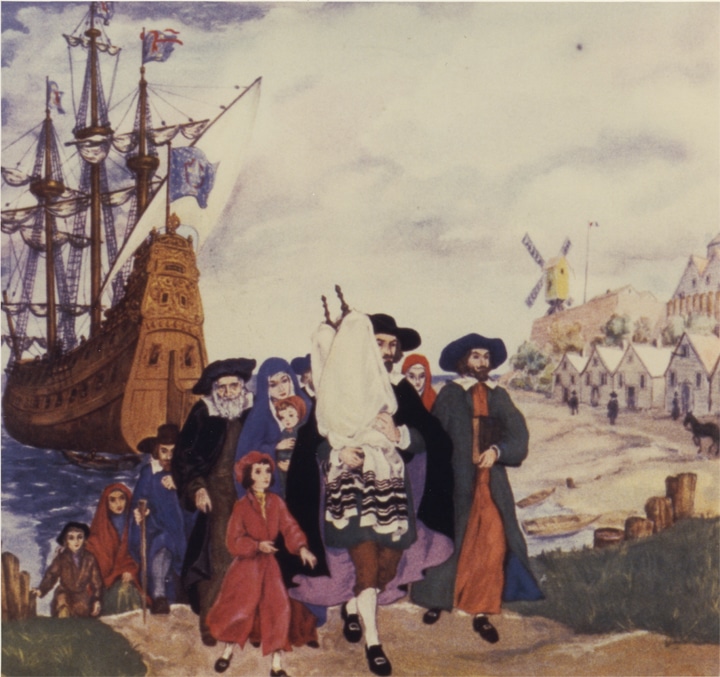
The company refused. Several influential investors in the Dutch West India Company were Jewish merchants, and company officials argued that the refugees should be allowed to remain and support themselves rather than become a public burden.
That decision allowed a permanent Jewish community to take root in North America. Although the community remained tiny and Jews still faced restrictions on public worship, military service, and holding certain offices, the refugees had secured something unprecedented: a permanent Jewish foothold in what would become the U.S.
Life in colonial America was hardly free of discrimination. Jews could not always worship openly, and in some colonies they faced legal and social barriers, but compared with much of Europe, the colonies offered the possibility of building Jewish communal life without the constant threat of expulsion.
Within a few years, the settlers established a burial society and acquired a cemetery, among the first institutions that any Jewish community created. In 1655, one of the refugees, Asser Levy, successfully challenged efforts to bar Jews from serving in the local militia, winning the right to stand guard alongside other colonists rather than pay a special exemption tax. Levy would go on to become one of New Amsterdam’s most prominent Jewish citizens, owning property, engaging in commerce, and demonstrating that Jews could participate fully in civic life.
Over the next century, small Jewish communities emerged in Newport, Philadelphia, Charleston, Savannah, and New York. Most were made up of Sephardic Jews, whose families traced their roots to Spain and Portugal before the expulsions of the late 15th century.
The American Revolution and the promise of religious liberty
By the time the American Revolution began in 1775, Jews remained a tiny minority in the colonies. Roughly 2,000 to 2,500 Jews lived among nearly three million colonists, concentrated in port cities.
Their numbers were small, but their influence often exceeded their size.
Many colonial Jews worked as merchants, brokers, and traders with business and family connections stretching across the Atlantic. Those relationships, built over generations through commerce in Europe, the Caribbean, and North America, suddenly became invaluable when Britain attempted to blockade the colonies.
The Revolution was not won by soldiers alone. The Continental Army desperately needed gunpowder, muskets, uniforms, food, and financing. Jewish merchants helped move many of those supplies through international trade networks that reached far beyond the thirteen colonies.
One of the most important hubs was the tiny Dutch Caribbean island of St. Eustatius, one of the busiest trading ports in the Atlantic world. Among the merchants operating there were many Sephardic Jews. By the time of the Revolution, Jews made up roughly 30% of the island’s European population and had built thriving businesses that connected markets across the Atlantic.

In November 1776, the American brig Andrew Doria sailed into St. Eustatius flying the Grand Union Flag. As custom dictated, the ship fired a 13-gun salute. The island’s Dutch governor, Johannes de Graaff, returned the salute with 11 cannon shots.
Known as the “First Salute,” it marked the first official recognition of the U.S. by a foreign government.
The island continued supplying the revolutionaries with desperately needed gunpowder, weapons, and other goods, frustrating British attempts to isolate the colonies.
Jewish merchants elsewhere also played significant roles.
Haym Salomon, a Polish-born Jewish immigrant, became one of the Revolution’s most important financiers. After escaping British imprisonment, he settled in Philadelphia, where he helped broker loans and raise desperately needed funds for the Continental Congress. Working alongside financier Robert Morris, Salomon arranged credit for the struggling government at several critical moments during the war. Although later legends exaggerated some aspects of his contributions, historians agree that he played an important role in sustaining the revolutionary cause financially.
Another prominent figure was Jonas Phillips, a merchant who immigrated from Germany and settled in Philadelphia. In July 1776, Phillips wrote a surviving Yiddish letter describing the Declaration of Independence. The letter, intercepted by the British before reaching Europe, survives today as a rare glimpse into how one Jewish colonist experienced America’s founding.
Phillips would later leave another lasting mark on American history. In 1787, while delegates gathered in Philadelphia to draft the Constitution, he petitioned the Constitutional Convention to eliminate religious tests for public office. His request reflected a broader hope shared by many American Jews: that the new nation would judge citizens by their character rather than their faith.
The Constitution largely fulfilled that hope.

Article VI of the Constitution prohibited religious tests for federal office, a remarkable provision at a time when many countries limited political participation based on religion. Just a few years later, the First Amendment guaranteed the free exercise of religion while preventing the federal government from establishing a national church.
The new republic did not immediately eliminate every form of religious discrimination. Several states continued to maintain religious requirements for public office well into the 19th century, and social prejudice remained widespread.
Even so, the U.S. altered the trajectory of Jewish history.
For much of Jewish history, rights depended on the goodwill of kings, emperors, or local rulers and could disappear with a change in government. The American experiment suggested something radically different: that religious liberty belonged to every citizen by right.
That promise became even clearer in 1790.
After the war, members of the small Jewish community in Newport, Rhode Island, led by synagogue warden Moses Seixas, wrote to President George Washington congratulating him on his presidency while asking whether Jews truly enjoyed equal standing in the new nation.
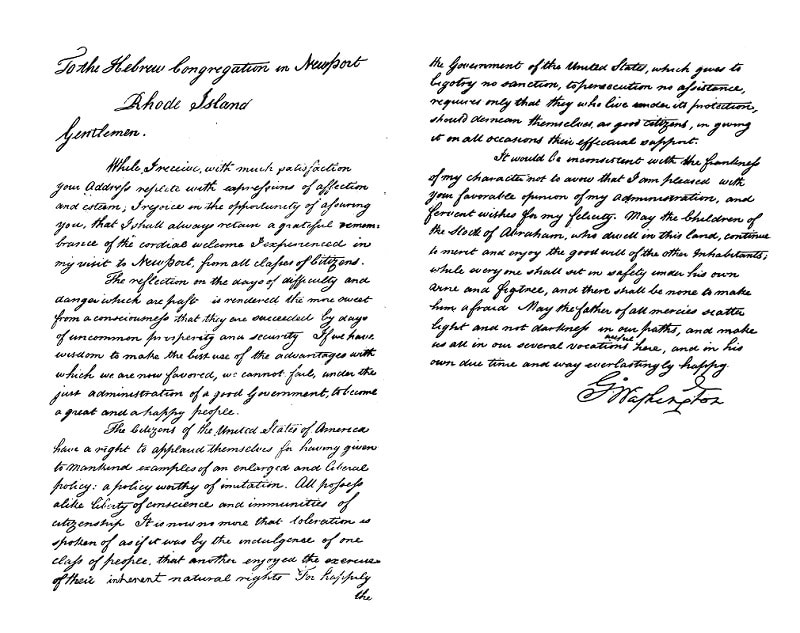
Washington’s reply became one of the defining documents of American religious liberty.
“The Government of the United States,” he wrote, “gives to bigotry no sanction, to persecution no assistance.”
Borrowing language first used by Seixas himself, Washington argued that Americans no longer enjoyed religious freedom merely because it was tolerated by those in power. Instead, liberty belonged equally to all citizens.
For Jews, whose history had so often depended on the whims of rulers, the letter represented a profound turning point. The U.S. would not simply permit Jews to live within its borders. At least in principle, it would recognize them as full members of the national community.
The question facing American Jews was no longer whether they would be allowed to stay, but how they would build a Jewish future in a country that, for the first time, invited them to belong.
A new kind of Judaism: German immigration transforms American Jewish life
For the first 150 years of American Jewish history, the community remained remarkably small; by 1820, there were still fewer than 10,000 living in the new nation.
Beginning in the 1820s, and accelerating after the failed Revolutions of 1848 in Europe, tens of thousands of Jews emigrated from the German states and Central Europe. Unlike the Sephardic Jews who had dominated colonial Jewish life, these newcomers brought different customs, religious traditions, and ideas about what Judaism should become in the modern world.
By the outbreak of the Civil War, roughly 150,000 Jews lived in the U.S., making Judaism one of the country’s fastest-growing religions.

Many of these immigrants arrived with little money, but they also arrived at a moment of extraordinary opportunity. The U.S. was expanding westward, new towns were springing up almost overnight, and railroads were transforming commerce. Jewish immigrants became peddlers, selling clothing, household goods, tools, and other necessities to isolated communities. Some eventually saved enough money to open dry goods stores, general stores, or clothing businesses of their own.
This pattern shaped much of American Jewish history. Businesses that began as small family shops sometimes grew into major companies. Retail giants such as Levi Strauss & Co., founded by Bavarian immigrant Levi Strauss during the California Gold Rush, Macy’s, Bloomingdale’s, and later Sears all had Jewish founders or leaders who helped reshape American commerce.
As Jewish merchants followed the frontier westward, they established communities wherever they settled. Synagogues appeared in places that had never before had Jewish residents, including Cincinnati, St. Louis, Chicago, San Francisco, and dozens of smaller towns across the expanding nation.
By the mid-19th century, Cincinnati had earned the nickname “the Jerusalem of America,” becoming one of America’s leading Jewish centers. Unlike the older East Coast communities, which looked toward Europe for religious leadership, Cincinnati became the birthplace of a distinctly American Judaism.
No one shaped this new American Judaism more than Rabbi Isaac Mayer Wise.
Born in what is now the Czech Republic, Wise immigrated to the U.S. in 1846 and quickly concluded that American Judaism needed to adapt to American realities. American Jews were free to choose how they observed Judaism, and Wise believed Jewish institutions needed to reflect that freedom.

Reform Judaism had originated decades earlier in Germany, where rabbis sought to reconcile Judaism with the ideals of the Enlightenment and modern European society. But in the U.S., Wise transformed those ideas into a national movement. Through institutions like the Union of American Hebrew Congregations and Hebrew Union College, he gave American Reform Judaism its organizational structure and helped make it the largest Jewish denomination in the country by the early 20th century.
Many Reform congregations shortened services, introduced sermons in English rather than German or Hebrew, incorporated choirs and organ music inspired by Protestant churches, and emphasized Judaism’s ethical teachings over ritual observance. Some congregations abandoned traditional practices such as dietary laws or head coverings.
Not everyone agreed.
Many Jews worried that Reform was changing Judaism too dramatically. Others believed it had not changed enough. Those disagreements eventually led to the development of Conservative Judaism, which sought a middle path between preserving Jewish law and embracing modern scholarship and American life. At the same time, Orthodox Judaism continued to maintain that traditional Jewish law remained fully binding.
For perhaps the first time in Jewish history, major religious movements developed side by side within a single country, each offering a different answer to the same question: How could Jews remain faithful to ancient traditions while fully participating in modern American society?
Religious diversity became one of the defining characteristics of American Judaism, a legacy that continues today.

During the Civil War, Union General Ulysses S. Grant issued General Order No. 11, expelling “Jews as a class” from the military district under his command, which included parts of Tennessee, Mississippi, and Kentucky. Grant accused Jewish traders of participating in illegal cotton smuggling, but instead of targeting individuals, he blamed an entire religious community.
The order was unprecedented in American history.
Jewish leaders immediately protested, and delegations traveled to Washington to appeal directly to President Abraham Lincoln. Within weeks, Lincoln revoked the order, declaring that punishment should fall on guilty individuals rather than an entire people.
The episode revealed two competing realities of American Jewish life.
On one hand, antisemitic prejudice could still influence government policy. On the other hand, Jews possessed political rights and access to the nation’s highest leaders in ways that would have been unimaginable in much of Europe. Rather than accepting discrimination as inevitable, American Jews successfully challenged it through the political system.
By the late 19th century, German-American Jews had founded hospitals, orphanages, charities, newspapers, and national organizations. They were becoming judges, lawyers, professors, entrepreneurs, and elected officials. Many believed they had discovered something unprecedented in Jewish history: a country where Jews could prosper without abandoning their identity.
Then another wave of immigrants arrived, one that would transform American Jewish life even more profoundly than the last.
Ellis Island and the making of modern American Jewry
If German immigration reshaped American Judaism, the next great wave of immigration transformed it beyond recognition.
Between 1880 and 1924, roughly 2.5 million Jews arrived in the U.S. from Eastern and Central Europe, making it one of the largest migrations in Jewish history. Most were Ashkenazi Jews, descendants of Jewish communities that had lived in Central and Eastern Europe for centuries.
Many were fleeing violence. Beginning in 1881, following the assassination of Tsar Alexander II, waves of anti-Jewish riots known as pogroms swept across the Russian Empire. Jewish homes and businesses were destroyed, families were attacked, and entire communities lived under the constant threat of violence. At the same time, restrictive laws confined many Jews to the Pale of Settlement, limiting where they could live, what professions they could enter, and how many could attend universities.
For many, the journey itself took weeks. After weeks crossing Europe and the Atlantic, many immigrants saw the Statue of Liberty as a symbol of an entirely new future.
Most entered through Ellis Island, which processed more than 12 million immigrants between 1892 and 1954.
Many Jewish immigrants settled on Manhattan’s Lower East Side. At the turn of the 20th century, hundreds of thousands of people lived within just a few square miles. Families crowded into small tenement apartments, often without indoor plumbing or adequate ventilation.
Many immigrants found work in the garment industry, sewing shirts, dresses, coats, and other clothing in factories or small workshops. Working days of 10 or 12 hours were common, wages were low, and workplaces were often unsafe.

(Courtesy: American Jewish Historical Society)
Yet amid the hardship, immigrants built one of the richest Jewish cultures the diaspora had ever seen.
Yiddish, the everyday language of millions of Eastern European Jews, filled the streets. Newspapers such as the Forverts (the Jewish Daily Forward) became some of the most widely read foreign-language newspapers in the U.S., helping immigrants navigate everything from American politics to labor disputes and family life.
Theater flourished as well. Second Avenue in Manhattan became known as the “Yiddish Broadway,” home to dozens of theaters producing comedies, dramas, operas, and musicals. At its height, audiences could see dozens of Yiddish productions every week, making Second Avenue one of the busiest theater districts in America.
Read more: How Jewish delis shaped American food culture
Food also became an enduring part of American culture. Jewish delicatessens, appetizing stores, and neighborhood bakeries introduced foods like bagels, lox, pastrami, challah, and pickles to a much broader public.
Religion evolved alongside culture.


While some immigrants remained deeply Orthodox, others embraced Reform Judaism or the growing Conservative movement. Synagogues, landsmanshaftn, charities, and mutual aid organizations helped immigrants find housing, work, healthcare, and community. Jewish life became supported by an extraordinary network of institutions that touched nearly every stage of life.
Jewish immigrants also became deeply involved in organized labor.
The garment industry exposed workers to dangerous conditions, low wages, and long hours, prompting many Jews to become leaders in the growing labor movement. Activists like Clara Lemlich helped organize the 1909 “Uprising of the 20,000,” one of the largest strikes by women workers in American history. Jewish labor leaders such as Sidney Hillman later helped shape the Congress of Industrial Organizations (CIO), while unions like the International Ladies’ Garment Workers’ Union fought for safer workplaces, shorter hours, and higher wages.
The movement gained tragic urgency after the 1911 Triangle Shirtwaist Factory fire, which killed 146 workers, many of them young Jewish and Italian immigrant women. The disaster shocked the nation and led to sweeping workplace safety reforms.
As Jewish immigrants became more settled, they also transformed American popular culture.
Nearly every major Hollywood studio was founded or led by Jewish immigrants or their children. On Broadway, in publishing, in Tin Pan Alley, and later in radio and television, Jewish artists, writers, producers, and composers helped define American entertainment throughout the 20th century.
Yet acceptance remained incomplete.
Elite universities quietly imposed quotas limiting the number of Jewish students they admitted. Exclusive neighborhoods, country clubs, hotels, and employers often excluded Jews. Industrialist Henry Ford financed and distributed antisemitic conspiracy theories through his newspaper, The Dearborn Independent, while old stereotypes found new audiences in the U.S.
The federal government also narrowed Ellis Island’s open door.
The Immigration Act of 1924 established strict national quotas that sharply reduced immigration from Southern and Eastern Europe, effectively ending the great wave of Jewish immigration. Tragically, those restrictions remained largely in place during the rise of Nazi Germany, preventing many European Jews from finding refuge in the U.S. during the years leading up to the Holocaust.
In just a few decades, American Jewry had grown from a relatively small community of mostly German and Sephardic immigrants into the largest Jewish population in the world outside Eastern Europe. The neighborhoods they built, the institutions they founded, and the culture they created would shape not only Jewish life, but American life itself, for generations to come.
The Holocaust, Israel, and the American Jewish century
By the early 20th century, the center of American Jewish life had shifted decisively to major cities. Jewish immigrants had built neighborhoods, businesses, newspapers, synagogues, labor unions, and cultural institutions that touched nearly every aspect of American life.
Then events across the Atlantic changed everything.
In 1933, Adolf Hitler became chancellor of Germany. Over the next decade, Nazi Germany systematically stripped Jews of their rights, isolated them from society, and ultimately launched the Holocaust, the murder of six million Jews by Nazi Germany and its collaborators.
Jewish organizations raised money, organized rallies, lobbied politicians, and desperately searched for ways to help relatives escape Europe. But restrictive immigration quotas, established by the Immigration Act of 1924, severely limited the number of refugees who could enter the United States.

One of the most enduring symbols of that failure came in 1939, when the MS St. Louis, carrying more than 900 Jewish refugees fleeing Nazi Germany, was denied permission to dock in the U.S. after being turned away from Cuba. Forced to return to Europe, many of its passengers would later perish in the Holocaust.
The destruction of European Jewry permanently shifted the demographic, cultural, and political center of Jewish life. For the first time in nearly two thousand years, the world’s largest Jewish communities were no longer in Europe, but in the United States and the newly established State of Israel. American Jews increasingly saw themselves not simply as another diaspora community, but as custodians of Jewish continuity.
As Holocaust survivors rebuilt their lives, many settled in the U.S., joining relatives who had immigrated decades earlier. Their arrival strengthened American Jewish communities while bringing painful memories of destruction that would shape Jewish identity for generations.
Just three years after the war ended, another historic event transformed American Jewish life.

On May 14, 1948, the State of Israel declared independence.
For many American Jews, Israel represented far more than the creation of a new country. It symbolized Jewish self-determination after nearly two thousand years without sovereignty and offered refuge to Holocaust survivors and Jews fleeing persecution across Europe, the Middle East, and North Africa.
President Harry Truman recognized Israel just minutes after its declaration of independence, making the U.S. the first country to extend de facto recognition.
Support for Israel quickly became one of the defining features of American Jewish communal life.
American Jews donated millions, advocated for U.S. support, and forged educational, religious, and family ties with the young state.
The postwar decades reshaped everyday Jewish life in the U.S.
Jewish veterans returned from World War II, attended college through the GI Bill, bought homes in rapidly expanding suburbs, and started families during the postwar baby boom.
New synagogues appeared across suburban America, often serving as far more than places of worship. They became community centers where families celebrated holidays, attended Hebrew school, joined youth groups, played sports, and built lifelong friendships.
Jewish Community Centers, summer camps, day schools, and national organizations expanded rapidly.
Later in the 20th century, Jewish comedians honed their craft in the Catskills’ Borscht Belt resorts before reshaping American comedy through television and stand-up.
American Judaism itself continued to evolve.
Reform, Conservative, and Orthodox Judaism all expanded after the war, each responding differently to suburbanization, modernity, and changing American life. Conservative Judaism, in particular, experienced remarkable growth during the 1950s and 1960s, becoming the largest Jewish denomination in the U.S. for several decades.
By the second half of the 20th century, Jews were visible across nearly every profession. And many American Jews were also deeply involved in the Civil Rights Movement.
Rabbis marched alongside the Rev. Martin Luther King Jr., most famously when Rabbi Abraham Joshua Heschel joined the march from Selma to Montgomery in 1965. Jewish activists Andrew Goodman and Michael Schwerner were murdered alongside James Chaney during Freedom Summer in Mississippi while working to register Black voters.
The relationship was not without tensions, particularly in later decades, but the Civil Rights Movement marked one of the most significant periods of Black-Jewish cooperation in American history.
Meanwhile, another cause united Jews across religious and political lines.
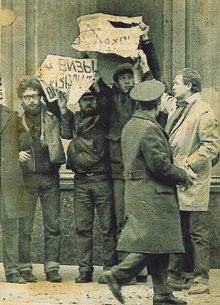
Beginning in the 1960s, American Jews launched a massive grassroots campaign on behalf of Soviet Jewry, demanding that Jews trapped behind the Iron Curtain be allowed to practice Judaism freely and emigrate to Israel or elsewhere. The movement mobilized students, rabbis, politicians, and ordinary families across the U.S., becoming one of the largest human rights campaigns in modern Jewish history.
By the 1970s, American Jews occupied a position unlike any diaspora community before them.
For the first time in nearly two millennia, millions of Jews lived in a democratic society where they enjoyed religious freedom, economic opportunity, political influence, and constitutional equality. Together with Israel, the U.S. had become one of the two great centers of Jewish life, a reality that continues to shape the Jewish world today.
American Jews today: A community more diverse than ever
Today, the U.S. is home to approximately 7.5 million Jews, making it one of the world’s two largest Jewish communities alongside Israel. After more than 350 years, American Jews remain a small minority, about 2% of the U.S. population, yet their influence on American culture, politics, science, business, education, and the arts has been profound.
But there is no single American Jewish experience.
While the descendants of Eastern European immigrants still make up a large portion of the community, American Jews trace their roots to nearly every corner of the Jewish world. Some families descend from the 23 refugees who arrived in New Amsterdam in 1654. Others came from Germany in the 19th century or Eastern Europe at the turn of the 20th. Since the 1970s, new waves of immigrants have arrived from the former Soviet Union, the Middle East, Latin America, Africa, and Central Asia, further enriching the tapestry of American Jewish life.
American Judaism is equally diverse.
Some Jews are Orthodox, while others identify as Conservative, Reform, Reconstructionist, Renewal, Humanistic, or secular. Many express their Jewish identity primarily through religion. Others connect through culture, family, history, food, language, or a sense of shared peoplehood. According to recent surveys, a growing number identify as “Jews of no religion,” reflecting the many ways Jewish identity continues to evolve.
Across the country, synagogues, Jewish Community Centers, day schools, summer camps, Hillels, Federations, and community organizations continue to serve millions of American Jews.
Success brought different questions.
Earlier generations often worried about exclusion: whether Jews would be accepted into universities, neighborhoods, professions, or American society itself. Today’s debates are often about continuity. What role should religion play in modern Jewish life? And what responsibilities do American Jews have to Israel, to one another, and to broader American society?
At the same time, antisemitism has not disappeared.
The 2017 white supremacist rally in Charlottesville, Virginia, where marchers chanted antisemitic slogans, served as a stark reminder that hatred of Jews remained present in American public life. In 2018, a gunman murdered 11 worshippers at the Tree of Life synagogue in Pittsburgh, the deadliest antisemitic attack in American history. The 2019 shooting at the Chabad of Poway in California, the 2022 hostage crisis at Congregation Beth Israel in Colleyville, Texas, and other attacks underscored that Jewish institutions continued to face security threats.
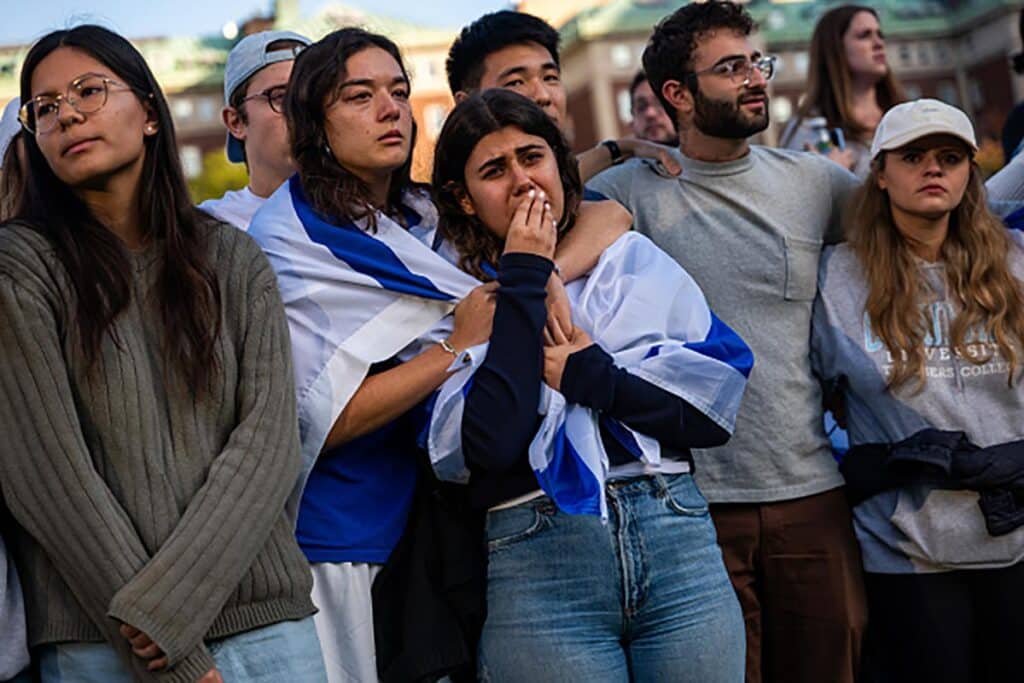
The Hamas attack on Israel on October 7, 2023, and the ensuing war in Gaza marked another turning point. American Jews mourned the dead, prayed for hostages, and debated Israel’s response, while many also witnessed a sharp rise in antisemitic incidents, heated campus protests, and intense public arguments about Zionism, antisemitism, free speech, and the Israeli-Palestinian conflict. Once again, events thousands of miles away profoundly shaped Jewish life in the U.S.