
I am old enough to remember when, in 2023, the film industry granted its highest honor, the Academy Award for Best Documentary Feature, to “Navalny,” a documentary about Russian opposition leader Alexei Navalny. As the filmmakers took the stage, the audience stood on their feet, cheering enthusiastically.
This was less than a year after Russia’s full-scale invasion of Ukraine in February 2022. At the time, Hollywood seemed to understand something it now appears to have forgotten: people are not their governments. More than that, it also recognized that, in the face of authoritarian or generally problematic governments, amplifying the voices of dissidents becomes more important, not less.
A great deal has changed since early 2023. The Hamas-led October 7 attack on Israel became the catalyst for an explosion of antisemitic, anti-Zionist, and anti-Israel sentiment around the world. The anger hasn’t been solely directed at Israeli Prime Minister Benjamin Netanyahu and the far-right members of his governing coalition. Increasingly, it has been aimed at Israelis and Jews more broadly, regardless of their personal political beliefs.
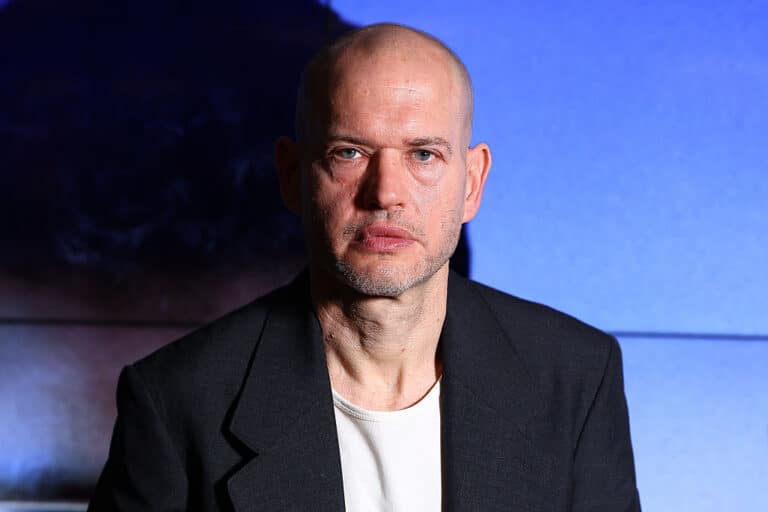
So it came as little surprise when Israeli filmmaker and longtime Netanyahu critic Nadav Lapid was forced to withdraw from his role as a jury member at the Marseille International Film Festival after pro-Palestinian filmmakers and activists objected to his participation. They argued that Lapid is complicit in Israel’s alleged crimes because his latest film, “Yes,” received partial funding from the Israeli Film Fund.

The irony is difficult to miss. “Yes” is itself a scathing critique of Israeli society and culture. The documentary accuses the Israeli artistic community of being complicit in the suffering and deaths of Palestinians in Gaza and the West Bank. Yet even that was not enough. In the current climate, merely being an Israeli filmmaker was apparently disqualifying.
A few days later, over 350 figures from the film industry, including Israeli-born Netanyahu critic Natalie Portman, signed an open letter in the French newspaper Le Monde, condemning Lapid’s treatment.
“That Israel’s greatest dissident artist [who] tirelessly denounces the fascist and colonialist tendencies of his government and its criminal moral failings in films that have won awards worldwide, should be forced to withdraw from a French festival should alarm us and mobilize us beyond this absurdity,” the letter reads. “It should alert us to the obvious truth: whatever crimes their state may commit, no one can be reduced to a passport.”
The signatories, however, seem to misunderstand the nature of the Boycott, Divestment and Sanctions (BDS) movement and the broader anti-normalization attitudes in parts of the contemporary pro-Palestinian movement. Anti-normalization activists oppose dialogue with Israelis, arguing that such engagement legitimizes an unjust status quo. They denounce Israelis as implicitly criminal on account of their country of nationality or birth. Under that framework, Israelis are often viewed not as individuals with diverse political views, but as representatives of a state deemed inherently illegitimate.
We have seen this logic before. When the joint Israeli-Palestinian documentary film “No Other Land” won Best Documentary Feature at the 2025 Academy Awards, BDS activists swiftly condemned both the documentary and its victory, arguing that the cooperative feature violated its anti-normalization guidelines. This was even though “No Other Land” is deeply critical of Israel, with a narrative that highlights the Palestinian experience of displacement from the West Bank community of Masafer Yatta.
The Le Monde letter correctly argues that silencing critics of a government is not an effective way to exert pressure on said government; if anything, ostracizing dissidents allows the government in question to continue unchallenged by its own citizens.
But the letter also misses the mark. It argues that Lapid shouldn’t have been boycotted, not because he is a human being like any other, but specifically because his film lambasts the Israeli government and the Israeli population. In other words, their argument is that Lapid should be welcomed into the family of filmmakers only because he is a harsh critic of Israel, its government, and its citizens. The implication is not that boycotting people based on their nationality is wrong in principle. According to Lapid’s defenders, Israelis are OK, so long as they pass a political purity test.
But I must ask: Do we ask this of citizens of any other country? Or is it only Israelis that must fall perfectly in line with the anti-Israel language of the day — settler-colonialist, apartheid, genocidal, fascist — or otherwise beyond redemption, before they qualify to be treated as equals?
When Soviet filmmakers Leonid Varlamov and Ilya Kopalin won the Academy Award for Best Documentary Feature in 1943 for “Moscow Strikes Back,” were they first required to condemn Josef Stalin and the Soviet Union’s vast network of labor camps?


In fact, Soviet filmmakers consistently won prestigious film awards throughout the entirety of the Soviet Union’s run, all while remaining publicly supportive of a government that imprisoned, tortured, and even murdered critics; suppressed religious and ethnic minorities; and carried out widespread political repression.
I can think of more recent examples, too. When Chloé Zhao won Best Director and Best Picture for “Nomadland” in 2020, was she first required to condemn China’s handling of the COVID-19 crisis or its treatment of Uyghurs before accepting her awards?
And what of Israeli filmmakers and artists who explore other themes, beyond Israeli politics or the Israeli-Palestinian conflict? Are Israelis not allowed to produce art about personal relationships, the diversity of Israeli culture, or Israeli innovations? Israelis, like any other people, are multifaceted human beings. And yet, even Lapid’s supporters are implicitly making the argument that he qualifies for inclusion because of the specific political message of his work.
That’s not actually what equality is all about.
Equality means judging people as individuals, not demanding ideological declarations as a condition of participation. It means extending the same standards to Israelis that we extend to everyone else.
Lapid himself seems to understand that the opposition to his presence has little to do with his views and everything to do with an identity that he cannot change. “
For a year, it was my film ‘Yes’ that was being attacked. And then, suddenly, my mere presence became unacceptable. I asked myself: What exactly do they want? That I stop making films? Should I leave France? How far will this go?” he told Variety.
We don’t know how far it will go. What we do know is that it’s already gone too far.