

The Jewish calendar is full of anniversaries, but so is the regular calendar.
Every week marks the anniversary of events that helped shape Jewish history, whether that’s a Nobel Prize-winning discovery, a pivotal Supreme Court decision, the birth of an iconic artist, the founding of a community, or a moment that changed the course of the Jewish people.
Welcome to Unpacked’s latest series, “This Week in Jewish History.” Each week, we’ll take a look back at the stories worth remembering and why they still matter today.
Check out previous editions here.
Göring officially orders the Final Solution (July 31, 1941)
Jewish history spans thousands of years, but it’s hard to imagine a darker period than the summer of 1941, when Nazi Germany officially set its plans for the Final Solution into motion.
On July 31, Hermann Göring signed a document that would become a critical step as Nazi Germany’s persecution of the Jewish people accelerated into systemic mass murder. And yet, this idea – that the “Jewish Question” was a problem to be solved – has its ugly roots in the mid-18th century, around a hundred years before the first Nazi death camp ever opened its gates.
Let’s rewind.
For centuries, Jews in Europe were segregated from their non-Jewish neighbors and denied basic rights afforded to other citizens. This began to change with the Enlightenment and the French Revolution, when France granted Jews full citizenship in 1791. Soon, a wave of Jewish emancipation spread across Central and Western Europe. For the first time in centuries, Jews were legally recognized as equal citizens…at least on paper.
Not everyone welcomed that change. Some non-Jewish Europeans questioned whether Jews would — or should — be able to successfully integrate into the rest of society after centuries of separation. These debates gave rise to the so-called “Jewish Question,” or Judenfrage. Ultimately, the question boiled down to this: What should European society do with its Jewish population?
Some early proponents of emancipation argued that Jews could become equal citizens only if they abandoned their distinct religious, cultural, and communal identities. But soon enough, the debate grew much darker.
The rise of racial pseudoscience and social Darwinism gave rise to a new flavor of European antisemitism, which argued that Jews were not merely members of a different religion, but were an inferior, foreign race to the European continent. Under this worldview, assimilation could never be enough. Jews could abandon their culture, religion, and national identity. It didn’t even matter if they converted to Christianity. Antisemites would still consider them biologically Jewish — and therefore permanently dangerous.
The Nazis were obsessed with finding their own “solution” to the Jewish Question. And, as you might expect, they fell pretty firmly on one side of the debate. In their racial worldview, Jews could never be true Germans. They would have to be removed from German society entirely.

Before ordering the Final Solution, the Nazis pursued other ideas to rid Germany and its expanding empire of Jews. It stripped Jews of their rights and property, terrorized them, and pressured them to emigrate. There was even a far-fetched idea known as the Madagascar Plan, in which the Nazis expected to deport millions of European Jews to the African island of Madagascar, where they’d live under an SS police state and ultimately succumb to disease.
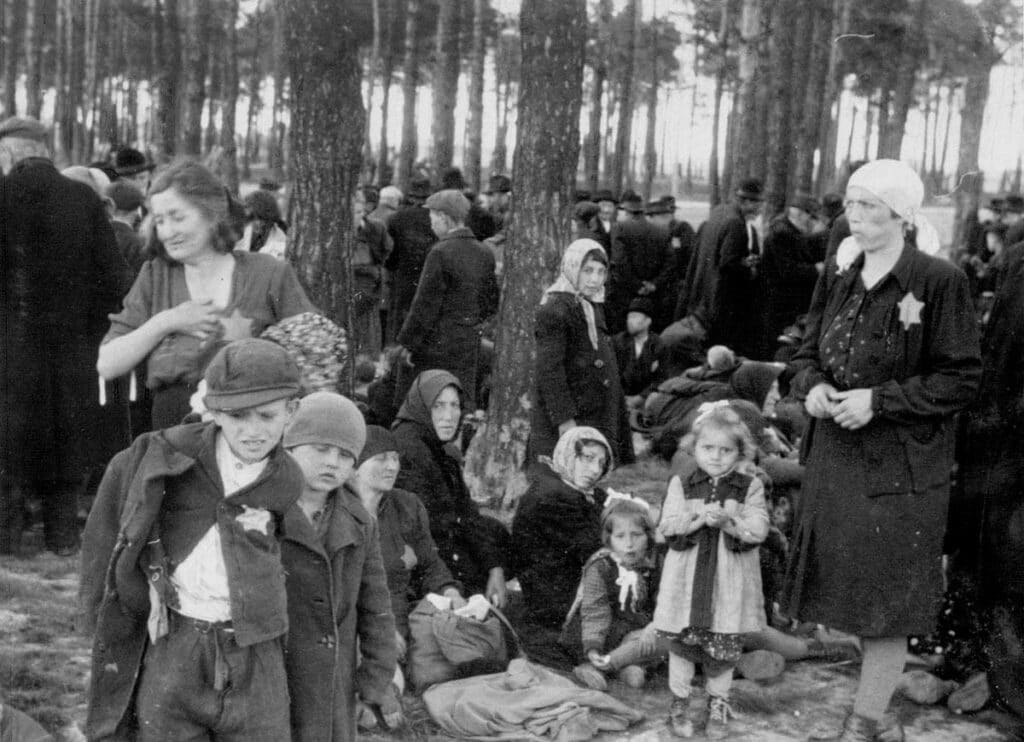
By 1941, though, the Nazis deemed the Madagascar Plan unfeasible, and so they set another, darker plan into motion. Following Germany’s invasion of the Soviet Union that June, mobile killing units known as Einsatzgruppen, assisted by German police, military units, and local collaborators, began shooting entire Jewish communities.
This paved the way for the Final Solution to the Jewish Question, or the plot to annihilate Jews across Europe and beyond.
On July 31, 1941, Hermann Göring, acting on instructions from Hitler himself, wrote a formal order to SS General Reinhard Heydrich, demanding that he carry out all the necessary preparations for the extermination of Jews across all Nazi-occupied and Nazi-allied territories.
The document did not explicitly call for extermination, and historians continue to debate precisely when the Nazis decided to murder every Jew within their reach. Still, Göring’s directive gave Heydrich the authority to coordinate policy across the German government, helping transform escalating mass murder into a continent-wide program of annihilation
Six months later, Heydrich convened the Wannsee Conference, where 15 high-ranking Nazi leaders gathered to arrange the systematic annihilation of 11 million European Jews. The rest, as you probably know, is history.
Jewish history is a story of both tragedy and triumph. This week is no exception.
First shipload of Russian Jews arrives in New York City (July 29, 1881)
If you’re an American Jew, there’s a pretty good chance you can trace at least some of your ancestry to a late 19th-century or early 20th-century Jewish immigrant in New York City. In fact, though there’s no official statistic, genealogists estimate that some 80% of American Jews come from families who passed through New York City’s Ellis Island between 1892 and 1924, when the United States all but closed its doors to Jewish immigrants with the Johnson-Reed Act, most commonly referred to as the Immigration Act of 1924.
Between 1881 and 1924, approximately three million Jews from the Russian Empire and other parts of Eastern Europe for the U.S. Many arrived in New York, transforming the city into the largest Jewish population center in the world.
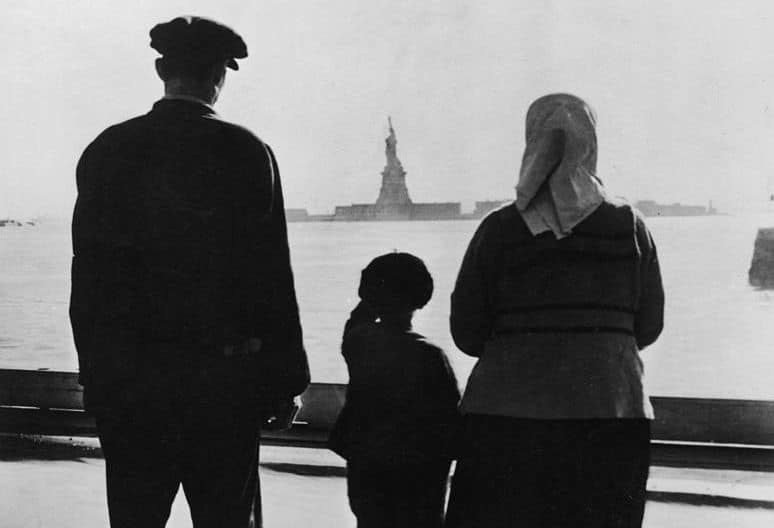
This wave of Jewish immigration began on July 29, 1881, when a group of roughly 250 Jews from the Russian Empire associated with Am Olam, a movement that sought to establish Jewish agricultural communities in the U.S., docked at the Castle Garden immigration depot in lower Manhattan, over a decade before Ellis Island Immigration Station officially opened its doors on January 1, 1892.
Their arrival came amid a wave of antisemitic violence sweeping the Russian Empire.
In March of 1881, a Russian revolutionary group known as Narodnaya Volya assassinated Tsar Alexander II. Only one Jew, Gesya Gelfman, had been involved in the plot, but the incident sparked a furious wave of antisemitic sentiment and scapegoating.
Within a month, anti-Jewish riots and pogroms spread across the southern and western regions of the Russian Empire, reaching small towns and major cities such as Odessa and Kyiv. Mobs looted Jewish businesses, destroyed homes, assaulted women, and murdered residents, sometimes with the encouragement or complicity of local authorities.
Instead of holding the perpetrators responsible, the Russian authorities reacted by punishing the Jewish community with even more restrictions. The so-called “May Laws” of 1882 prohibited Jews from settling outside designated towns and cities within the Pale of Settlement and further limited their ability to own, lease, and manage property.
The violence and oppressive laws fundamentally changed Jewish life in Eastern Europe, and certainly not for the better. In response to the pogroms and repression, millions of Eastern European Jews grew increasingly desperate to get out. Some joined emerging movements such as Hovevei Zion and set their sights on Ottoman-controlled Palestine, helping fuel the First Aliyah. Others looked to the U.S.
But even leaving the Russian Empire was no easy feat. Tsarist policies made legal emigration virtually impossible as passports were expensive and difficult for Jews to obtain, so they found creative – and illegal – ways to slip out, purchasing train tickets to port cities in Europe, like Hamburg, Bremen, and Liverpool. Once there, these Jewish immigrants got tickets for 10- to 14-day voyages across the Atlantic. The Hamburg-New York City line was so popular among Jewish refugees that the ships even started offering kosher food.
Because the overwhelming majority of Jews could only afford steerage tickets, they were forced to endure unsanitary conditions and cramped quarters during their journey. They slept in crowded, inadequately ventilated compartments below deck, spread out across multi-tiered iron bunk beds. Even water was rationed, and the poor sanitation, paired with seasickness, resulted in a foul, overwhelming stench. Since not all ships offered kosher options, passengers had to bring their own plates and utensils and had to survive on potatoes, herring, and tea. Even so, they held onto their Judaism, creating makeshift religious services.

But in the end, the grueling voyage was all worth it. After docking in New York, the passengers underwent medical and legal inspections. Then, they were finally free to start a new life in the Land of Opportunity.

Passing inspection did not make the struggle disappear. Most Russian Jewish immigrants arrived with little money, limited English, and few possessions. Many crowded into tenements on Manhattan’s Lower East Side, where they worked long hours in factories, sweatshops, pushcarts, and small businesses while building synagogues, schools, mutual-aid societies, labor unions, newspapers, and theaters.
Their arrival would profoundly reshape both New York and American Jewish life. The immigrants and their descendants became writers and garment workers, rabbis and radicals, entertainers and entrepreneurs, labor organizers and Supreme Court justices.
Now, over a century later, the U.S. is still the most successful diaspora story in Jewish history.