
The Jewish calendar is full of anniversaries, but so is the regular calendar.
Every week marks the anniversary of events that helped shape Jewish history, whether that’s a Nobel Prize-winning discovery, a pivotal Supreme Court decision, the birth of an iconic artist, the founding of a community, or a moment that changed the course of the Jewish people.
Welcome to Unpacked’s latest series, “This Week in Jewish History.” Each week, we’ll take a look back at the stories worth remembering and why they still matter today.
Check out previous editions here.
The liquidation of the Vilna Ghetto (September 23-24, 1943)
Few events show how suddenly Jewish safety could vanish more starkly than the Holocaust. Much has been written about German Jews who had built lives in a country they considered home before the Nazis came to power. But German Jewry was far from alone in seeing a once-thriving world destroyed. A similar story unfolded in Vilna, now Vilnius, Lithuania — a city once known as the “Jerusalem of Lithuania.”
Long before German troops arrived, Vilna had been a center of Jewish life. It was home to Rabbi Eliyahu ben Shlomo Zalman, better known as the Vilna Gaon, as well as renowned yeshivas and printing presses. Its secular Jewish culture flourished alongside its religious institutions. Generations of Jews had made Vilna one of the great centers of Jewish scholarship in Eastern Europe.


Then came the Nazi occupation.

German forces entered Vilna in June 1941, and the killing began before the ghetto was even established. German forces and Lithuanian auxiliaries took thousands of Jews to Ponary, a wooded area outside the city, and shot them. In early September, the Nazis sealed the remaining Jews inside two overcrowded ghettos.
The larger ghetto, Ghetto I, held Jews selected for forced labor. The smaller, Ghetto II, held many whom the Nazis deemed unable to work. That distinction offered no real safety to either group. By the end of October 1941, Ghetto II had been emptied and its residents murdered at Ponary. Those in Ghetto I were forced to work in factories, on construction projects and in labor camps, while periodic killing operations continued.
By September 1943, the ghetto that had once held tens of thousands of people had been reduced to a fraction of its original population. On September 23, the Nazis ordered its final liquidation. About 4,000 Jews were deported to the Sobibor killing center. Others were transported to concentration and forced-labor camps in Latvia and Estonia. Approximately 3,000 remained in labor camps in or near Vilna.

The Jews of Vilna did not face their destruction without resistance. Members of the United Partisan Organization, or FPO, had formed an underground movement inside the ghetto, gathered weapons and prepared to fight. As the Nazis moved toward its liquidation, resistance members clashed with German forces. Some escaped to the surrounding forests and joined partisan units. Others hid, hoping to survive the deportations.
The liquidation marked the end of the ghetto, but the destruction of Vilna’s Jewish community had begun more than two years earlier, in the killing pits at Ponary. The city once called the “Jerusalem of Lithuania” lost most of the people who had given it that name. What survives — in books, testimony and the record of those who resisted — is a glimpse of the extraordinary Jewish world that was there before.
Jewish history is a story of both tragedy and triumph. This week is no exception.
The first Shabbat ever (September 26, 3760 BCE)
“More than the Jewish people have kept Shabbat,” the Hebrew essayist and Zionist thinker Ahad Ha’am is often quoted as saying, “Shabbat has kept the Jewish people.”
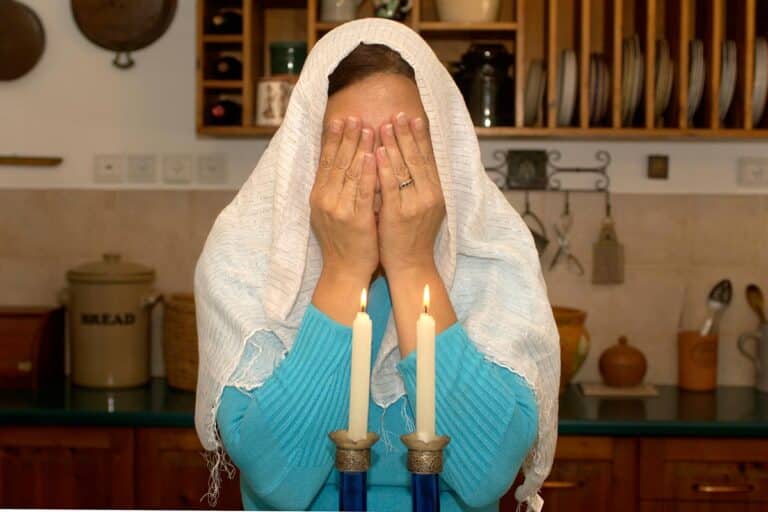
The first Shabbat might seem like a strange entry in a series of Jewish anniversaries. After all, who was there to mark the date? But Jewish sages spent centuries working out a chronology of Creation from the Hebrew Bible. In the traditional telling, God created the world in six days and rested on the seventh. That first day of rest became the model for a ritual Jews would carry with them through every century that followed.
It would be hard to overstate Shabbat’s importance to Jewish life. It is a divine commandment, a remembrance of Creation and a sign of the covenant between the Jewish people and God. It is also a time for family and community. In the Book of Deuteronomy, the command to rest recalls the Exodus from Egypt: Jews are told to remember what it meant to be enslaved and to allow others to rest, too. Rabbi Abraham Joshua Heschel called Shabbat a “palace in time” — a sanctuary built not of stone, but of hours set apart from the working week.
And Shabbat’s influence reaches far beyond the Jewish community. That weekend everybody loves so much? Shabbat helped shape the idea behind it.
The seven-day week wasn’t always the only way to organize time. Ancient Egyptians divided some periods into 10-day cycles, while Romans used an eight-day market cycle. Other societies organized recurring days around markets and trade. Against those rhythms, the Jewish practice of setting aside every seventh day for rest was a powerful idea. It followed its own cycle, regardless of the season or the demands of work.

The commandment was striking in another way: rest wasn’t reserved for the person in charge. The Torah extends it to children, servants, resident foreigners and even working animals. That doesn’t make the ancient world a model of equality. But it does mean the day’s rest was supposed to reach people who otherwise had little control over their labor.
The modern two-day weekend emerged much later, through changes in religious practice and labor. Still, one of the ideas beneath it—that life needs a regular pause from work — has deep roots in Shabbat.
Pretty neat, huh?